Chip supply chain faces new bottlenecks as AI drives upstream price hikes

Synopsis
The AI infrastructure boom is pushing price hikes far beyond GPUs: Japan's Murata Manufacturing will raise multilayer ceramic capacitor prices by up to 40% from July 2026, as AI servers consume up to ten times more capacitors than conventional servers — exposing a little-watched but critical vulnerability in the global chip supply chain.
Key Takeaways
Murata Manufacturing , the world’s largest MLCC maker, will raise prices for AI server and automotive electronics capacitors by 10 to 40 per cent from July 2026 .
AI servers require three to ten times more capacitors than traditional servers, according to Sinolink Securities analyst Liu Gaochang .
Price increases have spread from GPUs and memory chips to power semiconductors , copper-clad laminates , industrial gases , and ceramic parts .
Orders for power components are reportedly “fully loaded,” with cost pressures also rising for aluminium foil and chemical materials .
Key suppliers affected include Jianghai Electronics , Kingboard Laminates , Infineon Technologies , and Nippon Sanso .
The bottleneck threatens to raise the total cost of AI data centre buildouts globally through the second half of 2026 .
The AI-fuelled price surge rippling through the semiconductor supply chain is no longer confined to graphics processing units (GPUs) and memory chips. Upstream materials and manufacturing inputs — from power chips and capacitors to copper-clad laminates and industrial gases — are now entering their own price-increase cycles, threatening to slow the global buildout of artificial intelligence (AI) infrastructure.
From GPUs to the Invisible Components
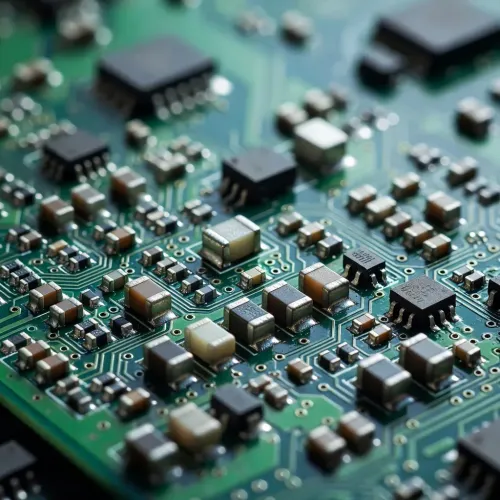
Suppliers of once less-visible parts are rapidly gaining pricing leverage as customers scramble for limited capacity. The affected categories span a wide arc of the electronics ecosystem: power chips and capacitors that regulate electricity inside AI data centres, copper-clad laminates (CCLs) and glass fabric that form the substrate of printed circuit boards (PCBs), and industrial gases, valves, and ceramic parts used inside chipmaking equipment.
Why It Matters: AI Servers Are Capacitor-Hungry
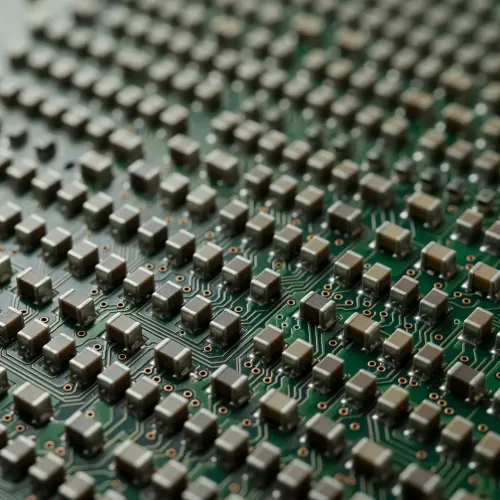
Liu Gaochang, an analyst at Sinolink Securities, noted that the adjustments have spread from selected products to wider categories. “Capacitors and power semiconductors are now both moving into a price-increase cycle,” Liu said. He added that AI servers consume three to ten times as many capacitors as traditional servers, and that orders for power components were “fully loaded,” with costs also rising for aluminium foil, chemical materials, and electricity.
Murata to Raise MLCC Prices Up to 40% From July
Japan’s Murata Manufacturing, the world’s largest maker of multilayer ceramic capacitors (MLCCs), will raise prices for products used in AI servers and high-end automotive electronics by 10 to 40 per cent starting July 2026, according to reports citing Shanghai Securities News. The move signals that even the most commoditised passive components are being repriced as AI demand reshapes the economics of the entire supply stack.
The Competitive Backdrop
The bottleneck is not limited to one geography. Key players across the supply chain — including Jianghai Electronics and Kingboard Laminates in China, Infineon Technologies in Europe, and Nippon Sanso in Japan for industrial gases — are all navigating surging demand. MediaTek and other chip designers sourcing these components face margin pressure as input costs climb simultaneously across multiple categories.
What’s Next
The cascading nature of these price increases suggests the AI infrastructure buildout will encounter cost headwinds well beyond the GPU layer that has dominated headlines. As data centre operators in the Middle East, Asia, and beyond accelerate capacity expansion, procurement teams will need to contend with a broader and less predictable set of supply constraints. Watch for further price announcements from passive component and specialty chemical suppliers through the second half of 2026.
Point of View
The supply economics reset entirely. This dynamic mirrors what happened to high-bandwidth memory in 2023-24, but is now playing out across a far wider set of inputs simultaneously — laminates, gases, valves, ceramics — making it harder for hyperscalers to hedge. Mainstream coverage continues to focus on the GPU layer; the more durable cost inflation story is quietly building several tiers below it.
NationPress
30 Sept 2026
Frequently Asked Questions
Why are capacitor and PCB material prices rising in 2026?
Capacitor and PCB material prices are rising because AI servers consume three to ten times more capacitors than conventional servers, overwhelming supply chains that were sized for traditional demand. The surge in AI data centre construction has pushed orders for power components to “fully loaded” levels, according to Sinolink Securities analyst Liu Gaochang .
How much is Murata Manufacturing raising MLCC prices?
Murata Manufacturing will raise prices for multilayer ceramic capacitors (MLCCs) used in AI servers and high-end automotive electronics by 10 to 40 per cent , effective July 2026 . Murata is the world’s largest MLCC maker, making the move a significant signal for the broader passive components market.
Which companies are most affected by the chip supply chain bottleneck?
Companies across the electronics value chain face exposure, including Jianghai Electronics and Kingboard Laminates in China , Infineon Technologies in Europe , and Nippon Sanso in Japan . Chip designers such as MediaTek and data centre operators in the Middle East and Asia are also facing rising input costs across multiple component categories simultaneously.
What upstream materials are becoming scarce because of AI demand?
Beyond GPUs and memory, the bottlenecks now extend to power chips , capacitors , copper-clad laminates (CCLs) , glass fabric for PCBs , industrial gases , valves , and ceramic parts used in chipmaking tools. Costs have also risen for aluminium foil and chemical materials , according to industry analysts.
Will AI infrastructure costs keep rising through 2026?
Industry analysts suggest the cascading price increases across upstream materials are likely to persist through the second half of 2026 , as AI data centre expansion continues at pace globally. Further price announcements from passive component and specialty chemical suppliers are widely anticipated as demand outpaces capacity additions.