AI servers need 28,000 MLCCs each, sparking historic supply crunch
Synopsis
Goldman Sachs calls it the 'largest and longest' MLCC cycle ever: AI servers now demand up to 28,000 of the tiny capacitors per unit — 13 times a standard server — while Nvidia's upcoming Rubin platform nearly doubles board-level MLCC count to 12,000, making supply relief unlikely before 2027.
Key Takeaways
Goldman Sachs has labelled the current MLCC upcycle the 'largest and longest' in the component's history, driven by AI infrastructure build-out.
A single AI server requires up to 28,000 MLCC units — a 13-fold increase over a standard server, according to China Securities .
Nvidia's Rubin architecture, debuting later in 2026 , uses 12,000 MLCCs per board, up from 6,500 on the current GB200 platform, per TrendForce .
Taiyo Yuden CEO Katsuya Sase described the pace of demand growth as 'scary' .
An EV with Level 2+ autonomous driving uses more than 10,000 MLCCs , versus just 800–1,000 in a smartphone, according to Murata Manufacturing .
Demand from humanoid robots , EVs , and autonomous vehicles is compounding pressure alongside AI server growth.
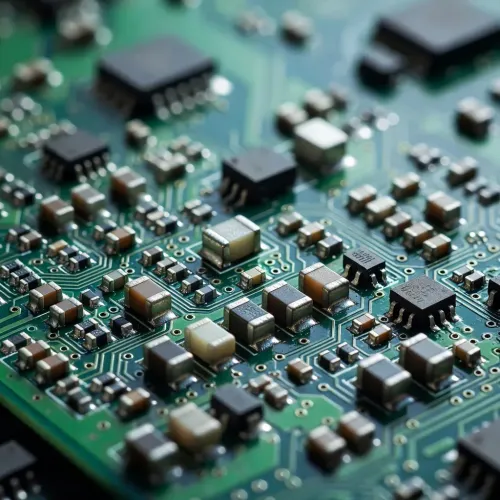
Multilayer ceramic capacitors (MLCCs) — the tiny passive components known as 'the rice of the electronics industry' — are at the centre of what Goldman Sachs has called the 'largest and longest' supply cycle in the component's history, driven almost entirely by the explosive computing demands of artificial intelligence (AI). The bottleneck, already straining global supply chains, is expected to deepen as AI infrastructure spending accelerates through 2026 and beyond.
Why AI is the primary demand driver
The rapid build-out of power-hungry data centres to support AI training and inference workloads is the single biggest catalyst behind the current MLCC shortage. A dedicated AI server requires up to 28,000 MLCC units per machine — a 13-fold increase compared with a standard server configuration, according to China Securities. That staggering multiplier effect means even modest growth in AI server shipments translates into an enormous incremental pull on MLCC supply.
Katsuya Sase, CEO of Japanese MLCC maker Taiyo Yuden, described the pace of demand growth as 'scary' — a rare admission from an industry executive accustomed to cyclical swings but clearly caught off-guard by the current magnitude.
Nvidia's Rubin platform doubles board-level MLCC count
Nvidia's next-generation computing platform, the Rubin architecture, is set to debut later in 2026 and will use 12,000 MLCC units on a single board, according to TrendForce. That compares with 6,500 units on the current GB200 platform — an increase of roughly 85% per board. As Rubin-based systems ramp in volume, the incremental demand on MLCC manufacturers will intensify further.
The concentration of demand around a single supplier's roadmap underscores how tightly the semiconductor and passive-component ecosystems are now intertwined, leaving MLCC makers with little buffer time to scale capacity.
EVs and humanoid robots add to the pressure
Beyond AI infrastructure, a second wave of demand is emerging from electric vehicles (EVs), autonomous cars, and humanoid robots. An EV equipped with Level 2+ autonomous driving capabilities requires more than 10,000 MLCC units, according to Murata Manufacturing, the world's largest MLCC maker. By contrast, a typical smartphone uses only 800 to 1,000 units — illustrating how the centre of gravity for MLCC demand has shifted decisively away from consumer electronics.
The convergence of AI servers, autonomous vehicles, and robotics as simultaneous demand vectors is historically unprecedented, and industry analysts note that capacity expansion cycles for MLCCs typically span multiple years, making near-term relief unlikely.
What's next for the MLCC market
With Goldman Sachs characterising this as the most significant upcycle the MLCC industry has ever seen, all eyes are on leading manufacturers — including Murata Manufacturing, Taiyo Yuden, and peers across Japan, South Korea, and China — to announce capacity investment timelines. Pricing pressure and allocation constraints are likely to persist well into 2027, with AI server OEMs and EV manufacturers most exposed to supply-chain disruption.
Point of View
But it also reveals a structural blind spot: the passive-component industry — long treated as a commodity afterthought — is now a genuine chokepoint in the AI supply chain. Mainstream coverage fixates on GPU scarcity, yet the bottleneck on a component costing fractions of a cent could prove equally disruptive to AI server delivery timelines. The simultaneity of demand from AI infrastructure, EVs, and robotics is new territory; prior cycles were driven by a single end-market, giving manufacturers a clearer signal to invest. Investors tracking the AI hardware trade should watch MLCC pricing and allocation data as a leading indicator of data-centre build-out velocity.
NationPress
13 Sept 2026
Frequently Asked Questions
What is an MLCC and why does it matter for AI?
An MLCC (multilayer ceramic capacitor) is a miniature passive electronic component that stabilises voltage and filters electrical noise in circuits. AI servers require up to 28,000 MLCCs per unit — 13 times more than a standard server — making them a critical bottleneck in AI hardware supply chains.
Why is there an MLCC supply shortage in 2026?
The surge in AI data-centre construction has created unprecedented demand for high-capacitance MLCCs , compounded by rising adoption in EVs and humanoid robots . Goldman Sachs describes this as the 'largest and longest' upcycle in MLCC history, and manufacturing capacity expansions typically take years to come online.
How many MLCCs does Nvidia's Rubin platform use?
Nvidia's Rubin architecture, set to debut later in 2026 , uses 12,000 MLCC units on a single board, according to TrendForce . That is nearly double the 6,500 units used on the current GB200 platform, significantly amplifying demand as Rubin systems ramp up.
Which companies make most of the world's MLCCs?
Murata Manufacturing of Japan is the world's largest MLCC maker, followed by Taiyo Yuden , also Japanese . Other producers span South Korea and China , though the market remains heavily concentrated among a handful of Japanese manufacturers who set the pace for capacity investment.
How does MLCC demand in EVs compare to smartphones?
An EV with Level 2+ autonomous driving capabilities requires more than 10,000 MLCCs , according to Murata Manufacturing . A typical smartphone needs only 800 to 1,000 units, illustrating how the demand centre of gravity has shifted dramatically away from consumer electronics.