EU threatens Pakistan's GSP+ trade access over human rights failures
Synopsis
The EU has delivered its bluntest warning to date: Pakistan's GSP+ privileges — worth over 7.1 billion euros in annual exports and 732 million euros in saved tariffs — are no longer assured. With Brussels documenting regression on enforced disappearances, minority rights, and judicial independence, and a stricter 32-convention framework arriving in 2027, Islamabad faces a closing window to reform or risk a trade shock its textile-dependent economy can ill afford.
Key Takeaways
The EU has warned Pakistan that its GSP+ trade access is 'far from guaranteed' without verifiable human rights progress.
In 2024 , over 7.1 billion euros of Pakistani exports used GSP+ preferences; Islamabad saved roughly 732 million euros in tariffs.
Textiles and garments make up 70–76% of Pakistan's EU exports; losing GSP+ could add tariffs of 9–12% on key products.
The European Commission's 2023–2025 review found Pakistan regressed on enforced disappearances, minority rights, judicial independence, and press freedom.
273 new enforced disappearance cases were registered in 2025 alone, with no convictions recorded.
A revised EU GSP framework from 1 January 2027 will require compliance with 32 conventions ; Pakistan must reapply under stricter rules after 2028 .
The European Parliament and the EU delegation to Pakistan have issued their starkest warning yet to Islamabad, making clear that merely ratifying conventions and enacting domestic legislation will no longer be sufficient to retain privileged access to the European Union's market under the Generalised Scheme of Preferences Plus (GSP+). The ultimatum, reported by the European Conservative, comes after Pakistan's continued failure to demonstrate credible progress on enforced disappearances, political repression, and suppression of minorities.
What EU Officials Said
In early September 2026, Spanish MEP Sandra Gomez Lopez raised pointed questions before the European Parliament's Subcommittee on Human Rights, challenging the value of Pakistan's commitments in the absence of deadlines, measurable objectives, and consequences when impunity persists. Two days later, EU Ambassador to Pakistan Raimundas Karoblis stated that the country was at a 'very critical moment' and warned that the future of GSP+ was 'far from guaranteed' without verifiable forward progress.
What Pakistan Stands to Lose
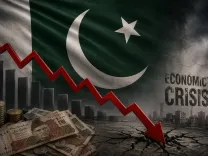
The stakes are substantial. Pakistan is the GSP+ programme's single largest beneficiary, having participated since 2014. In 2024, approximately 7.5 billion euros worth of Pakistani exports were eligible for the preferences, with more than 7.1 billion euros actually utilising them — a utilisation rate of close to 95 per cent. The European Commission estimates that Islamabad saved around 732 million euros in tariffs that year alone.
Textiles and garments account for approximately 70 to 76 per cent of Pakistan's exports to the EU. Losing GSP+ status could result in additional tariffs of between 9 and 12 per cent on certain textile products, dealing a severe blow to the country's export-dependent manufacturing sector.
What Brussels Found: A Worsening Record
The European Commission's latest review, covering the 2023–2025 period, concludes that Pakistan has regressed in several critical areas, including enforced disappearances, extrajudicial killings, freedom of expression, pressure on journalists, minority rights, judicial independence, and the persistence of forced labour. Notably, no convictions have been recorded in cases of enforced disappearances. The Pakistani commission charged with investigating such cases registered 273 new cases in 2025 alone, while human rights organisations argue the true figure is considerably higher.
New Rules and the Road Ahead
The EU's revised GSP framework is set to come into force on 1 January 2027, expanding the number of mandatory compliance conventions from 27 to 32. Pakistan will temporarily retain its current GSP+ status until the end of 2028, but will subsequently be required to submit a fresh application under significantly stricter criteria. This gives Islamabad a narrow window to demonstrate reform — or face a structural downgrade in its trade relationship with Europe.
This comes amid growing international scrutiny of Pakistan's governance record, with rights groups arguing that the country's institutional failings extend well beyond any single administration. How Islamabad responds to the EU's escalating pressure in the coming months is likely to shape both its economic and diplomatic standing well into the next decade.
Point of View
Not stagnation. Pakistan has moved backwards. Brussels documenting that shift in an official review closes the diplomatic escape route Islamabad has historically relied upon. The real exposure is asymmetric: the EU absorbs the loss of a trading partner; Pakistan's textile sector, which runs on GSP+ margins, faces an existential adjustment. Islamabad's strategic calculation has long been that geopolitical utility — as a buffer state, as a counter-terrorism partner — insulates it from economic conditionality. The EU's sharpening tone suggests that calculus is running out of room.
NationPress
13 Sept 2026
Frequently Asked Questions
What is GSP+ and why does it matter to Pakistan?
GSP+ is the EU's Generalised Scheme of Preferences Plus, which grants developing countries reduced or zero tariffs on exports to the European market in exchange for compliance with international conventions on human rights, labour, environment, and governance. For Pakistan, it covers over 7.1 billion euros in annual exports and saved Islamabad an estimated 732 million euros in tariffs in 2024 alone.
Why is the EU threatening to withdraw Pakistan's GSP+ access?
The European Commission's 2023–2025 review concluded that Pakistan has regressed — not merely stalled — on key human rights benchmarks including enforced disappearances, extrajudicial killings, minority rights, press freedom, and judicial independence. EU officials, including Ambassador Raimundas Karoblis, have stated that GSP+ continuity is 'far from guaranteed' without credible and verifiable reform.
What would losing GSP+ mean for Pakistan's economy?
Textiles and garments account for 70–76% of Pakistan's exports to the EU. Losing GSP+ status could impose additional tariffs of between 9 and 12 per cent on certain textile products, sharply eroding the price competitiveness of Pakistan's largest export category and potentially disrupting hundreds of thousands of jobs in the sector.
What are the new EU GSP rules coming in 2027?
The EU's revised GSP framework takes effect on 1 January 2027 and increases the number of mandatory compliance conventions from 27 to 32. Pakistan retains its current GSP+ status until end-2028, after which it must submit a fresh application under the stricter criteria — giving Islamabad a narrow window to demonstrate reform.
How serious is Pakistan's enforced disappearances problem according to the EU?
The European Commission's review found that no convictions have been recorded in enforced disappearance cases. Pakistan's own investigative commission registered 273 new cases in 2025, while human rights organisations argue the actual figure is significantly higher, indicating systemic impunity rather than isolated incidents.