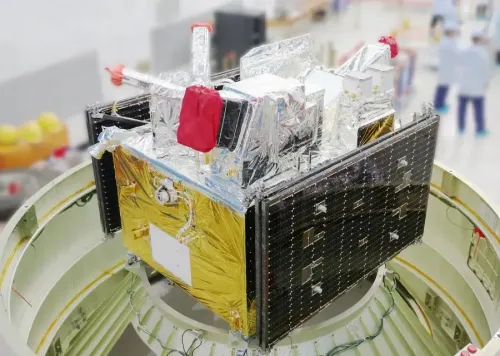
GalaxySpace eyes Hong Kong, Macau as launchpads for global space push
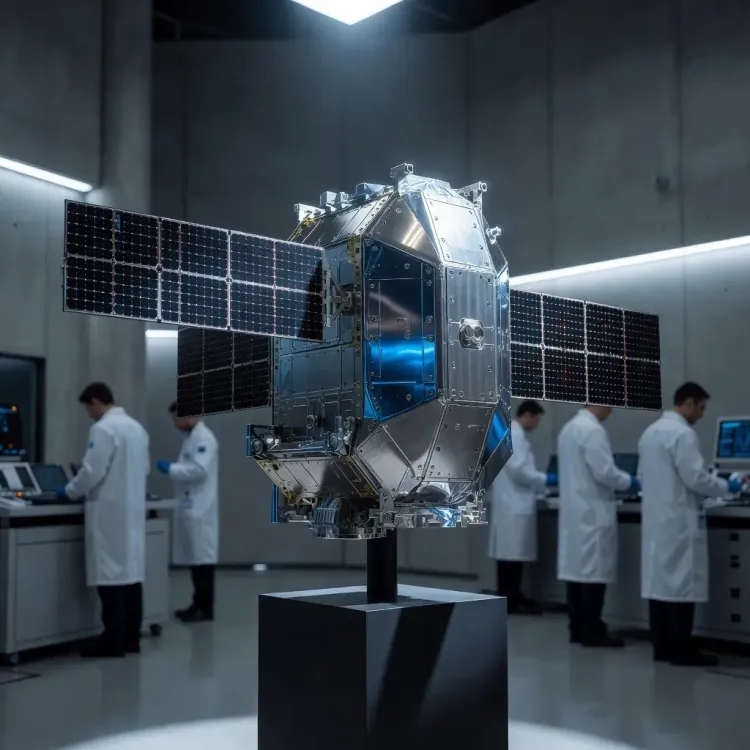
Synopsis
GalaxySpace, which has launched 46 satellites and is pursuing a domestic IPO, is betting that Hong Kong and Macau's international networks can do what Beijing's manufacturing muscle alone cannot: open global markets for China's commercial space industry.
Key Takeaways
GalaxySpace , founded in 2018 and headquartered in Beijing , has launched 46 self-developed low-Earth orbit satellites as of July 2026 .
The company began its domestic IPO process earlier in 2026 , seeking capital to scale satellite manufacturing and international operations.
Xin Yichun , General Manager of Government and Corporate Partnership , said Hong Kong and Macau hold 'irreplaceable strategic positions' in China 's commercial space sector.
Beijing is positioned as the R&D and manufacturing hub, while Hong Kong and Macau are seen as international business gateways for overseas expansion.
GalaxySpace is pushing for formal three-city collaboration to use Hong Kong and Macau as platforms for Chinese commercial space technology to reach global markets.
GalaxySpace, one of China's leading commercial satellite companies, has identified Hong Kong and Macau as indispensable gateways for taking its low-Earth orbit technologies and services to international markets, executives said on Wednesday, 10 July 2026, during a media tour in Beijing. The Beijing-based firm is actively pushing for deeper three-city collaboration as it accelerates a domestic IPO process launched earlier this year.
The Strategic Case for Hong Kong and Macau
Xin Yichun, General Manager of Government and Corporate Partnership at GalaxySpace, articulated the company's rationale plainly. 'We have come to realise in recent years that Hong Kong and Macau hold irreplaceable strategic positions and industrial value in the development of China's commercial space sector,' Xin told reporters.
While Beijing anchors the country's satellite research, development, and manufacturing capabilities, Hong Kong and Macau contribute international business networks and global financial connectivity — attributes the mainland capital cannot fully replicate. Together, the three cities form what Xin described as a complementary ecosystem for outbound commercial space expansion.
Why It Matters
GalaxySpace, founded in 2018, has launched a total of 46 self-developed satellites as of July 2026, cementing its position at the forefront of China's commercial space sector. The company develops low-Earth orbit satellites and communications technologies at a time when Beijing is intensifying efforts to build a domestically competitive satellite network industry.
The explicit framing of Hong Kong and Macau as overseas expansion platforms signals a broader strategic shift: Chinese commercial space firms are increasingly looking beyond domestic contracts toward global customers, and the two special administrative regions offer the regulatory familiarity and international credibility to bridge that gap.
The Competitive Backdrop
China's commercial space sector is racing to challenge the dominance of established players such as SpaceX's Starlink constellation, which has set the global benchmark for low-Earth orbit broadband. GalaxySpace's push to internationalise through Hong Kong and Macau reflects an industry-wide recognition that technology alone is insufficient — market access and trusted intermediary hubs are equally critical.
The company's ongoing domestic IPO process, initiated earlier in 2026, is expected to provide capital to scale both satellite manufacturing and overseas business development efforts.
What's Next
GalaxySpace is advocating for structured collaboration frameworks across Beijing, Hong Kong, and Macau, positioning the two cities as 'an important platform for Chinese commercial technology and services to expand overseas,' according to Xin Yichun. How quickly those frameworks materialise — and whether they gain traction with international partners — will determine the pace of the company's global footprint expansion.
Investors and industry observers will be watching the company's IPO timeline and any formal partnership announcements involving Hong Kong- or Macau-based entities as early indicators of execution.
Point of View
But geopolitical friction and trust deficits limit direct market access in the West. By routing overseas expansion through Hong Kong and Macau — jurisdictions with common-law frameworks and established international finance links — Chinese space firms are effectively using institutional arbitrage to sidestep barriers that pure technology cannot overcome. What mainstream coverage underplays is that this strategy is not unique to GalaxySpace; it mirrors the playbook used by Chinese fintech and semiconductor firms seeking credibility with foreign partners. The real test will come when GalaxySpace attempts to sign contracts with non-Chinese operators, where US-aligned export-control regimes and allied-nation procurement rules will pose harder limits than any domestic IPO can resolve.
NationPress
9 Oct 2026
Frequently Asked Questions
What is GalaxySpace and what does it do?
GalaxySpace is a Beijing -based commercial space company founded in 2018 that develops low-Earth orbit satellites and communications technologies. As of July 2026 , it has launched 46 self-developed satellites and is one of China 's leading commercial space firms.
Why is GalaxySpace focusing on Hong Kong and Macau?
GalaxySpace views Hong Kong and Macau as international business gateways that complement Beijing 's satellite manufacturing strengths. According to Xin Yichun , the two cities offer global connectivity and business networks that position them as platforms for Chinese commercial space technology to reach overseas markets.
Is GalaxySpace planning an IPO?
GalaxySpace began its initial public offering process for a domestic listing earlier in 2026 . The IPO is expected to provide capital to support both satellite manufacturing scale-up and international expansion efforts.
How many satellites has GalaxySpace launched?
GalaxySpace has launched a total of 46 self-developed satellites as of July 2026 . The company focuses on low-Earth orbit satellite development and communications technologies.
How does GalaxySpace fit into China's broader space ambitions?
GalaxySpace is part of Beijing 's accelerating push to develop a globally competitive commercial space and domestic satellite network industry. The company's internationalisation strategy via Hong Kong and Macau reflects a wider industry effort to challenge established global players in the low-Earth orbit communications market.