Piyush Goyal urges Japanese firms to build '1,580 Suzukis' in India
Synopsis
Commerce Minister Piyush Goyal took India's investment pitch to Tokyo with a striking ask: turn every one of the 1,580 Japanese companies operating in India into the next Suzuki. With a $30 trillion GDP target by 2047 and a 200-strong business delegation in tow, the visit signals that New Delhi is treating Japan as a cornerstone of its next manufacturing leap — not just a bilateral courtesy call.
Key Takeaways
Commerce Minister Piyush Goyal addressed the JIBCC and JCCI in Tokyo on 24 August , urging Japanese firms to scale up India operations.
Goyal called for 1,580 Suzukis to be created from the Japanese companies currently represented by the JIBCC .
India's working-age population averages below 30 years and is expected to stay young for several decades, the minister noted.
India targets growth from a $4 trillion economy today to $30 trillion by 2047 , marking 100 years of independence .
Goyal called for the number of Japanese companies in India to double within this decade.
The minister is leading a delegation of more than 200 Indian business representatives on a four-day Japan visit from 24–27 August .
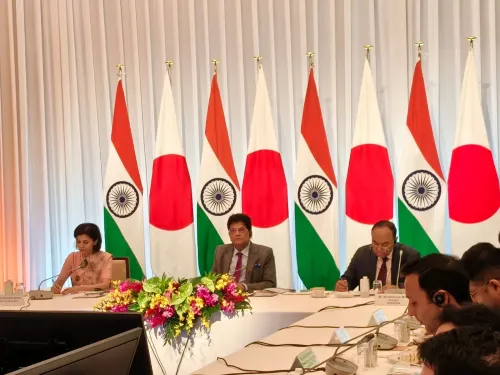
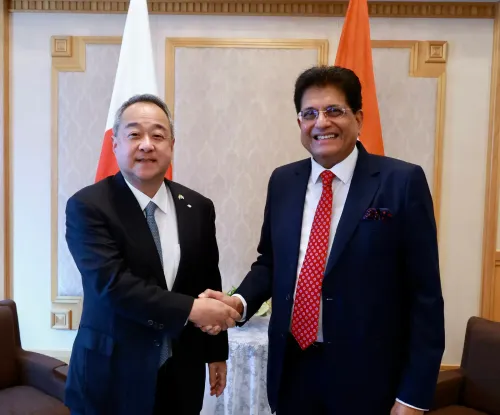
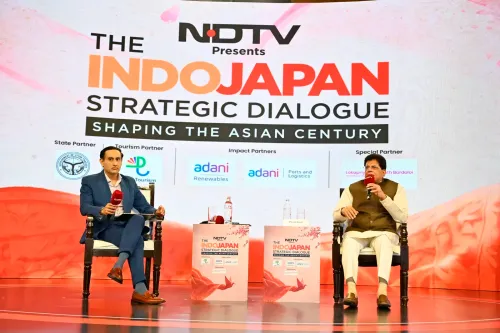
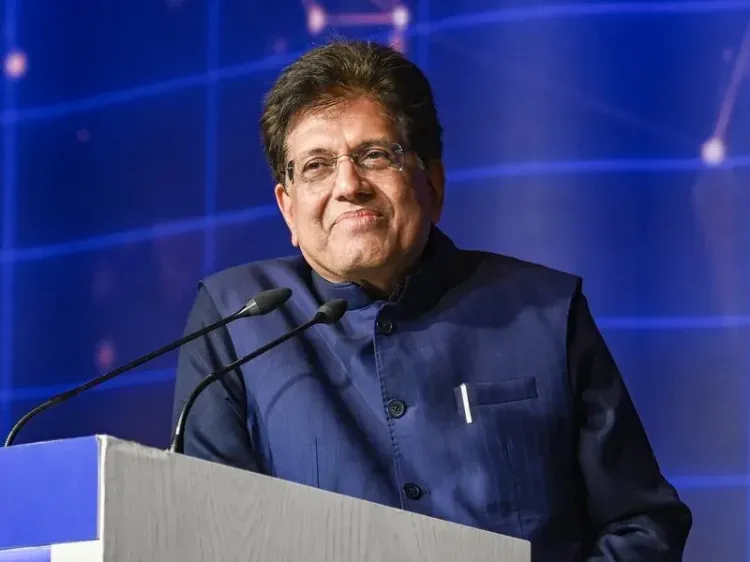
Commerce and Industry Minister Piyush Goyal on Monday, 24 August called on Japanese companies to replicate the success of Suzuki in India at scale, telling a high-level business gathering in Tokyo that he wants to see 1,580 Suzukis emerge from the Japanese firms already operating in the country. The appeal came at a round-table with the Japan India Business Consultative Committee (JIBCC) of the Japan Chamber of Commerce and Industry (JCCI) and the Embassy of India.
The '1,580 Suzukis' Vision
Goyal invoked Suzuki's four-decade journey in India as the benchmark for what Japanese investment can achieve. “Today, we see some of the largest and most profitable operations coming out of India,” he said, before turning the spotlight on the broader opportunity. “This is the journey we would like to see for the 1,580 companies you represent. We would like to see 1,580 Suzukis being created out of India,” the minister added. The number refers to the tally of Japanese firms currently operating in the country that the JIBCC represents.
Why India, Why Now
Goyal highlighted three structural advantages he believes make India uniquely attractive for Japanese capital. First, a young workforce: India's average working-age population is below 30 years and is projected to remain so for several decades, offering a deep talent pool and a fast-expanding consumer base. Second, scale: India is currently a $4 trillion economy with an stated ambition to reach $30 trillion by 2047, when the country marks 100 years of independence. “It is an ambitious target, but 1.4 billion Indians are committed to making this happen,” Goyal said. Third, the bilateral milestone: he urged both sides to use the 75th anniversary of India-Japan diplomatic relations to deepen business collaboration and set the terms of their economic partnership for the coming decade.
Doubling Japanese Presence in India
The minister set a concrete directional target for the bilateral relationship. “I believe that this decade should see that number double from the current levels,” he said, referring to the count of Japanese companies active in India. The call to double the corporate footprint signals that New Delhi views Japan not merely as a technology or infrastructure partner but as a long-term anchor investor in its manufacturing and services ecosystem. This comes amid India's broader push to attract allied-nation capital as global supply chains diversify away from single-country dependencies.
The Delegation and Visit
Goyal is leading an Indian business delegation of more than 200 representatives on a four-day visit to Japan from 24 August to 27 August. The scale of the delegation underscores the strategic weight New Delhi is placing on the Tokyo engagement. Notably, the visit coincides with renewed global interest in India as a manufacturing destination, with several multinational firms publicly scouting alternatives to China-centric production networks.
What Comes Next
No specific investment commitments or policy announcements were disclosed at the round-table, but the meeting is expected to feed into ongoing free-trade and investment treaty discussions between the two governments. Industry watchers will track whether the '1,580 Suzukis' framing translates into concrete facilitation measures — faster approvals, dedicated industrial zones, or bilateral skilling programmes — in the weeks following the visit.
Point of View
580 Suzukis' line is memorable diplomacy, but the harder question is whether the policy architecture exists to back it. Suzuki's India success was built on decades of stable regulation, a captive small-car market, and patient capital — conditions that are not automatically replicable across 1,580 firms in diverse sectors. India's investment facilitation record remains uneven: land acquisition, labour law complexity, and approval timelines continue to feature in Japanese business surveys as friction points. Doubling Japanese corporate presence is a worthy ambition, but it will require more than a round-table speech — it demands verifiable ease-of-doing-business improvements that Goyal's own ministry has struggled to fully deliver.
NationPress
9 Oct 2026
Frequently Asked Questions
What did Piyush Goyal say to Japanese firms in Tokyo?
Commerce Minister Piyush Goyal urged the 1,580 Japanese companies operating in India to replicate Suzuki's four-decade success story in the country. Speaking at a JIBCC round-table in Tokyo on 24 August, he said India wants to see '1,580 Suzukis' emerge from these firms.
Why did Goyal use Suzuki as a benchmark?
Suzuki's journey in India over the last four decades has made it one of the country's most profitable automotive operations, making it a widely recognised symbol of successful Japanese investment in India. Goyal cited it to illustrate the scale of opportunity available to other Japanese companies.
What is India's economic target by 2047?
India aims to grow from its current $4 trillion economy to $30 trillion by 2047, when it will mark 100 years of independence. Goyal described this as an ambitious but achievable goal backed by the commitment of 1.4 billion Indians.
How many Indian business representatives accompanied Goyal to Japan?
Commerce Minister Goyal is leading a delegation of more than 200 Indian business representatives on a four-day visit to Japan from 24 to 27 August.
What is the significance of the 75th anniversary of India-Japan diplomatic relations?
Goyal called on both countries to use the 75th anniversary of their diplomatic ties as a launchpad to deepen business collaboration and shape their economic partnership for the next decade, framing it as a strategic inflection point for bilateral investment.