Suzuki Motor targets 4 million India vehicles by FY30, factory productivity up 50%
Synopsis
Suzuki Motor is making its biggest India manufacturing bet yet — targeting 4 million vehicles a year by FY30 from 2.9 million today, while boosting factory productivity by 50% and halving development timelines. The push, anchored across plants in Haryana, Gujarat, and a new Sanand site, also doubles down on a multi-powertrain approach that bucks the industry's BEV-only momentum.
Key Takeaways
Suzuki Motor targets annual India production capacity of 4 million vehicles by FY30 , up from 2.9 million units currently.
Factory productivity at the Manesar plant will be raised by 50% ; development efficiency to improve by 30% from fiscal 2020 levels.
Vehicle development times are targeted to be halved by 2030 through concurrent engineering and modularisation.
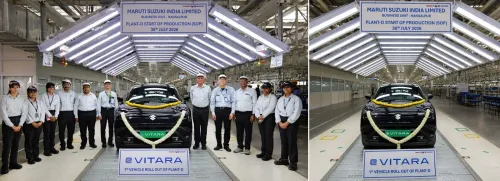
A fourth production line at Hansalpur, Gujarat recently added capacity, bringing that plant to 1 million units annually.
A new plant is planned at Sanand ; existing facilities operate at Gurugram , Manesar , and Kharkhoda .
Suzuki will retain a multi-powertrain strategy , developing BEVs, hybrids, ICE, CNG, flex-fuel, and carbon-neutral-fuel vehicles simultaneously.
Japanese automaker Suzuki Motor Corporation on 25 September 2026 announced plans to nearly double its annual production capacity in India to 4 million vehicles by FY30, up from the current 2.9 million units, while targeting a 50% boost in factory productivity at its Manesar, Haryana plant. The company also aims to halve vehicle development times by 2030 as part of a sweeping overhaul of its global manufacturing and engineering operations.
Key Announcements from the Top
Suzuki Motor Corporation President Toshihiro Suzuki outlined the company's ambitions, stating the automaker would improve development efficiency by 30% from fiscal 2020 levels. He identified Japan and India as the twin pillars of Suzuki's global business foundation, emphasising that technologies developed in Japan would be shared with Maruti Suzuki India and adapted for individual markets.
'Technology is shared. Products are regionally optimised. This is our mindset, and this is how Suzuki competes,' Toshihiro Suzuki said.
India Capacity Expansion in Detail
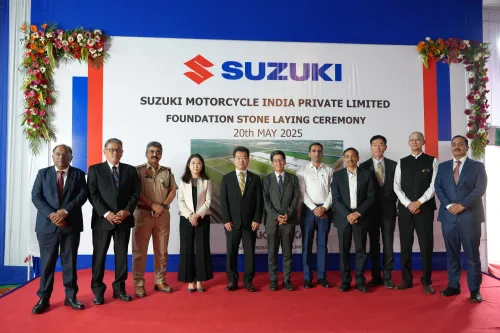
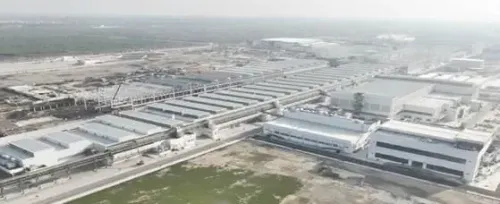
Suzuki's India manufacturing network is among the most expansive in the country. A fourth production line at Hansalpur, Gujarat recently pushed the plant's annual capacity to 1 million units. The company also operates facilities in Gurugram, Manesar, and Kharkhoda, with a new site planned at Sanand. This multi-plant strategy positions India as a cornerstone of Suzuki's global output ambitions.
Engineering Overhaul: Concurrent Development and Modularisation
A key shift in Suzuki's methodology involves moving from sequential to concurrent engineering — running planning, design, production engineering, quality, and procurement processes simultaneously rather than one after another. The company also plans to deepen digital engineering capabilities and expand modularisation, allowing shared components across product lines. These changes are intended to compress the time from concept to market and tighten integration between development and manufacturing.
Multi-Powertrain Strategy Over BEV-Only Bet
Bucking a trend seen at several global rivals, Suzuki said it would not pivot exclusively to battery electric vehicles (BEVs). Instead, it will continue developing BEVs and hybrids alongside internal-combustion-engine (ICE), compressed natural gas (CNG), flex-fuel, and carbon-neutral-fuel technologies. The automaker argued that variations in electricity generation, renewable energy availability, charging infrastructure, fuel supply, and government policy across markets make a single propulsion technology commercially unviable on a global scale. This is a notably conservative stance compared to European and Chinese automakers accelerating their BEV transitions.
What This Means for India's Auto Sector
Maruti Suzuki already commands the largest share of India's passenger vehicle market. A capacity jump to 4 million units by FY30 would further entrench its position and put pressure on rivals including Hyundai, Tata Motors, and Mahindra to match production investments. The move also signals strong confidence in India's long-term demand trajectory, particularly as rural and semi-urban markets continue to expand. With the Sanand plant still in planning and the Kharkhoda facility scaling up, Suzuki's India capex cycle is far from complete.
Point of View
But it also risks leaving Suzuki behind if BEV adoption accelerates faster than the company's conservative modelling assumes. The concurrent-engineering pivot is the less-discussed but arguably more consequential commitment: if it genuinely halves development cycles, Suzuki could out-refresh rivals in a market increasingly won on newness.
NationPress
25 Sept 2026
Frequently Asked Questions
What is Suzuki Motor's India production capacity target by FY30?
Suzuki Motor aims to reach an annual production capacity of 4 million vehicles in India by FY30, up from the current level of 2.9 million units. The expansion spans existing plants in Gurugram, Manesar, Kharkhoda, and Hansalpur, with a new facility planned at Sanand.
How will Suzuki improve factory productivity and development speed?
Suzuki plans to raise factory productivity by 50% above current standards at its Manesar plant and improve overall development efficiency by 30% from fiscal 2020 levels. It also targets halving vehicle development times by 2030 through concurrent engineering, digital tools, and modularisation.
Why is Suzuki not going all-in on battery electric vehicles?
Suzuki argues that differences in electricity generation, charging infrastructure, fuel availability, and government policy across markets make a single propulsion technology impractical globally. It will continue developing BEVs and hybrids alongside ICE, CNG, flex-fuel, and carbon-neutral-fuel vehicles.
What is the role of India in Suzuki's global strategy?
Suzuki Motor President Toshihiro Suzuki identified India and Japan as the twin centres of the company's global business foundation. Technologies developed in Japan will be shared with Maruti Suzuki India and adapted for specific markets, making India a key node in Suzuki's global manufacturing and product network.
What is the significance of the new Hansalpur production line?
A fourth production line at Hansalpur, Gujarat recently brought that plant's annual capacity to 1 million units, contributing to the current total of 2.9 million units across Suzuki's Indian operations. It is one of several steps toward the 4-million-unit FY30 target.