Maruti Suzuki's 4th Gujarat plant live: e VITARA leads 10 lakh unit push
Synopsis
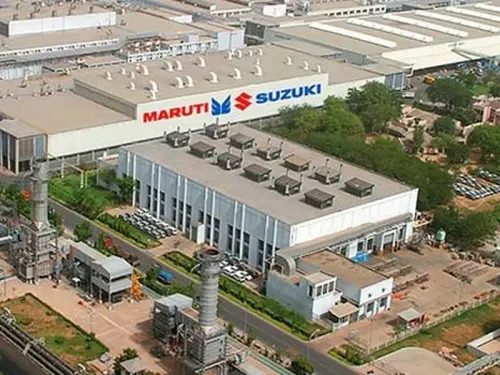
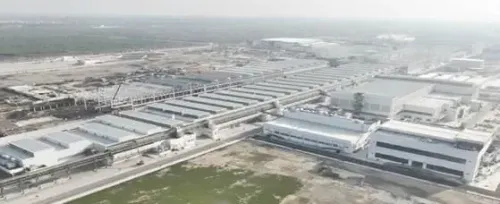
Maruti Suzuki has quietly pulled off a global first — its Hansalpur plant in Gujarat is now the only single-location Suzuki facility on the planet with one-million-unit annual capacity. That the first car off Plant D's line is the e VITARA, not another petrol model, signals how seriously India's largest carmaker is now chasing the EV market it once sat out.
Key Takeaways
Maruti Suzuki commissioned its fourth plant at Hansalpur, Gujarat on 30 July 2025 , raising site capacity to 10 lakh units per annum.
Hansalpur is now the world's first single-location Suzuki facility with one-million-vehicle annual capacity and India's largest passenger vehicle complex at one site.
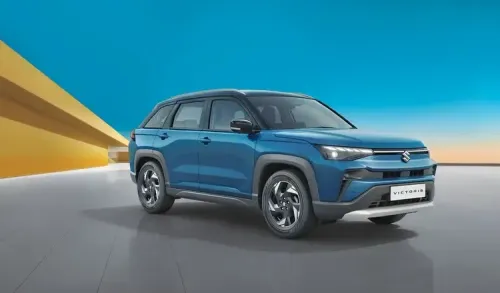
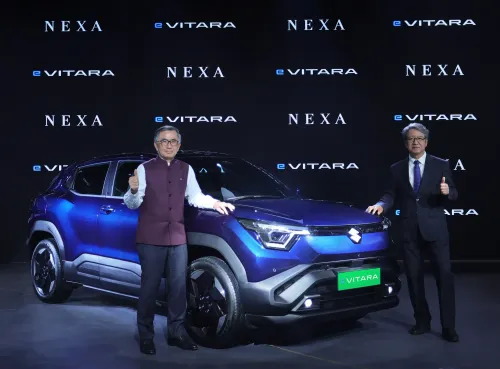
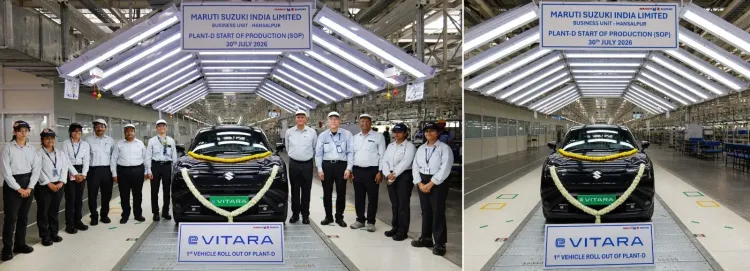
The new Plant D will initially manufacture the e VITARA BEV, marking Maruti Suzuki's entry into electric passenger vehicles.
Cumulative investment at Hansalpur stands at ₹25,288.7 crore , including ₹3,900 crore for Plant D.
Maruti Suzuki's total India manufacturing capacity has risen to 2.9 million units per annum .
The facility's in-plant railway siding — the world's first modal-shift project under Verra's VCS — has moved over 7.5 lakh vehicles since March 2023 .
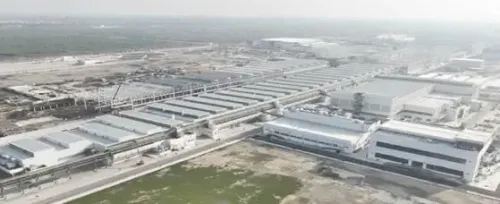
Maruti Suzuki India Limited on Thursday, 30 July 2025, commenced commercial production at its fourth manufacturing plant at Hansalpur, Gujarat, pushing the site's annual output capacity to 10 lakh units — making it the largest passenger vehicle manufacturing complex at a single location in India and the first Suzuki facility anywhere in the world to cross the one-million-vehicle threshold at one site. The newly commissioned Plant D will initially roll out the company's flagship battery electric vehicle, the e VITARA, marking Maruti Suzuki's formal entry into the electric passenger vehicle segment.
Milestone Numbers at Hansalpur
The addition of Plant D lifts Hansalpur's capacity from 7.5 lakh units to 10 lakh units per annum. Maruti Suzuki's total manufacturing footprint across India now stands at 2.9 million units per year. The company has made a cumulative investment of ₹25,288.7 crore at the Hansalpur facility, with an estimated ₹3,900 crore channelled into the newly commissioned plant alone.
e VITARA and the EV Pivot
Plant D's first production mandate is the e VITARA, the automaker's inaugural mass-market electric vehicle. The Hansalpur complex already manufactures the FRONX, Baleno, and Swift alongside the new EV. By anchoring EV production at its most capacious facility, Maruti Suzuki is signalling that electric vehicles are no longer a peripheral play but a core volume strategy — a notable shift for a brand that was late to India's EV transition.
Export Hub and Green Logistics
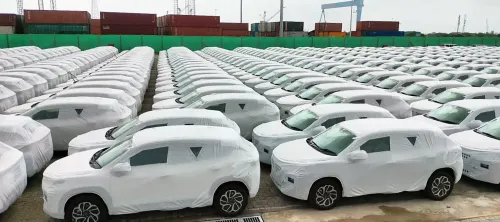
Hansalpur has become a critical export base for the company, accounting for nearly 47 per cent of Maruti Suzuki's total overseas shipments during FY2025-26. On the logistics front, the facility commissioned India's first in-plant railway siding for automobiles in March 2024 under the Prime Minister's GatiShakti programme. Since rail dispatches began in March 2023, more than 7.5 lakh vehicles have been transported through the network, reducing carbon emissions, fuel consumption, and road congestion. In February 2026, the Gujarat in-plant railway siding became the world's first modal-shift transportation project to be registered under Verra's Verified Carbon Standard (VCS) programme, recognising its environmental contribution.
Skill Development and Local Ecosystem
Beyond the production floor, Maruti Suzuki has established two Japan-India Institutes for Manufacturing (JIMs) — in Mehsana and Gandhinagar — in collaboration with the governments of India and Japan. More than 1,200 students have been trained at these institutes, strengthening the local automotive talent pipeline in Gujarat.
What Comes Next
With Plant D operational and the e VITARA in production, industry watchers will monitor how quickly Maruti Suzuki scales EV volumes and whether Hansalpur's export share grows further as global demand for Indian-made EVs builds. The facility's global-first status as a single-location million-unit plant also sets a benchmark for the broader Indian auto sector.
Point of View
MG, and now Maruti itself. The global-first capacity milestone at Hansalpur is a manufacturing story, but the real headline is strategic: India's volume leader is no longer hedging on electrification. The risk is execution — the e VITARA enters a market where consumer charging infrastructure remains uneven and EV penetration, while growing, is still under 3% of total passenger vehicle sales. Whether Hansalpur's scale becomes an asset or an overcapacity liability depends on how fast that infrastructure gap closes.
NationPress
13 Sept 2026
Frequently Asked Questions
What is the significance of Maruti Suzuki's fourth plant at Hansalpur?
Plant D at Hansalpur takes the facility's annual capacity to 10 lakh units, making it India's largest single-location passenger vehicle complex and the first Suzuki plant globally to hit one million units at a single site. It will initially produce the e VITARA electric vehicle.
What is the e VITARA and why is it being made at Hansalpur?
The e VITARA is Maruti Suzuki's flagship battery electric vehicle and the company's first mass-market EV. It has been assigned to the newly commissioned Plant D at Hansalpur, signalling that Maruti Suzuki is scaling EV production at its highest-capacity facility.
How much has Maruti Suzuki invested in the Hansalpur facility?
The company has made a cumulative investment of ₹25,288.7 crore at Hansalpur, with an estimated ₹3,900 crore going into the newly commissioned fourth plant.
What is the total manufacturing capacity of Maruti Suzuki in India now?
With Plant D operational, Maruti Suzuki's total manufacturing capacity across India has increased to 2.9 million units per annum.
What is the Japan-India Institute for Manufacturing (JIM) set up at Gujarat?
Maruti Suzuki has established two JIMs — in Mehsana and Gandhinagar — in collaboration with the governments of India and Japan. More than 1,200 students have been trained there to build local automotive manufacturing skills in Gujarat.