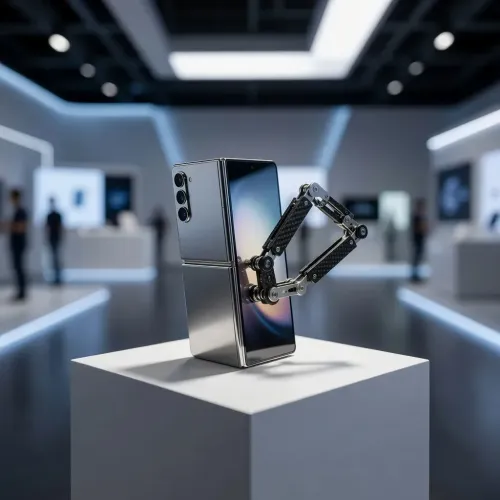
Honor Robot Phone debuts motorised gimbal camera with embodied AI
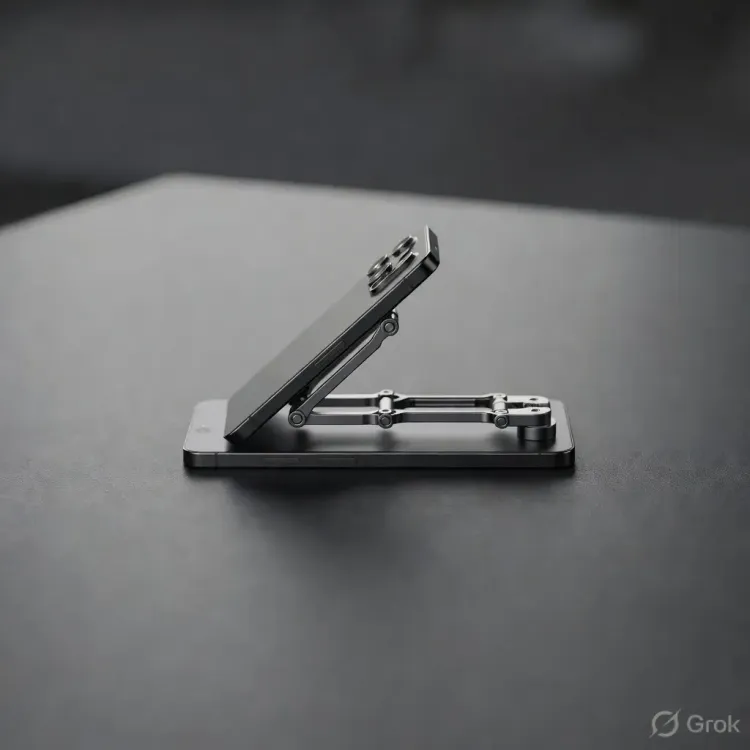
Synopsis
Honor's Robot Phone packs a gesture-activated three-axis gimbal that nods back at users and auto-tracks them on calls — backed by Arri cinema optics and embodied AI — marking one of the most mechanically ambitious smartphone launches of 2026.
Key Takeaways
Honor launched the Robot Phone on Wednesday, 12 August 2026 in Shenzhen , featuring a motorised gimbal camera with four degrees of motion .
The gimbal mechanism required 60 manufacturing processes and 100 precision components , according to the company.
The device uses embodied AI to automatically pan and tilt the camera, keeping users in frame during calls and live streams.
Honor has partnered with German cinema camera maker Arri to power the handset's imaging technology.
The launch targets growth in a cooling global smartphone market, with Honor seeking to expand beyond China following its spin-off from Huawei Technologies .
Honor, the Shenzhen-based smartphone brand spun off from Huawei Technologies, launched its Robot Phone on Wednesday, 12 August 2026, featuring a motorised three-axis mechanical gimbal camera designed to nod, tilt, and track users automatically — a hardware bet the company hopes will reignite demand in a cooling global smartphone market.
What the Robot Phone does
The gimbal camera unfurls from the rear of the device when activated by a hand gesture, offering four degrees of motion for video stabilisation and interactive responses such as nodding and tilting. According to the company, the mechanism required 60 manufacturing processes and 100 precision components to engineer. The camera automatically pans and tilts to keep subjects in frame during phone calls and live streams as users move around.
Embodied AI at the core
Beyond the standard agentic AI capabilities that execute tasks across apps, the Robot Phone deploys what Honor calls embodied AI — intelligence tied directly to physical hardware performance rather than software alone. The distinction positions the device as more than a software upgrade cycle, linking computational intelligence to mechanical actuation in a way few consumer handsets have attempted at scale.
The Arri partnership and filmmaker appeal
Honor has partnered with Arri, the German cinema camera manufacturer, to underpin the handset's imaging technology. The collaboration targets mobile filmmakers and content creators, a segment that has become a key battleground for premium Android devices. Arri's involvement signals Honor's intent to compete on optical credibility alongside mechanical novelty.
Why it matters: hardware differentiation in a flat market
Global smartphone shipments have faced sustained pressure, with industry trackers including IDC flagging slowing replacement cycles and saturated markets. Honor's robotic camera strategy represents a deliberate pivot away from incremental spec upgrades — processing speed, battery capacity, screen resolution — toward experiential hardware that is difficult to replicate purely in software. The move echoes earlier pivots by rivals who leaned into foldable form factors to justify premium pricing.
What's next
The key test for the Robot Phone will be its reception outside China, where Honor has been rebuilding distribution networks since its separation from Huawei Technologies. Whether the embodied AI and Arri-backed imaging proposition translates into meaningful volume in Europe, Southeast Asia, and other markets will determine if motorised camera hardware becomes a durable product category or a short-lived novelty. Analysts and competitors will be watching closely when sales data emerges in the coming quarters.
Point of View
Mechanical differentiation is one of the few vectors left that cannot be instantly copied via an over-the-air update. The Arri partnership is particularly telling — it borrows credibility from professional cinema, a playbook Leica and Hasselblad pioneered with rivals, suggesting Honor sees imaging heritage as a proxy for premium positioning in markets where its brand equity is still thin. What mainstream coverage underplays is the supply-chain complexity signal: 60 manufacturing processes and 100 components for a single camera module raises questions about yield rates, repairability, and cost at scale. If the mechanism proves fragile or expensive to produce at volume, the novelty could become a liability rather than a moat.
NationPress
26 Sept 2026
Frequently Asked Questions
What is the Honor Robot Phone?
The Honor Robot Phone is a smartphone launched on Wednesday, 12 August 2026 by Honor , the Shenzhen -based brand spun off from Huawei Technologies . It features a motorised three-axis mechanical gimbal camera that can nod, tilt, and automatically track users, activated by a hand gesture.
How does the Honor Robot Phone's gimbal camera work?
The gimbal camera unfurls from the back of the device when triggered by a hand gesture and offers four degrees of motion. It uses embodied AI to automatically pan and tilt, keeping users centred in the frame during phone calls or live streams. The mechanism involves 60 manufacturing processes and 100 precision components.
Why did Honor partner with Arri for the Robot Phone?
Honor partnered with Arri , the German professional cinema camera manufacturer, to power the Robot Phone's imaging technology and appeal to mobile filmmakers and content creators. The collaboration is intended to lend optical credibility to the device in a competitive premium smartphone segment.
What is embodied AI in the context of the Honor Robot Phone?
Embodied AI, as used in the Robot Phone, refers to artificial intelligence that is directly coupled to physical hardware — in this case, the motorised gimbal — rather than operating purely in software. It enables the camera to physically respond to user movement in real time, going beyond standard agentic AI that executes tasks across apps.
How does the Robot Phone fit into the broader smartphone market?
Global smartphone shipments have been under sustained pressure from slowing replacement cycles and market saturation, according to industry trackers including IDC . Honor's robotic camera approach is a bid to differentiate through experiential hardware at a time when software-based AI features are becoming standard across Android devices.