Hua Hong pours $2b into Wuxi fab to ride AI chip demand surge
Synopsis
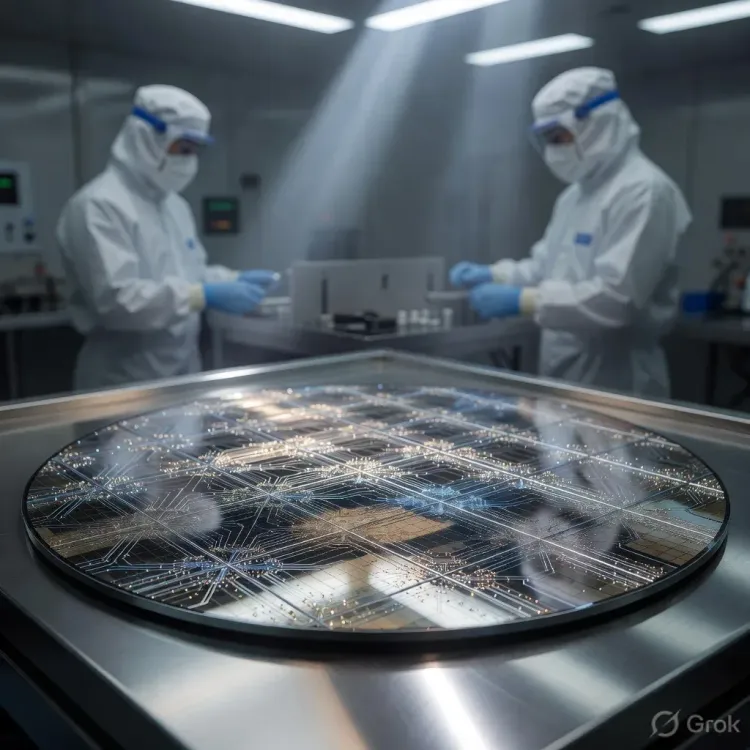
Hua Hong Grace Semiconductor is investing US$2 billion — part of a US$4.2 billion state-backed joint venture — to add 55,000 wafers per month in Wuxi, a 30% capacity surge driven by AI demand and US chip curbs. It is China's boldest foundry expansion announcement of 2026.
Key Takeaways
Hua Hong Grace Semiconductor is investing US$2 billion in a new 12-inch speciality fab in Wuxi , disclosed in a Hong Kong Stock Exchange filing on 2 September 2026 .
The new plant is Hua Hong 's third facility in Wuxi and will add 55,000 wafers per month — roughly a 30 per cent increase in its Wuxi capacity.
Total project funding reaches US$4.2 billion after state-backed entities, including the Hua Xin Fund (a vehicle of China's National Integrated Circuit Industry Investment Fund ), contribute the remaining capital.
Hua Hong and its Shanghai subsidiary hold a controlling 51 per cent stake, contributing US$1 billion and US$1.1 billion respectively.
The expansion targets surging domestic demand for AI infrastructure amid tightening US export controls on advanced semiconductor equipment.
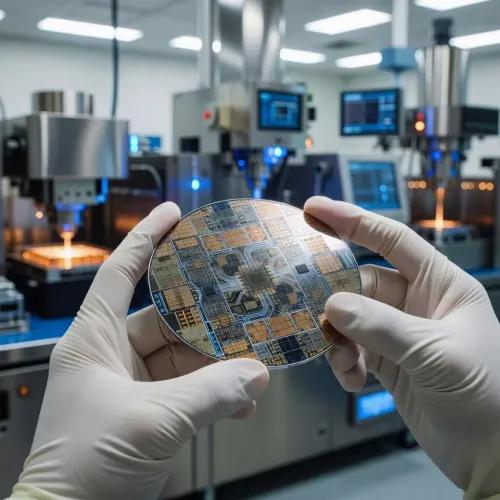
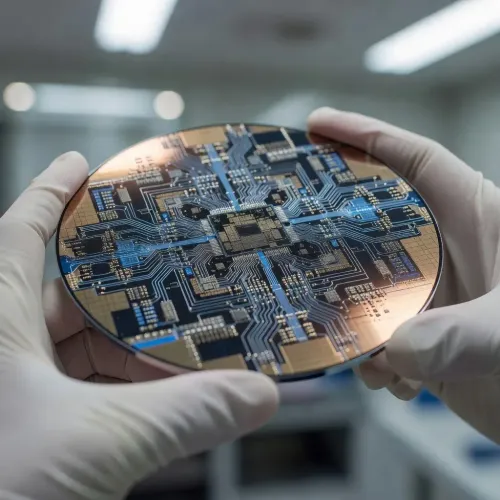
Hua Hong Grace Semiconductor, China's second-largest contract chipmaker, is committing US$2 billion to build a new 12-inch speciality wafer line in Wuxi, Jiangsu province, as surging domestic demand for AI infrastructure and mounting US technology restrictions accelerate the country's push for semiconductor self-sufficiency. The company disclosed the plan in a filing to the Hong Kong Stock Exchange on Tuesday, 2 September 2026.
What Hua Hong Is Building
The new facility will be Hua Hong Grace Semiconductor's third fab in Wuxi, a city that has emerged as a central node in China's chip manufacturing ecosystem. Once fully operational, the plant will add 55,000 wafers to the company's monthly production capacity — a roughly 30 per cent increase over its existing Wuxi output, according to the company filing.State Capital and Joint-Venture Structure
The project is structured as a joint venture with state-backed investment entities. Hua Hong Grace Semiconductor and its Shanghai subsidiary are contributing US$1 billion and US$1.1 billion respectively, retaining a controlling 51 per cent stake. The remaining capital comes from state entities including the Hua Xin Fund, a vehicle for China's National Integrated Circuit Industry Investment Fund — widely known as the 'Big Fund'. When combined with the state capital injection, total project funding reaches US$4.2 billion, the filing states.Why It Matters
The investment signals how aggressively China's foundry sector is scaling capacity to serve a domestic AI buildout that can no longer rely on leading-edge foreign chips. Hua Hong specialises in mature-node and speciality processes — precisely the segments where demand is rising fastest for power management, display drivers, and embedded memory used in AI-adjacent devices. The move also reduces dependence on peers such as Semiconductor Manufacturing International Corp (SMIC) and diversifies the country's contract manufacturing base alongside players like Yangtze Memory Technologies Corporation (YMTC) and ChangXin Memory Technologies.The Competitive Backdrop
The Big Fund's participation underscores that Beijing views foundry capacity as a strategic asset rather than a purely commercial one. US export controls have repeatedly targeted advanced chipmaking equipment, pushing Chinese fabs to maximise output at nodes they can already access. A 30 per cent capacity expansion at Wuxi — funded partly by sovereign capital — is a direct operational response to that constraint.What's Next
The timeline for the new fab's ramp-up was not disclosed in the filing. Investors and industry analysts will be watching whether Hua Hong's speciality-process focus allows it to capture incremental AI supply-chain contracts that larger rivals cannot fulfil at scale. The project's success will also test whether state-co-funded joint ventures can move from groundbreaking to volume production faster than previous cycles.Point of View
MCUs, and embedded non-volatile memory — precisely the unglamorous chips that every AI server, EV, and smart appliance needs in volume and that US controls have not yet choked off. The 30 per cent monthly capacity jump also quietly pressures SMIC to differentiate upward toward more advanced nodes, reshaping the domestic foundry pecking order. Investors should watch whether Hua Hong's customer mix shifts toward domestic AI fabless designers — a signal that the broader import-substitution cycle is accelerating faster than export-control designers anticipated.
NationPress
18 Oct 2026
Frequently Asked Questions
What is Hua Hong Grace Semiconductor building in Wuxi?
Hua Hong Grace Semiconductor is constructing a new 12-inch speciality wafer fabrication line in Wuxi , Jiangsu , its third facility in the city. The plant will add 55,000 wafers per month to the company's production capacity, a roughly 30 per cent increase over its existing Wuxi output.
How much is being invested in the Hua Hong Wuxi fab project?
Total funding for the project amounts to US$4.2 billion . Hua Hong Grace Semiconductor and its Shanghai subsidiary are contributing US$2 billion combined, while state-backed entities — including the Hua Xin Fund , a vehicle of China's National Integrated Circuit Industry Investment Fund (Big Fund) — are providing the remainder.
Why is Hua Hong expanding chip capacity now?
Hua Hong is scaling up to meet skyrocketing domestic demand for AI infrastructure components and to reduce reliance on foreign suppliers amid tightening US export controls. Speciality-process chips — the company's core focus — are in high demand for AI -adjacent devices, power management systems, and embedded memory applications.
What role does China's Big Fund play in the Hua Hong project?
China's National Integrated Circuit Industry Investment Fund , known as the 'Big Fund' , is participating through its vehicle the Hua Xin Fund as a minority state investor in the joint venture. The state entities collectively fund roughly half the US$4.2 billion total project cost, while Hua Hong retains a controlling 51 per cent stake.
How does Hua Hong compare to other Chinese chipmakers like SMIC?
Hua Hong Grace Semiconductor is China 's second-largest contract chipmaker, behind Semiconductor Manufacturing International Corp (SMIC) . Unlike SMIC , which pursues more advanced logic nodes, Hua Hong specialises in mature and speciality processes — a segment seeing renewed investment as domestic AI and consumer electronics demand intensifies.