US tariffs up to 25%: India well-placed, say economists
Synopsis
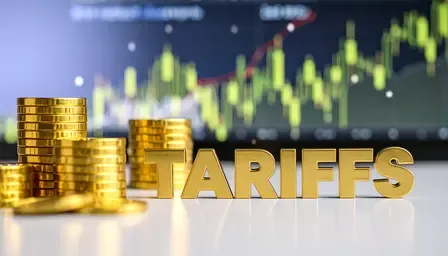
Washington's proposed tariffs of up to 25% on Indian goods have a built-in escape hatch: sign the trade deal and the rate could fall to around 17%. Economists say India's diverse exports and new FTAs give it room to manoeuvre. Industry's bigger worry is uncertainty, not the duties themselves.
Key Takeaways
The US has proposed tariffs of up to 25 per cent on Indian goods after an investigation into manufacturing overcapacity.
A lower rate of around 17 per cent could apply if India and the US conclude a Bilateral Trade Agreement .
ASSOCHAM 's Dr SP Sharma said exports have reached about $60 billion this fiscal and could approach $100 billion by year-end.
PHDCCI 's Ranjeet Mehta said China , Bangladesh and Vietnam face higher tariffs, giving India a slight edge.
The Commerce Ministry said India has no ‘structural excess capacity’ in any sector and remains committed to an early BTA.
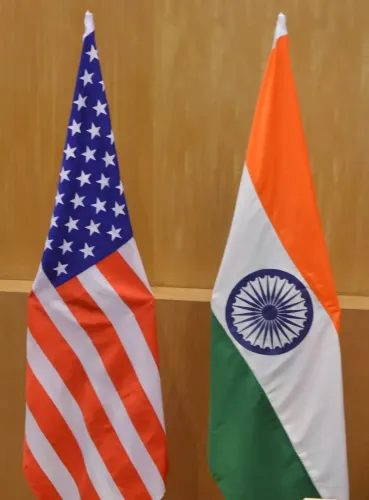
India is well-positioned to absorb the impact of proposed US tariffs of up to 25 per cent on Indian goods, industry leaders and economists said in New Delhi on Thursday, 26 November 2026. They cited the country's diversified export base, a growing network of free trade agreements (FTAs) and ongoing talks with Washington on a bilateral trade pact.
The remarks came a day after the United States proposed the duties following an investigation into manufacturing overcapacity. Washington also indicated that a lower rate of around 17 per cent could apply if the two countries reach a trade agreement.
Diversification Seen as India's Main Cushion
Dr SP Sharma, Chief Economist at the Associated Chambers of Commerce and Industry of India (ASSOCHAM), said India's economic fundamentals and the spread of its exports would help soften any tariff-related disruption.
“Such variations or volatility arise in the US from time to time, and India remains resilient. India's exports are growing significantly and our strength lies in diversification,” Sharma said.
He noted that the US remains India's largest export destination, but that alternative markets are also growing. According to Sharma, India's exports have already reached around $60 billion in the current financial year and are expected to approach $100 billion by the end of the fiscal year.
Competitors Face Steeper Duties
Ranjeet Mehta, CEO and Secretary General of the PHD Chamber of Commerce and Industry (PHDCCI), said the proposed duties were not aimed only at India. He pointed out that competing Asian economies such as China, Bangladesh and Vietnam face even higher tariff burdens.
“India's tariffs are lower than those of competing Asian economies. That gives us a slight edge,” Mehta said.
However, he said uncertainty around global trade policy was a bigger challenge than the tariffs themselves. “It is not so much the tariffs but the prevailing uncertainty that is causing businesses to hesitate before engaging with the US. Predictability and transparency in tariff policies are important for industry,” he said.
FTAs and the India-US Trade Deal in Focus
Mehta credited the government for actively pursuing trade agreements with major economies. He said India had strengthened its position by advancing negotiations and signing FTAs with several partners.
“We are now in a position to conclude a very important FTA with the European Union, while agreements with the UAE, New Zealand and the UK have enhanced India's global trade engagement,” he said.
He added that much would depend on progress in the India-US Bilateral Trade Agreement (BTA). “What we understand is that if India concludes the trade deal, it could be subject to a tariff of around 17 per cent, whereas without an agreement, the tariff could rise to 25 per cent. This makes the trade negotiations critical,” Mehta said.
He said India should negotiate from a position of economic strength and use its growing role in global supply chains as leverage.
What the Commerce Ministry Said
The Commerce Ministry has said India does not have ‘structural excess capacity’ in any sector. It reiterated its commitment to working with the US towards an early conclusion of the proposed BTA.
The ministry said India had engaged constructively throughout the Section 301 investigation. It maintained that any trade concerns should be resolved through the ongoing negotiations between the two countries.
With an 8 percentage-point gap between the deal and no-deal tariff scenarios, the pace of the BTA talks is now likely to shape how Indian exporters plan their US business in the months ahead.
Point of View
And New Delhi should read it that way. Industry's optimism rests on diversification, but the US is still India's largest market, so even a ‘slight edge’ over Asian rivals does not offset a tariff wall. Mehta's point about uncertainty is the most telling: unpredictable rules freeze investment and orders faster than any duty. India's FTA momentum with the UK, UAE, New Zealand and possibly the EU is a real hedge, but it is a medium-term one, while the US deadline pressure is immediate.
NationPress
26 Nov 2026
Frequently Asked Questions
What tariffs has the US proposed on Indian goods?
The US has proposed tariffs of up to 25 per cent on Indian goods after an investigation into manufacturing overcapacity. It has indicated that a lower rate of around 17 per cent could apply if India and the US reach a trade agreement.
Why do economists say India can handle the US tariffs?
They point to India's diversified export base, its expanding network of free trade agreements and the ongoing India-US trade talks. ASSOCHAM's Dr SP Sharma said diversification is India's main strength, while PHDCCI's Ranjeet Mehta noted that rivals such as China, Bangladesh and Vietnam face higher tariffs.
How would an India-US trade deal change the tariff rate?
According to PHDCCI's Ranjeet Mehta, India could face a tariff of around 17 per cent if it concludes the Bilateral Trade Agreement, compared with up to 25 per cent without one. This makes the negotiations critical for exporters.
What has the Commerce Ministry said about the Section 301 investigation?
The Commerce Ministry said India does not have ‘structural excess capacity’ in any sector and engaged constructively throughout the investigation. It said any trade concerns should be resolved through the ongoing bilateral negotiations.
Which trade agreements is India relying on to diversify exports?
Industry leaders cited India's agreements with the UAE, New Zealand and the UK. They also referred to a potential FTA with the European Union, which Mehta said India is now in a position to conclude.