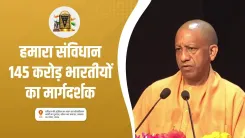
CM Yogi: Constitution gave every adult Indian the vote
Synopsis
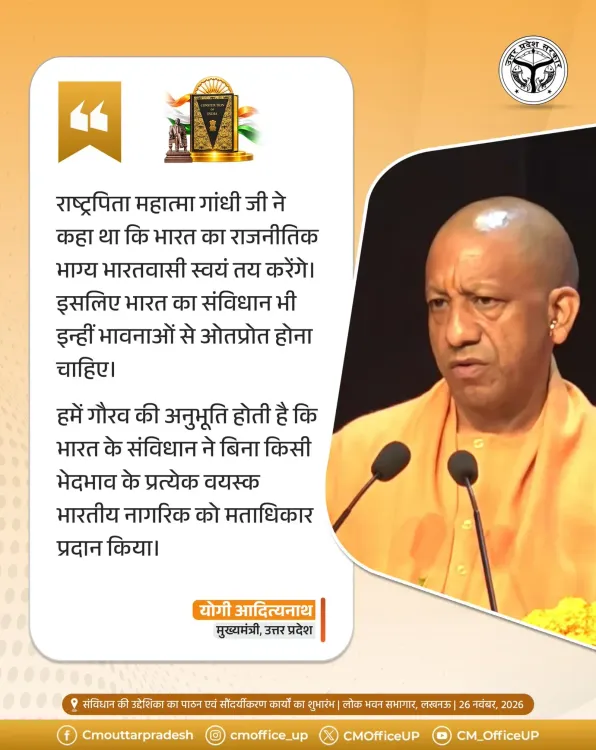
The Chief Minister's Office of Uttar Pradesh shared Yogi Adityanath's remarks linking Mahatma Gandhi's call for self-rule to universal adult franchise. The CM said the Constitution should embody that spirit and expressed pride that every adult Indian received the vote without discrimination.
Key Takeaways
The Chief Minister's Office of Uttar Pradesh posted remarks by CM Yogi Adityanath on 26 November 2026 .
He cited Mahatma Gandhi as saying Indians themselves would decide India's political destiny.
He said the Constitution should be imbued with that spirit of self-rule.
He expressed pride that the Constitution granted voting rights to every adult Indian citizen without discrimination.
The Constitution was adopted on 26 November 1949 ; Article 326 guarantees universal adult suffrage, first used in the 1951-52 general elections.
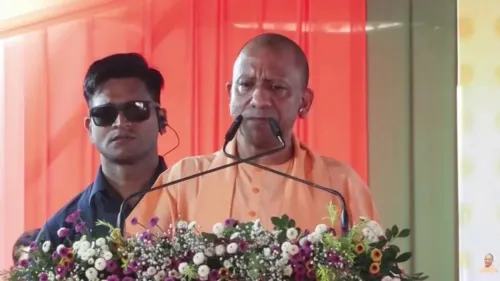
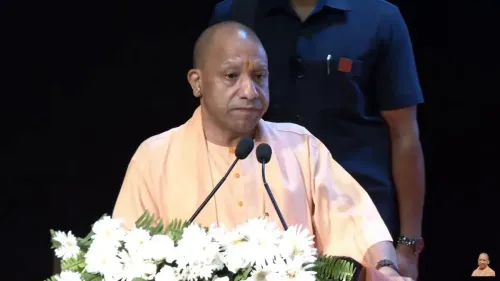
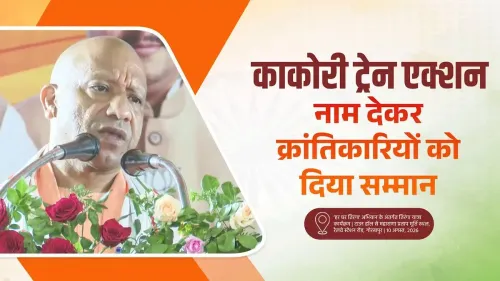
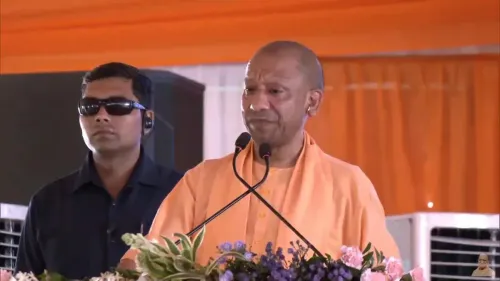
On 26 November 2026, the Chief Minister's Office of Uttar Pradesh put Chief Minister Yogi Adityanath on the record with a Constitution Day argument that starts with Gandhi and ends at the ballot box. India's political destiny, the Chief Minister said, would be written by Indians themselves — and the Constitution made that real by giving every adult citizen the vote, without discrimination.
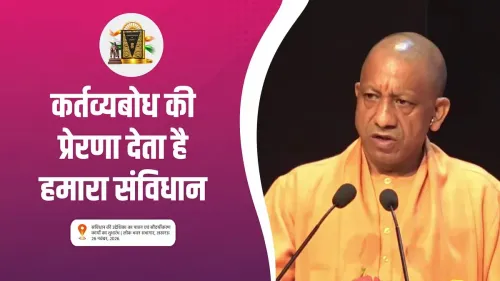
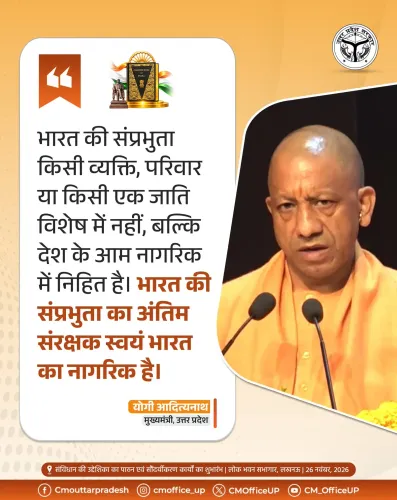
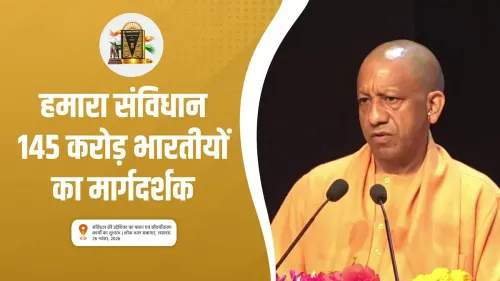
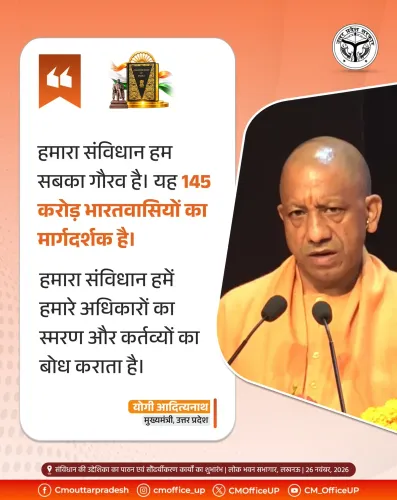
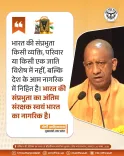
The post quoted him invoking the Father of the Nation. Rashtrapita Mahatma Gandhi, he said, had declared that India's political destiny would be decided by Indians themselves, so the Constitution had to be steeped in that spirit. 'We feel a sense of pride that India's Constitution has granted voting rights to every adult Indian citizen without any discrimination,' the quoted remarks ran.
Gandhi's self-rule, written into the founding law
Mahatma Gandhi had long argued that Indians, not outsiders, must settle India's political fate. That claim of self-rule sat at the centre of the independence movement. When the Constituent Assembly adopted the Constitution on 26 November 1949, it turned the claim into a legal architecture of democratic self-governance.
Indian leaders mark the date each year as Constitution Day, restating equality and the ballot as founding facts. The Lucknow statement sits in that recurring national pattern: a reminder of why the text still matters at the polling booth, not a new scheme or a fresh statute.
One adult, one vote, no property or literacy bar
Article 326 guaranteed universal adult suffrage. It did not wait for property, literacy, or gender filters. The first general elections of 1951-52 put that promise into practice for a newly independent electorate.
The Chief Minister's Office framed that grant of the franchise as national pride: every adult Indian citizen, without discrimination. In a country of vast social difference, that single rule — one person, one vote — remains the Constitution's most radical everyday fact.
Republic Day on 26 January will again put the document on public display. Until then, the argument from Lucknow is plain. Gandhi's insistence that Indians write their own political destiny is not a slogan. It is the ballot.
Point of View
The Uttar Pradesh Chief Minister places the ballot, not a new scheme, at the centre of constitutional pride. That is a familiar national script: Indian leaders return to Article 326 when they want to claim the moral ground of equality before the vote. Watch whether the same emphasis on a discrimination-free franchise reappears around Republic Day and the next cycle of electoral debate.
NationPress
26 Nov 2026
Frequently Asked Questions
What did Yogi Adityanath say about the Constitution on 26 November 2026?
He said Mahatma Gandhi believed Indians would decide India's political destiny, so the Constitution should reflect that spirit, and he expressed pride that it granted every adult citizen the vote without discrimination. The remarks were posted by the Chief Minister's Office of Uttar Pradesh.
Why do Indian leaders issue statements on 26 November?
26 November is Constitution Day, marking the Constituent Assembly's adoption of the Constitution in 1949. Political leaders typically reaffirm equality and universal franchise on that date as part of a recurring national observance since 1950.
What is universal adult franchise in India?
It is the right of every adult citizen to vote, without property, literacy or gender bars. Article 326 of the Constitution guarantees it, and the first general elections of 1951-52 put it into practice.
What did Mahatma Gandhi say about India's political destiny, according to the CM?
Yogi Adityanath quoted Gandhi as saying that India's political destiny would be decided by Indians themselves. The Chief Minister added that the Constitution should be imbued with those sentiments.
When did India adopt its Constitution?
The Constituent Assembly adopted the Constitution on 26 November 1949. It came into force on 26 January 1950, now marked as Republic Day.