CM Yogi hails Constitution's day-one voting rights for all
Synopsis
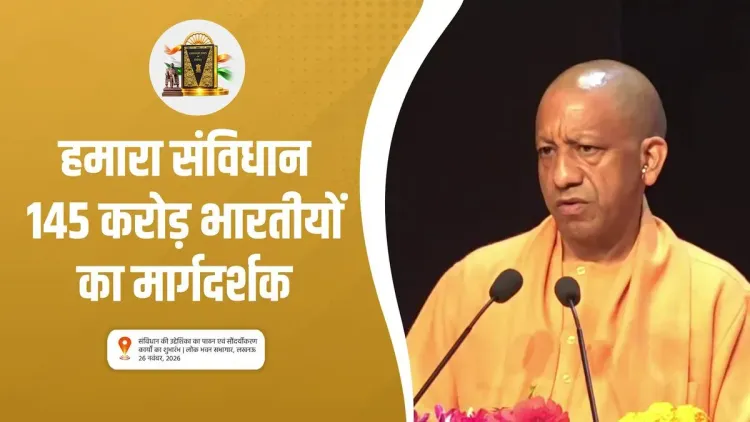
On Constitution Day, the UP Chief Minister's Office quoted Yogi Adityanath celebrating India's Constitution for granting every adult the vote from day one, without caste, region, language or gender bars.
Key Takeaways
The Chief Minister's Office of Uttar Pradesh posted a Constitution Day statement attributed to Chief Minister Yogi Adityanath on 26 November.
He said India's Constitution gave every adult citizen the full right to vote from day one without discrimination of caste, region, language or gender.
The Constitution was adopted on 26 November 1949 and came into force on 26 January 1950.
Article 326 provides for adult suffrage with no property, literacy or gender restriction.
India's first general elections under that principle were held in 1951-52.
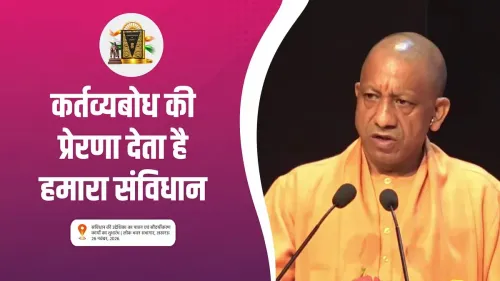
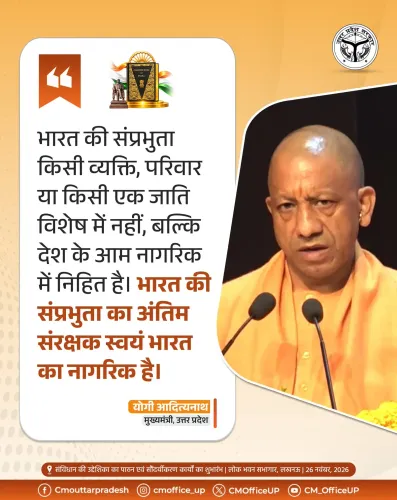
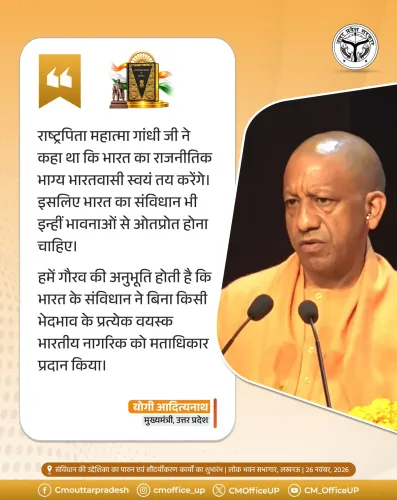
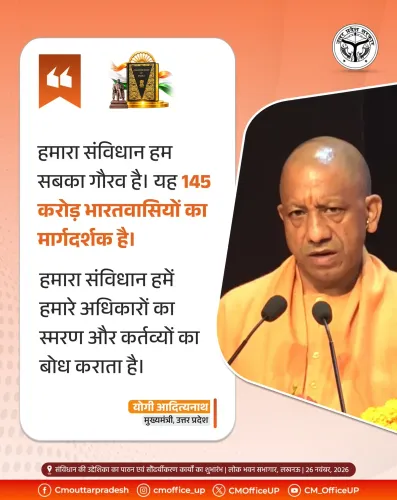
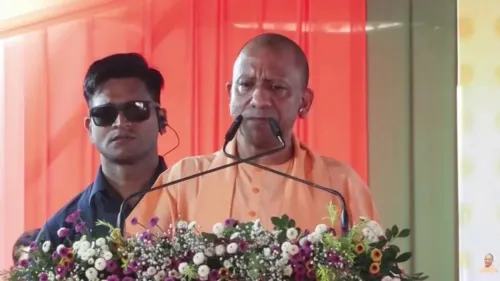
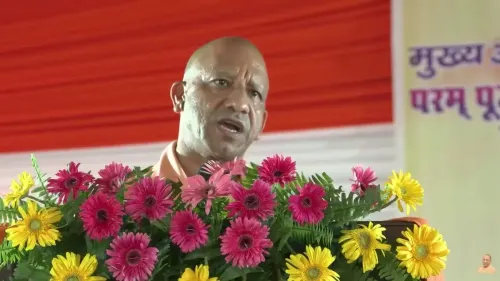
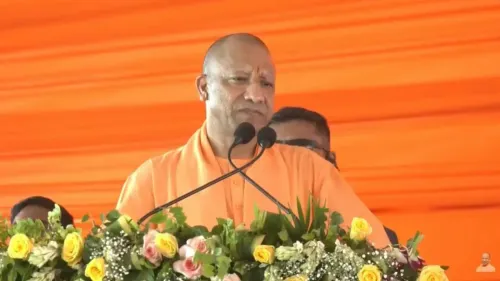
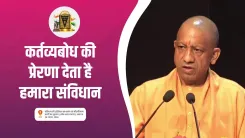
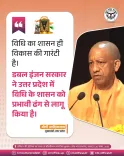
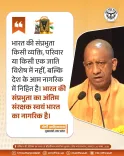
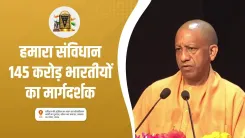
On 26 November, the Chief Minister's Office of Uttar Pradesh carried a Constitution Day message from Chief Minister Yogi Adityanath. India's founding charter, he said, is among the world's distinctive constitutions because it gave every adult citizen the full right to vote from day one — without discrimination of caste, region, language or gender.
The office attributed the words to the Chief Minister. In translation, the post says: 'Today we have the pride that India's Constitution is one of those distinctive constitutions in the world which, from the very first day, gave every adult Indian citizen the complete right to vote without any discrimination on the basis of caste, region, language or gender.' The original Hindi stressed the phrase pehle hi din se (from the very first day).
Article 326 and a franchise without tests
The boast maps onto the text. The Constitution of India was adopted on 26 November 1949 and came into force on 26 January 1950. Article 326 set elections to the Lok Sabha and the state assemblies on the basis of adult suffrage. There was no property qualification, no literacy test, and no bar on women.
That was not how most of the world had done it. Several older democracies still filtered voters by wealth, education or sex well into the twentieth century. Independent India chose the opposite at birth. The first general elections of 1951-52 then put the principle on the ground for the world's largest electorate.
Why Uttar Pradesh's CM returned to the same founding fact
State leaders on Constitution Day routinely flag this inclusive feature of the constitutional order. Successive governments have kept the principle, expanding electoral rolls rather than shrinking who counts as a voter. For Uttar Pradesh — India's most populous state — adult suffrage is not a slogan. It is the machinery that has produced every assembly since the first polls.
Chief Minister Yogi Adityanath, in office since 2017, framed that machinery as a source of national pride. The post announced no new law and named no election date. It restated a rule: the adult Indian citizen votes as an equal, not as a member of a caste, a region, a language group or a gender.
The electorate the Constitution still names
Constitution Day on 26 November often sits beside voter-awareness work and roll revisions. The message from Lucknow keeps the focus on that original equaliser. The rule is older than the Republic's first government. Every future election will still have to honour it.
Point of View
Not in any announced reform.
NationPress
26 Nov 2026
Frequently Asked Questions
When is Constitution Day observed in India?
Constitution Day, or Samvidhan Diwas, is observed every year on 26 November, the date the Constituent Assembly adopted the Constitution in 1949. The document came into force on 26 January 1950, which is Republic Day.
What did CM Yogi Adityanath say about the Constitution?
The Uttar Pradesh Chief Minister's Office quoted him saying India's Constitution is among the world's distinctive charters because it granted every adult citizen full voting rights from the first day, without discrimination of caste, region, language or gender.
What is Article 326 of the Indian Constitution?
Article 326 lays down that elections to the Lok Sabha and the state legislative assemblies shall be on the basis of adult suffrage. It did not impose property, literacy or gender restrictions.
When were India's first general elections held?
India's first general elections were held in 1951-52 after the Constitution came into force. They put universal adult franchise into practice for the world's largest electorate at the time.
Why is universal adult franchise highlighted on Constitution Day?
Official statements on 26 November routinely stress that India extended the vote to all adults at independence. The point is that the founding framework did not wait to phase in suffrage by caste, gender or literacy.