India-Japan sign first co-development defence pact: PM Modi

Synopsis
India and Japan have crossed a threshold in their defence relationship — moving from equipment imports to co-development. The first joint defence project, announced alongside a semiconductor and quantum technology supply-chain roadmap and a 1,000-plant biogas initiative, signals that the Modi-Takaichi summit was less a courtesy call and more a structural reset of one of Asia's most consequential bilateral partnerships.
Key Takeaways
India and Japan signed their first-ever defence co-development project agreement on 2 July at Hyderabad House, New Delhi .
The deal was announced by PM Narendra Modi at a joint press conference with Japanese PM Sanae Takaichi , Japan's first female prime minister.
Both nations unveiled a joint economic security roadmap covering semiconductors , quantum technology , and advanced materials .
The India-Japan Biogas Initiative will establish 1,000 biogas and organic fertiliser plants across India, reinforcing the GobarDhan programme.
Both leaders reaffirmed commitment to a free, prosperous and rules-based Indo-Pacific as a shared strategic priority.
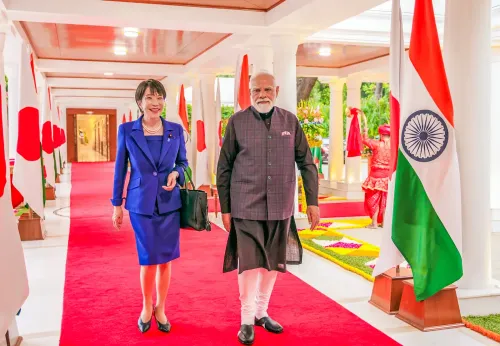
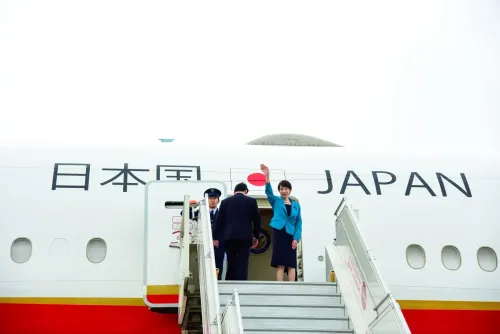
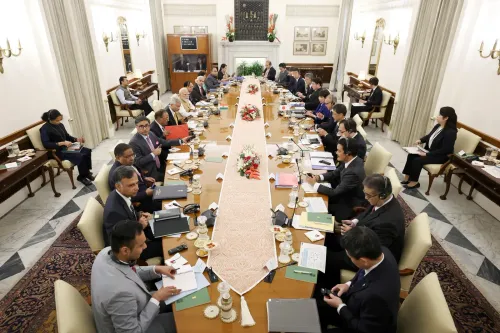
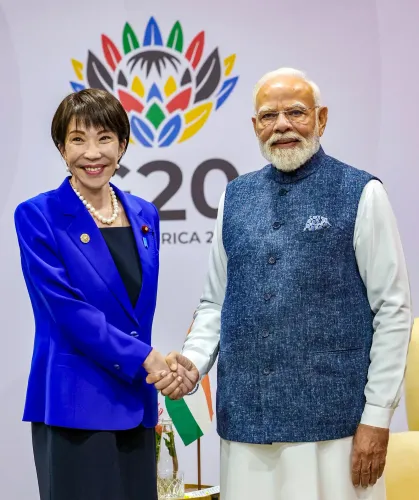
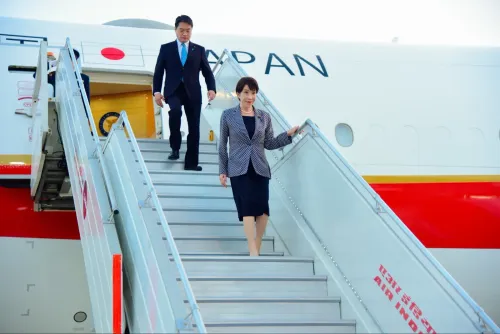
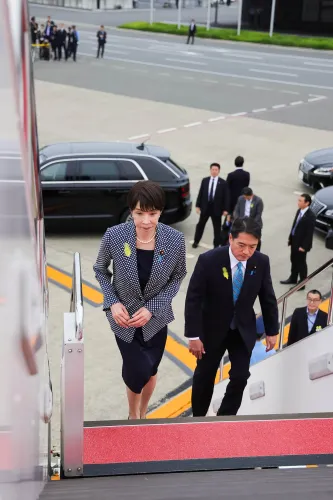
Prime Minister Narendra Modi on 2 July announced that India and Japan have signed a landmark agreement on their first-ever co-development project in the defence sector, marking a significant upgrade in bilateral security cooperation. The announcement came during a joint press conference at Hyderabad House, New Delhi, following Modi's summit meeting with Japanese Prime Minister Sanae Takaichi — Japan's first female prime minister — on her inaugural visit to India.
The Defence Agreement
The co-development pact is the first of its kind between the two nations in the defence domain. Modi described the convergence of capabilities as a strategic complement: 'The convergence of Japan's precision technology and India's software capabilities will give fresh momentum and strength to the global development of AI. In the field of defence, today we signed an agreement on the first co-development project between India and Japan.'
While specific details of the project — including the platform, technology, or timeline — were not disclosed at the press conference, the agreement signals a qualitative shift from buyer-seller dynamics toward joint industrial collaboration in defence manufacturing.
Economic Security and Supply Chain Roadmap
Beyond defence, both sides unveiled a joint roadmap for economic security, targeting supply chain resilience in strategic sectors including semiconductors, quantum technology, and advanced materials. Modi said both countries fully understand the importance of economic and energy security in an era of global uncertainty.
On the energy front, the two leaders announced the India-Japan Biogas Initiative, which aims to establish 1,000 biogas and organic fertiliser plants across India. Modi said the initiative would reinforce the government's existing GobarDhan programme and deliver fresh impetus to sustainability and rural livelihoods.
Framing the Partnership
Modi described PM Takaichi — whom he referred to as his 'younger sister' — as a 'visionary and popular leader' whose visit opens 'a new chapter' in the India-Japan Special Strategic and Global Partnership. He noted that Takaichi hails from Nara Prefecture, a centre of shared Buddhist heritage between the two nations, underscoring the civilisational depth of the relationship.
Modi also drew on remarks he had made at the recent G7 Summit, saying: 'In today's atmosphere of global upheaval, mutual trust is our greatest strategic asset. I am proud that the India-Japan partnership stands tall on this touchstone.'
Indo-Pacific and Broader Strategic Alignment
Both leaders reaffirmed that a 'free, prosperous and rules-based Indo-Pacific' is a shared priority. Modi positioned the two nations as the region's largest democracies and market economies, stating that the initiatives launched during the summit would 'create a strong foundation for stability and prosperity across the entire region.'
Notably, Japan has been a longstanding partner in India's infrastructure and industrial growth — from automotives to electronics — over several decades. The defence co-development pact now extends that partnership into a domain that carries direct strategic weight, and comes at a time when both countries are recalibrating their security postures amid shifting Indo-Pacific dynamics.
The full details of the defence co-development project and the economic security roadmap are expected to be formalised through follow-on ministerial consultations in the coming weeks.
Point of View
But the more durable shift may be the economic security roadmap. India and Japan have talked semiconductors and supply-chain resilience for years; a joint framework with named strategic sectors is a step toward operationalising what has largely been aspirational. The biogas initiative, meanwhile, is quietly significant — 1,000 plants is an ambitious rural energy target, and Japan's industrial precision could address the execution gaps that have dogged similar domestic schemes. What remains to be seen is whether the defence co-development project produces a fielded capability or becomes another MoU that stalls at the prototype stage — a fate that has befallen several earlier India bilateral defence collaborations.
NationPress
1 Oct 2026
Frequently Asked Questions
What is the India-Japan defence co-development agreement signed on 2 July?
It is the first-ever joint defence co-development project agreement between India and Japan, signed during the India-Japan Annual Summit in New Delhi on 2 July. Specific details of the platform or technology involved were not disclosed at the joint press conference, with further details expected through follow-on ministerial consultations.
Who is Sanae Takaichi and why is her visit significant?
Sanae Takaichi is Japan's Prime Minister and the country's first female prime minister. Her visit to New Delhi on 2 July for the India-Japan Annual Summit is her first official trip to India, and PM Modi described it as opening 'a new chapter' in the India-Japan Special Strategic and Global Partnership.
What is the India-Japan Biogas Initiative announced at the summit?
The India-Japan Biogas Initiative is a bilateral programme aimed at establishing 1,000 biogas and organic fertiliser plants across India. It is designed to strengthen India's existing GobarDhan initiative and boost sustainability and rural livelihoods.
What sectors are covered under the India-Japan economic security roadmap?
The joint economic security roadmap targets supply chain resilience in semiconductors, quantum technology, and advanced materials. Both governments described it as a response to global uncertainty and the need to secure strategic industrial supply chains.
How does this summit change the India-Japan relationship?
The summit marks a shift from India and Japan's traditionally infrastructure and trade-focused partnership toward defence co-development and strategic technology collaboration. The defence agreement, in particular, moves the bilateral relationship beyond buyer-seller dynamics into joint industrial production in the security domain.