India-Japan Summit: Takaichi's visit seals $62 bn investment, defence pact
Synopsis
Japan's USD 62 billion investment pledge and a first-ever defence co-development pact — covering stealth frigates and next-gen propulsion — make Takaichi's India visit the most substantive India-Japan summit in years, signalling a clear tilt toward co-production over procurement and a shared hedge against Chinese supply-chain dominance.
Key Takeaways
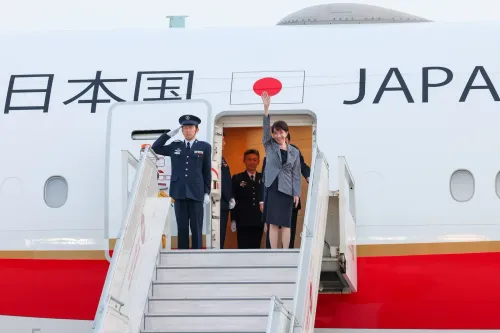
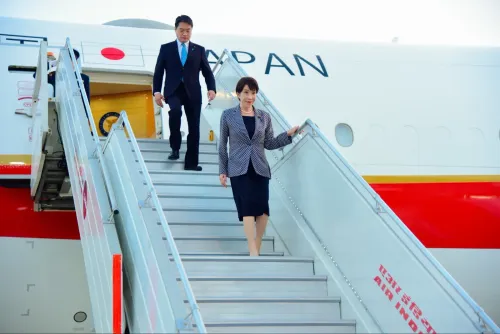
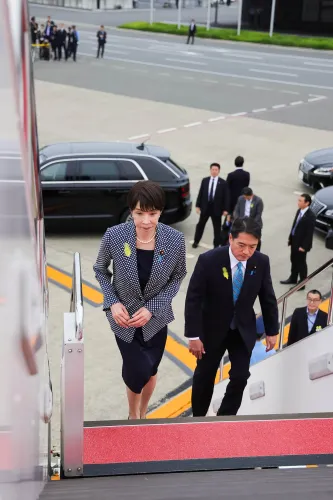
Japanese PM Sanae Takaichi visited India from 1–3 July for the 16th India–Japan Annual Summit — her first visit after assuming office.
Japan committed to invest USD 62 billion in India over the next 10 years .
The two nations signed their first-ever defence co-development agreement , covering Mogami-class stealth frigates, UNICORN masts, and next-gen warship propulsion.
A biogas initiative was announced targeting 1,000 biogas and organic fertiliser plants across India.
Both leaders reaffirmed the Mumbai–Ahmedabad High Speed Rail , with commercial operations on priority sections targeted for 2027 .
A new Maruti manufacturing complex spanning 800 acres in Haryana was virtually inaugurated during the summit.
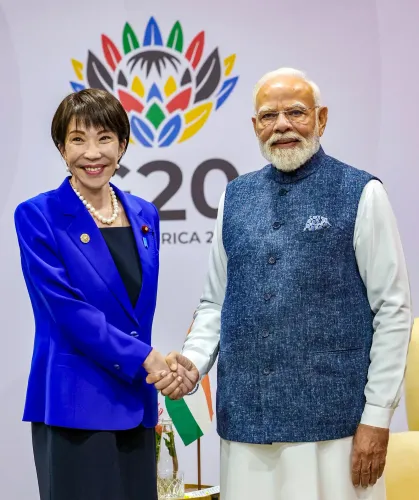
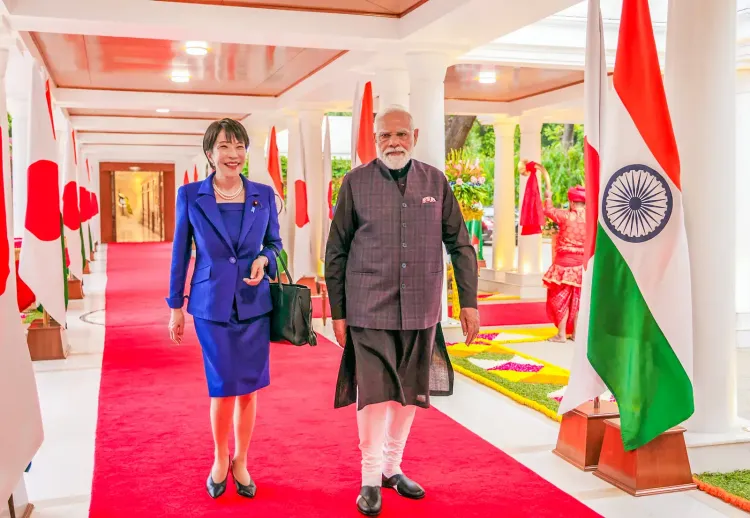
Japanese Prime Minister Sanae Takaichi visited India from 1–3 July for the 16th India–Japan Annual Summit, reinforcing a bilateral relationship that analysts describe as among the most strategically layered in Asia. The visit — Takaichi's first to India after assuming office — culminated in a USD 62 billion investment commitment over the next decade and a landmark first-ever defence co-development agreement between the two nations.
A Partnership Built Over Decades
India and Japan formalised their annual summit format in 2006, when ties were elevated to a 'Strategic and Global Partnership'. According to an analysis by the Institute of Peace and Conflict Studies (IPCS), Japan is only the second country after Russia with whom India holds annual bilateral summits — a distinction that underscores the depth of the relationship. The two nations also maintain an annual 2+2 ministerial dialogue, a mechanism typically reserved for India's closest security partners. The IPCS report characterises Japan as the most important partner in India's economic diversification over the past 35 years, with ties that are described as bipartisan and rooted in strong people-to-people goodwill.
What Was Agreed at Hyderabad House
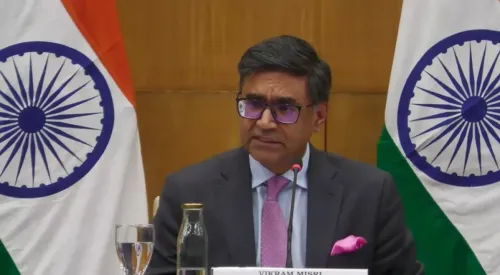
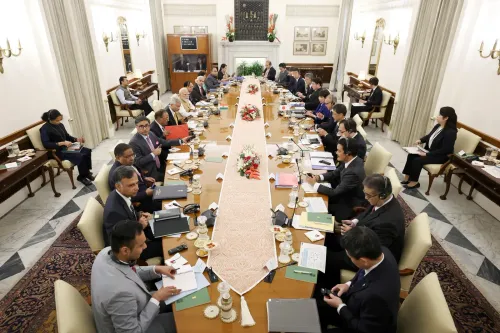
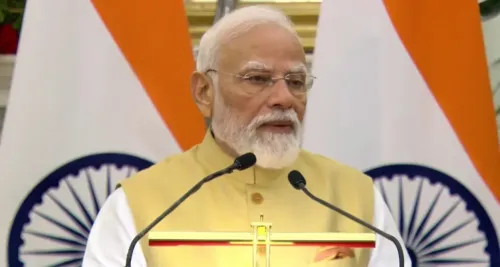
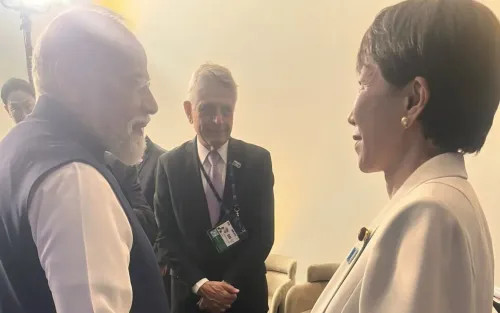
At the summit held at Hyderabad House, New Delhi on 2 July, Prime Minister Narendra Modi and Takaichi covered the full spectrum of bilateral engagement — trade and investment, economic security, energy, emerging technologies, defence, and people-to-people exchanges. Both leaders also addressed regional and global developments of mutual interest. Japan's USD 62 billion investment pledge over the next 10 years was the headline figure, accompanied by signed agreements in energy resilience, economic security, and artificial intelligence.
Historic Defence Co-Development Pact
The two nations signed their first-ever defence co-development agreement, a significant step aimed at securing maritime routes and upholding a free and open Indo-Pacific. According to the IPCS report, India is seeking Japanese collaboration to develop Mogami-class stealth frigates, naval radio antenna systems (UNICORN masts), and next-generation warship propulsion systems on Indian soil. The pact marks a qualitative shift from equipment procurement to co-production — a model India has been actively pursuing with select partners.
Economic and Industrial Highlights
Modi and Takaichi jointly attended the India–Japan Joint Economic Forum and virtually inaugurated a new Maruti manufacturing facility in Haryana. Spread across 800 acres, the integrated complex includes an adjoining supplier park and is designed to become one of the world's largest vehicle manufacturing facilities when fully operational. The two sides also announced a biogas initiative targeting the establishment of 1,000 biogas and organic fertiliser plants across India, with joint exploration planned in green ammonia and upstream oil and gas sectors.
Strategic Technology and Supply Chain Alignment
Japan's interest in deepening ties is also driven by its own strategic imperatives. Tokyo is seeking to secure technology pipelines in semiconductors, artificial intelligence, and robotics, while diversifying away from China for critical minerals and battery supply chains — particularly after Beijing imposed export restrictions in these domains, according to the IPCS. Both leaders reaffirmed the Mumbai–Ahmedabad High Speed Rail as a flagship bilateral project, with Takaichi expressing Japan's commitment to supporting India's target of commencing commercial operations on priority sections by 2027.
As both nations deepen their strategic convergence across defence, technology, and clean energy, the relationship appears positioned for its most consequential phase since the partnership was formally elevated nearly two decades ago.
Point of View
But investment pledges at bilateral summits routinely exceed disbursements; the more durable signal is the supply-chain realignment both sides are engineering against Chinese export restrictions. Japan needs India as much as India needs Japan right now, and that symmetry of need is what makes this partnership structurally different from earlier iterations that were largely India-receiving and Japan-giving.
NationPress
12 Oct 2026
Frequently Asked Questions
What was agreed at the 16th India–Japan Annual Summit?
At the summit held on 2 July in New Delhi, India and Japan signed agreements on energy resilience, economic security, artificial intelligence, and a first-ever defence co-development pact. Japan also committed to invest USD 62 billion in India over the next 10 years.
What is the India–Japan defence co-development pact?
It is the first agreement of its kind between India and Japan, focused on jointly developing advanced naval systems including Mogami-class stealth frigates, UNICORN mast antenna systems, and next-generation warship propulsion technology on Indian soil. The pact is aimed at securing maritime routes and supporting a free and open Indo-Pacific.
Why does Japan hold annual summits with India?
India and Japan established the annual summit format in 2006 when ties were elevated to a 'Strategic and Global Partnership'. According to the IPCS, Japan is only the second country after Russia with whom India holds annual bilateral summits, reflecting the depth of strategic alignment between the two nations.
What is the status of the Mumbai–Ahmedabad High Speed Rail project?
PM Modi and Takaichi reaffirmed the Mumbai–Ahmedabad High Speed Rail as a flagship bilateral project. Takaichi expressed Japan's commitment to supporting India's target of commencing commercial operations on priority sections by 2027.
What is the new Maruti facility inaugurated during the summit?
A new integrated Maruti manufacturing complex spanning 800 acres in Haryana was virtually inaugurated by both leaders during the summit. It includes an adjoining supplier park and is designed to become one of the world's largest vehicle manufacturing facilities when fully operational.