India fixes LPG output targets for 21 refiners to curb import disruptions
Synopsis
For the first time, India has codified refinery-wise LPG production targets — a direct response to the Iran-linked Strait of Hormuz disruptions that forced emergency measures earlier this year. With over 64 per cent of LPG imported and 91,000 tonnes consumed daily, the new 63,810-tonne standby capacity is India's most structured attempt yet to firewall its cooking gas supply from geopolitical shocks.
Key Takeaways
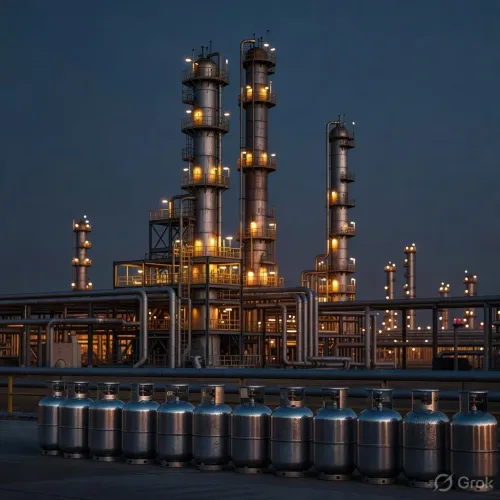
The Petroleum and Natural Gas Ministry has for the first time fixed company-wise and refinery-wise LPG production targets covering 21 refineries and upstream producers .
Combined standby production capacity under the framework is set at 63,810 tonnes per day , about 70 per cent of India's daily LPG consumption of 91,000 tonnes .
India imports more than 64 per cent of its LPG, most of it through the Strait of Hormuz .
18 public-sector refineries have been assigned a combined target of 31,470 tonnes per day .
The move follows the Iran-related crisis earlier this year, during which domestic output was temporarily raised to nearly 55,000 tonnes per day via emergency directives.
The new framework replaces ad-hoc emergency orders with a permanent, government-activated mechanism.
The Petroleum and Natural Gas Ministry has, for the first time, fixed refinery-wise and company-wise LPG production targets for public and private sector refiners as well as upstream oil and gas producers, in a move aimed at insulating India from the impact of imported cooking gas supply disruptions. The order, issued on 16 August, covers 21 refineries and upstream companies and establishes a permanent standby mechanism that the government can activate whenever supply constraints arise.
What the New Framework Establishes
Under the prescribed production schedule, the combined LPG output potential across all covered entities has been set at 63,810 tonnes per day — equivalent to roughly 70 per cent of India's daily LPG consumption and significantly above the country's normal domestic production levels. Of this, 18 public-sector refineries have been assigned a combined target of 31,470 tonnes per day. Private sector refiners and upstream producers account for the remainder.
The framework can be triggered at the government's discretion to ensure adequate availability and equitable distribution of cooking gas across the country.
Why India Is Vulnerable to LPG Supply Shocks
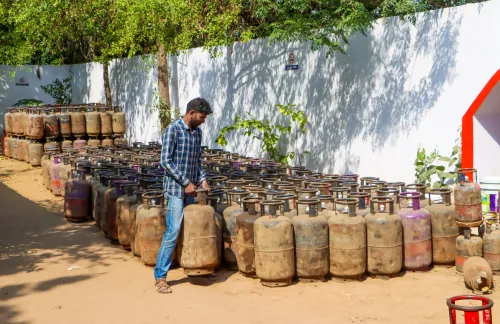
India consumes approximately 33.2 million tonnes of LPG annually, or around 91,000 tonnes per day. Domestic production meets only 13.1 million tonnes of that demand — meaning more than 64 per cent of requirements are fulfilled through imports, the bulk of which transit the Strait of Hormuz.
This dependence was laid bare during the Iran-related crisis earlier this year, when disruptions along the strategic waterway forced New Delhi to invoke emergency measures. Refiners were directed to maximise LPG output by diverting petrochemical feedstock streams, supplies to industrial and commercial users were curtailed, and households were encouraged to switch to piped natural gas where the infrastructure existed.
At the height of the crisis, domestic LPG production was ramped up to nearly 55,000 tonnes per day — but those emergency directives were wound down once supply conditions normalised. The new order replaces that ad-hoc approach with a codified, standing mechanism.
The West Asia Conflict as a Catalyst
The Ministry's decision is directly linked to the recent escalation in West Asia, which exposed the structural fragility of India's LPG supply chain. With the Strait of Hormuz serving as the primary chokepoint for Indian LPG imports, any sustained disruption in that corridor can rapidly translate into domestic shortages of a fuel used by hundreds of millions of households.
This is the first time the government has moved beyond crisis-time directives to institutionalise a production-readiness framework, signalling a shift in how India approaches energy security for the cooking fuel sector.
What Happens Next
The standing order gives the Petroleum and Natural Gas Ministry the authority to activate enhanced production schedules without requiring fresh emergency notifications. Industry observers note that the framework's effectiveness will depend on how quickly refiners can reroute feedstock streams and whether upstream producers can sustain elevated output levels over extended periods. The government has not yet detailed the timelines or thresholds that would trigger activation of the new targets.
Point of View
Many of whom balance LPG output against more profitable petrochemical streams, will comply at speed when the trigger is pulled. The framework's credibility will be tested the next time West Asia flares — not in the order itself.
NationPress
1 Oct 2026
Frequently Asked Questions
What are the new LPG production targets set by the Indian government?
The Petroleum and Natural Gas Ministry has fixed refinery-wise and company-wise LPG production targets for 21 refineries and upstream companies, with a combined standby capacity of 63,810 tonnes per day — roughly 70 per cent of India's daily LPG consumption. The targets can be activated by the government whenever supply constraints arise.
Why has India introduced this LPG production framework?
The framework was introduced in response to supply disruptions caused by the recent West Asia conflict, which exposed India's heavy dependence on LPG imports transiting the Strait of Hormuz. More than 64 per cent of India's LPG requirement is met through imports, making it vulnerable to geopolitical shocks in the region.
How much LPG does India consume and produce domestically?
India consumes approximately 33.2 million tonnes of LPG annually, or about 91,000 tonnes per day. Domestic production covers only 13.1 million tonnes, leaving the rest to be imported, primarily through the Strait of Hormuz.
What happened during the Iran-related LPG crisis earlier this year?
Disruptions in shipments through the Strait of Hormuz forced the government to issue emergency directives, asking refiners to maximise LPG output by diverting petrochemical feedstock. Supplies to industrial and commercial users were curtailed, and domestic production was raised to nearly 55,000 tonnes per day at the peak of the crisis before being eased as conditions improved.
Who is covered under the new LPG production order?
The order covers 21 entities including public and private sector refineries as well as upstream oil and gas producers. Of these, 18 public-sector refineries alone have been assigned a combined target of 31,470 tonnes per day.