Is the interim bilateral trade agreement between India and the US a game changer for the health industry?
Synopsis
The recent interim trade agreement between India and the US is generating optimism in the health industry. With tariffs reduced and a focus on generic pharmaceuticals, both nations stand to gain significantly. Health leaders emphasize the importance of ensuring mutual benefits and fairness in trade practices.
Key Takeaways
Interim agreement reduces US tariffs on Indian goods to 18%.
Elimination of tariffs on generic pharmaceuticals enhances trade.
India secures favorable terms in comparison to neighboring countries.
Importance of reciprocal fairness in trade highlighted.
Strengthening India-US partnership is critical for medicine security.
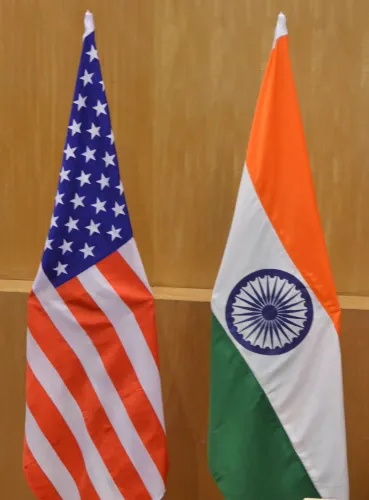
New Delhi, Feb 7 (NationPress) Leaders in the health sector expressed their approval on Saturday regarding the interim agreement concerning the bilateral trade arrangement between India and the United States.
Under this interim framework, the US will reduce reciprocal tariffs on Indian products to 18 percent. Additionally, the US will eliminate tariffs on generic pharmaceuticals, as well as other sectors including gems and diamonds, and aircraft components.
While complete details are still forthcoming, the interim trade deal framework suggests that India has secured the “best deal” from the United States compared to its neighboring countries.
“The Association of Indian Medical Devices (AiMeD) welcomes the US-India joint statement addressing trade barriers. It’s important to note that the Central Drugs Standard Control Organization (CDSCO) import licenses for devices from the US are already processed more quickly than those for Indian manufacturers, who face mandatory inspections unlike foreign firms,” stated Rajiv Nath, Forum Coordinator of AiMeD.
He further noted, “The US leads imports at Rs 14,000 crore (20 percent share), outpacing China’s Rs 12,000 crore, with our US exports at $750 million compared to $1.6 billion in imports last year. The US FDA shows a preference for ACSA over NABL labs, creating an imbalance. Indian medtech faces challenges from Chinese WANA dumping, EU CE delays, Japan's yen fluctuations, and biases in Indonesia, coupled with CDSCO hurdles. We call for reciprocal fairness to ensure that trade benefits both nations' innovative capacities,” he added.
Moreover, the agreement states that India will also gain negotiated outcomes concerning generic pharmaceuticals and ingredients based on the findings from the US Section 232 investigation.
“Enhancing the India-US medicines partnership is crucial, as medicine security is intertwined with national security. Generics are exempt from tariffs, and as outlined in the joint statement, all pharmaceuticals (including generics) are currently under US Section 232 investigation. This aligns with the approach taken in various Free Trade Agreements (FTAs),” added Sudarshan Jain, Secretary General of the Indian Pharmaceutical Alliance.
Point of View
This trade agreement marks a significant step towards strengthening India-US relations, especially in the health sector. The emphasis on fair trade practices and the reduction of barriers can potentially foster innovation and improve access to essential medical products. It's crucial that both nations work collaboratively to ensure that the benefits of this deal are realized equitably.
NationPress
19 Sept 2026
Frequently Asked Questions
What does the interim trade agreement entail?
The interim trade agreement includes a reduction in reciprocal tariffs on Indian goods, particularly focusing on generic pharmaceuticals and other sectors like gems and diamonds.
How does this agreement benefit India?
India is expected to receive favorable terms in trade, particularly in pharmaceuticals, which can enhance its export potential and aid in the growth of its health industry.
What challenges does the Indian medtech sector face?
Indian medtech contends with issues like Chinese WANA dumping, regulatory delays in Europe, currency fluctuations in Japan, and biases in Indonesia, along with CDSCO hurdles.
Why is the partnership between India and the US important?
Strengthening the partnership is vital for medicine security, which is linked to national security, ensuring that both nations have reliable access to essential medical products.
What is the role of generic pharmaceuticals in this deal?
Generics are crucial as they are exempt from tariffs, and the agreement aims to facilitate smoother trade in these essential medicines.