India's Aviation Sector Set to Slash Losses by One-Third Amid Rising Domestic Traffic
Synopsis
A recent report projects that India's aviation sector will significantly reduce its net losses by one-third by 2026-27, as domestic passenger traffic is expected to recover. This development highlights a positive trend for the industry amid various challenges.
Key Takeaways
India's aviation industry is set to reduce losses to Rs 110–120 billion by 2026-27.
Domestic passenger traffic is expected to grow at 6–8 percent .
International air passenger traffic will grow by 7-9 percent in 2025-26.
Factors supporting recovery include low base effects and government tourism initiatives.
Fuel prices significantly impact airline profitability.
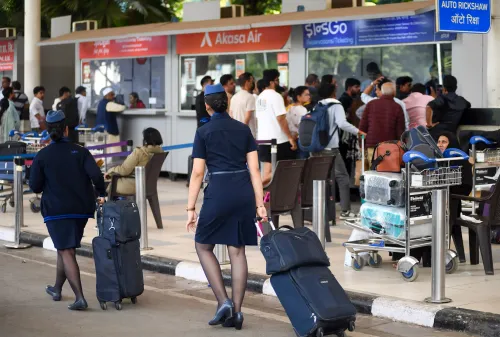
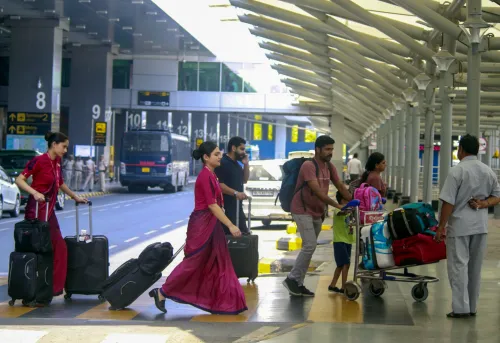
New Delhi, Feb 24 (NationPress) The aviation sector in India is projected to reduce its net losses by a remarkable one-third, bringing them down to Rs 110–120 billion in the fiscal year 2026-27, driven by a recovery in domestic passenger traffic growth of 6–8 percent, according to a recent report.
According to the findings from ICRA, current losses estimated at Rs. 170–180 billion are anticipated to decrease significantly as domestic traffic increases to between 175–179 million passengers by 2026-27.
The international air travel growth for Indian airlines is expected to remain robust, bolstered by factors such as a low base effect, an expansion of e-visa and visa-on-arrival options, and the government's emphasis on promoting iconic tourist destinations.
The ratings agency forecasts that international air passenger traffic will grow by 7-9 percent in 2025-26 and 8-10 percent in 2026-27.
“ICRA has a Stable outlook for the Indian aviation sector, driven by anticipated modest growth in domestic air passenger traffic and a gradually improving operating environment, even amid near-term challenges,” stated Kinjal Shah, Senior Vice President and Co‑Group Head at ICRA.
The industry has experienced modest domestic growth this fiscal year due to factors like cross-border tensions, weather-related disruptions, travel hesitancy following the June 2025 aircraft incident, high US tariffs, and operational interruptions at IndiGo in December 2025, the report noted.
The pricing of aviation turbine fuel (ATF) and fluctuations in the rupee-dollar exchange rate significantly impact airline profitability.
During the first 11 months of 2025-26, ATF prices averaged Rs. 91,173 per kilolitre (KL), while the rupee depreciated by approximately 3.2 percent year-on-year over the first nine months of 2025-26. Fuel costs represent 30–40 percent of airlines' operating expenses, as highlighted in the report.
“While such currency depreciation may not be severely disruptive on its own, it adds pressure to the cost structure of an already struggling industry, where major expenses like aircraft lease payments, maintenance costs, and debt servicing are highly sensitive to currency fluctuations,” the report concluded.
aar/na
Point of View
The report indicates a recovery trajectory for India's aviation industry, reflecting resilience despite challenges. The anticipated growth in domestic and international traffic suggests a positive shift that may bolster the sector's overall health.
NationPress
18 Sept 2026
Frequently Asked Questions
What are the projected losses for India's aviation industry in 2026-27?
The aviation industry in India is expected to reduce its net losses to Rs 110–120 billion by 2026-27.
What is the expected growth rate for domestic passenger traffic?
Domestic passenger traffic is projected to grow by 6–8 percent in the coming years.
How much will international air passenger traffic grow?
International air passenger traffic for Indian carriers is expected to grow by 7-9 percent in 2025-26 and 8-10 percent in 2026-27.
What factors are influencing the aviation sector's recovery?
Factors include the expansion of e-visa options, government focus on tourism, and a low base effect from previous years.
What impact do fuel prices have on airline profits?
Aviation turbine fuel prices and the rupee-dollar exchange rate significantly affect airline profitability, as fuel costs account for 30-40 percent of operating expenses.