India bio-economy to hit $300 bn by 2030: Jitendra Singh
Synopsis
Jitendra Singh has put a $300 billion stamp on India’s bio-economy by 2030, citing a jump from 50-60 biotech startups in 2014 to over 11,000 now. At the CII Global Genomics Summit 2026 he tied that bet to Genome India’s 10,000 sequenced genomes, the BioE3 Policy and a push for private capital in genomics.
Key Takeaways
Dr Jitendra Singh said India’s bio-economy is projected to reach $300 billion by 2030 .
He spoke at the CII Global Genomics Summit 2026 in New Delhi on 25 November 2026 .
Biotech startups have grown from 50-60 in 2014 to over 11,000 currently.
The Genome India Project has sequenced 10,000 individuals from 80 population groups.
The BioE3 Policy (Biotechnology for Economy, Environment and Employment) and bio-foundries are meant to turn research into commercial products.
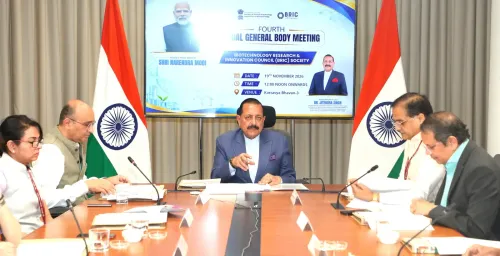
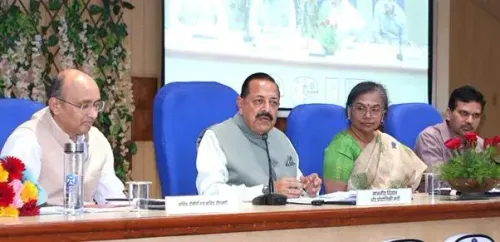
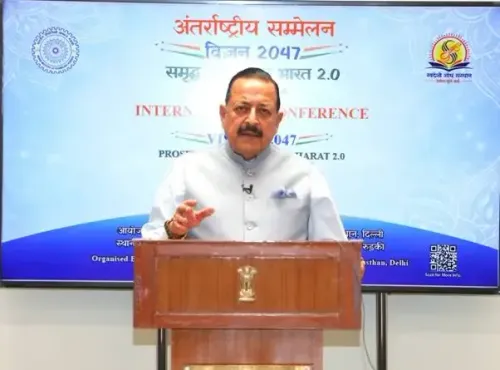
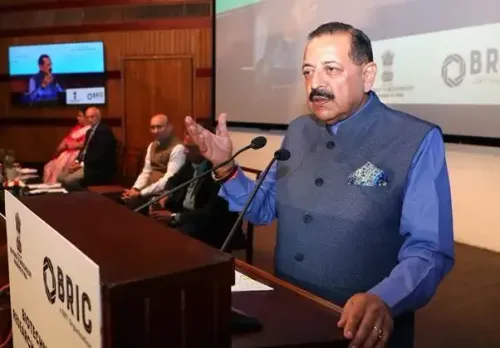
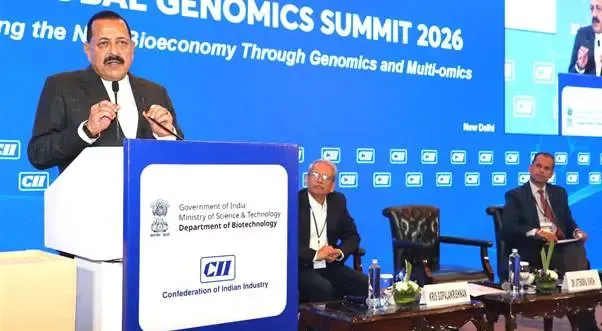
Union Minister of State for Science and Technology Dr Jitendra Singh on Wednesday said India’s bio-economy is projected to reach $300 billion by 2030, as biotechnology is set to drive the next industrial revolution. Addressing the CII Global Genomics Summit 2026 in New Delhi on 25 November 2026, he urged industry leaders, startups and investors to expand investments and participation in genomics, multi-omics and advanced biotechnology.
Startup growth behind the 2030 target
Biotech startups in India have already grown from just 50-60 in 2014 to over 11,000 currently, the minister said, according to a statement from the Ministry of Science and Technology. That scale-up is the backdrop to the $300 billion bio-economy projection for 2030. Singh described biotechnology as a strategic technology platform that will shape the future of healthcare, agriculture and global economic competitiveness, much as information technology transformed economies in previous decades.
This comes amid a government effort to treat biology as an industrial engine rather than a purely academic field. Notably, the rise from a few dozen firms a decade ago to more than 11,000 startups is being presented as evidence that the ecosystem can now support large commercial outcomes. The minister’s call was directed at private capital as much as at public laboratories, with genomics, multi-omics and advanced biotechnology named as the priority areas for fresh investment.
Genome India Project and genetic diversity
Singh said the country’s extraordinary genetic diversity could become a major global asset for research and development. India’s diverse population groups and wide spectrum of diseases, he noted, provide an extensive knowledge base for generating genomic data and developing solutions relevant to populations across the world. He said greater investment in genomic research would strengthen India’s scientific capabilities and create significant industrial and commercial opportunities.
Referring to the Genome India Project, he said whole-genome sequencing of 10,000 individuals representing 80 different population groups had already been undertaken, creating a valuable foundation for future research. The sequenced cohort is being positioned as a reference base on which further research, product development and clinical work can be built. For a sector that depends on population-specific data, that catalogue of 80 groups is the core scientific asset the minister tied to industrial opportunity.
Agriculture, livestock and BioE3 Policy
Genomics and advanced biotechnology can help improve crop productivity, nutritional quality and resistance to pests and diseases, while supporting climate-resilient agriculture, Singh said. Genomic applications can also improve breeding practices and strengthen disease surveillance in the livestock sector. Healthcare and farm systems are thus the two large demand pools linked to the bio-economy target.
The government has introduced the BioE3 Policy — Biotechnology for Economy, Environment and Employment — to accelerate biotechnology-led growth. The establishment of bio-foundries and other enabling infrastructure is aimed at supporting research, startups and industry in translating scientific discoveries into commercially viable products. BioE3 is the policy frame meant to connect sequenced genomes and laboratory work to factories, jobs and marketable products.
Who is affected and what comes next
Farmers and livestock keepers stand to be affected if genomic breeding, nutrition and disease-surveillance tools move from research into routine use. Patients and healthcare systems are the other large constituency, given the minister’s emphasis on genomic data drawn from India’s disease spectrum. The startup workforce already spanning more than 11,000 firms is the third: whether those companies attract the investment Singh sought will decide if the bio-economy trajectory holds.
What happens next depends on whether industry, startups and investors answer that call, and whether bio-foundries convert Genome India data into products. The comparison with information technology sets a high bar. The $300 billion by 2030 projection is now the public benchmark against which execution of the BioE3 Policy, bio-foundry build-out and genomic investment will be measured.
Point of View
Not a booked order book. India has shown it can multiply biotech startups from a few dozen to over 11,000, but headcount is not the same as globally competitive products, exports or jobs. Genome India’s 10,000 genomes across 80 groups is a genuine scientific asset; the risk is that it remains a dataset while value accrues to firms that commercialise elsewhere. BioE3 and bio-foundries will matter only if incentives are tied to products that leave the lab — the IT analogy the minister invoked was built on that conversion, not on announcements alone.
NationPress
25 Nov 2026
Frequently Asked Questions
What did Jitendra Singh say about India’s bio-economy?
Union Minister of State for Science and Technology Dr Jitendra Singh said India’s bio-economy is projected to reach $300 billion by 2030, with biotechnology set to drive the next industrial revolution. He made the remarks at the CII Global Genomics Summit 2026 in New Delhi on 25 November 2026.
How many biotech startups are there in India?
Biotech startups in India have grown from 50-60 in 2014 to over 11,000 currently, according to Dr Jitendra Singh. He cited that expansion while urging further investment in genomics, multi-omics and advanced biotechnology.
What is the Genome India Project?
The Genome India Project has completed whole-genome sequencing of 10,000 individuals representing 80 different population groups. Dr Jitendra Singh said this has created a valuable foundation for future genomic research and industrial applications.
What is the BioE3 Policy?
The BioE3 Policy stands for Biotechnology for Economy, Environment and Employment and is intended to accelerate biotechnology-led growth. It is backed by bio-foundries and other infrastructure meant to help research, startups and industry turn discoveries into commercial products.
Why does India’s genetic diversity matter for genomics?
Dr Jitendra Singh said India’s diverse population groups and wide spectrum of diseases provide an extensive knowledge base for generating genomic data and developing solutions relevant to populations worldwide. He argued this diversity could become a major global asset for research and development.