India's marine wildlife trade crisis: Scientists demand integrated strategy at Kochi workshop
Synopsis
India seized over 15.8 tonnes of illegal shark derivatives in just over a decade — and Tamil Nadu sits at the centre of the trade. At a national workshop in Kochi, scientists and enforcement officers argued that policing alone cannot fix the crisis: forensic tools, community dialogue, and a unified policy framework are the only way forward.
Key Takeaways
India recorded 17 seizures of illegal shark derivatives between 2010 and 2022 , with shark fins making up 82 per cent of confiscated material.
More than 15.8 tonnes of shark derivatives were seized during the period; Tamil Nadu identified as a major hotspot.
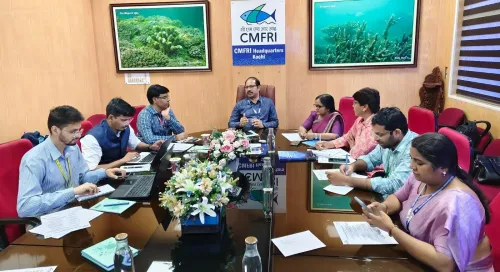
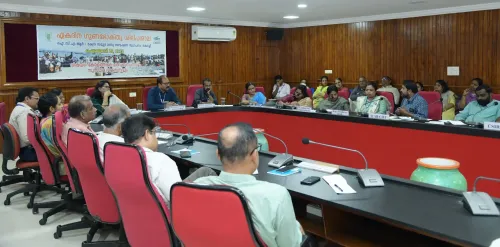
A three-day national workshop hosted by ICAR-CMFRI in Kochi on 13 May brought together scientists, enforcement officials, and policymakers.
CMFRI Director Grinson George called for stronger legislation backed by technology-driven surveillance and scientific monitoring.
Experts stressed that marine conservation must integrate fisheries management , forensic science , and coastal community participation — not enforcement alone.
Emerging tools highlighted include forensic shark fin identification and digital evidence collection for wildlife cybercrime.
Indian scientists, conservationists, and enforcement agencies convened in Kochi on 13 May to chart a new, science-backed response to the illegal trade of protected marine species, including shark fins, corals, and marine mammals, as global demand for these species continues to rise. The three-day national workshop, hosted by ICAR-Central Marine Fisheries Research Institute (CMFRI), brought together enforcement officials, marine scientists, and policymakers from across India to strengthen the country's framework against marine wildlife crime.
Scale of the Problem
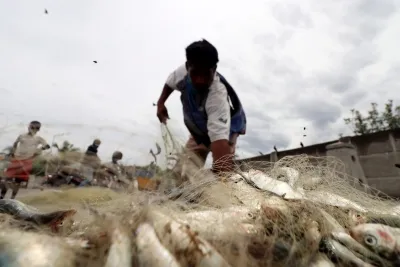
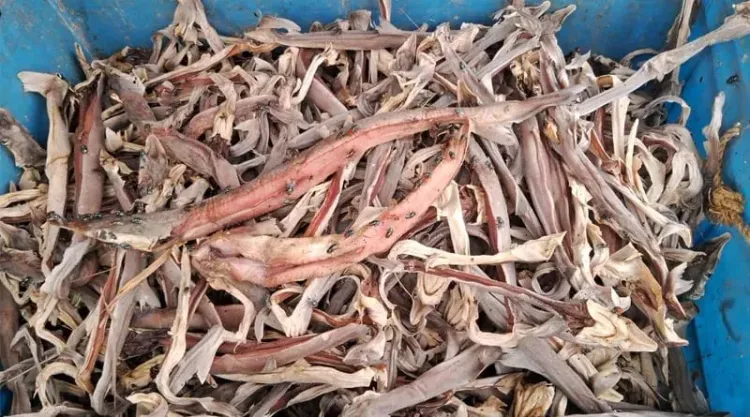
Studies presented at the workshop revealed that India recorded 17 seizures involving illegal shark derivatives between 2010 and 2022, with shark fins accounting for nearly 82 per cent of all confiscated material. In total, more than 15.8 tonnes of shark derivatives were seized during this period. Tamil Nadu was identified as a major hotspot for such illegal activity, underscoring the regional concentration of marine wildlife crime networks.
Key Voices from the Workshop
Divisional Forest Officer Manu Sathyan flagged that identifying protected marine species remains one of the most persistent challenges in wildlife crime investigations. He stressed the need for deeper collaboration between enforcement agencies and scientific institutions to enable accurate species identification and forensic documentation.
CMFRI Director Grinson George argued that stronger legislation, underpinned by technology-driven surveillance and scientific monitoring, is essential to tackle illegal marine trade effectively. He noted that conservation models must be tailored to both ecological sustainability and societal needs.
Senior biodiversity expert Dipankar Ghose drew a critical distinction between marine and terrestrial wildlife crime, pointing out that marine trade is deeply intertwined with the livelihoods of fishing communities. Sustainable conservation, he said, requires understanding the socio-economic realities of fishers alongside strict enforcement.
CMFRI scientist Shoba Joe Kizhakudan reinforced this perspective, arguing that marine conservation must be treated simultaneously as a fisheries and livelihood issue. She emphasised that continuous dialogue with fishing communities would be critical for long-term conservation success.
Emerging Tools and Technology
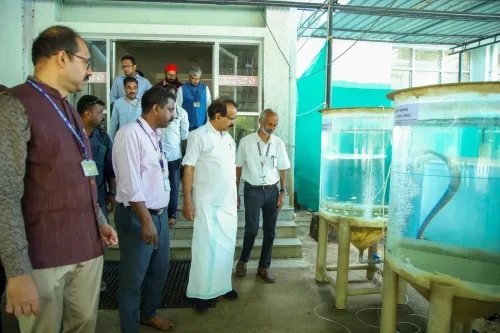
The workshop spotlighted a range of emerging scientific tools being deployed against marine wildlife crime, including forensic shark fin identification, digital evidence collection for wildlife cybercrime cases, and advanced monitoring techniques for corals, turtles, and marine mammals. Participants warned that illegal trade networks are becoming increasingly sophisticated, demanding improved surveillance and coordinated interstate enforcement to keep pace.
Why an Integrated Approach Is Needed
Experts at the workshop were unified in their view that marine conservation can no longer be treated solely as a policing matter. The consensus was that science, technology, fisheries management, and coastal community participation must all be integrated into a cohesive national strategy. This comes amid growing recognition that enforcement alone, without community buy-in and scientific backing, has historically failed to curb illegal marine trade at scale.
The workshop's outcomes are expected to inform policy recommendations to relevant central and state agencies. Whether those recommendations translate into coordinated action will determine the effectiveness of India's response to one of its most under-scrutinised environmental challenges.
Point of View
Tamil Nadu as a repeat hotspot — point to a structural enforcement gap, not just isolated incidents. The Kochi workshop's call for an 'integrated approach' is well-intentioned, but integration has been the stated goal of Indian conservation policy for years without a measurable institutional framework to show for it. The harder question is whether CMFRI's recommendations will reach the Union fisheries and environment ministries in a form that compels legislative action, or remain confined to workshop proceedings. With illegal trade networks growing more sophisticated and digital, the window for a purely incremental response is narrowing.
NationPress
29 Sept 2026
Frequently Asked Questions
What was the CMFRI workshop in Kochi about?
The three-day national capacity-building workshop, hosted by ICAR-Central Marine Fisheries Research Institute in Kochi on 13 May, focused on strengthening India's response to illegal marine wildlife trade. It brought together enforcement officials, marine scientists, conservationists, and policymakers to develop a science-backed, integrated national strategy.
How much illegal shark material has India seized in recent years?
According to studies presented at the workshop, India recorded 17 seizures of illegal shark derivatives between 2010 and 2022, with shark fins accounting for nearly 82 per cent of all confiscated material. In total, more than 15.8 tonnes of shark derivatives were seized during this period.
Why is Tamil Nadu considered a hotspot for marine wildlife crime?
Tamil Nadu was identified at the workshop as a major hotspot for illegal shark derivative trade, based on seizure data compiled over more than a decade. Its extensive coastline and large fishing community make it a focal point for both legal fisheries and illegal wildlife trade networks.
Why do scientists say enforcement alone is not enough?
Experts at the workshop argued that marine wildlife trade is deeply linked to the livelihoods of fishing communities, unlike terrestrial wildlife crime. Without integrating community dialogue, scientific identification tools, and fisheries management into enforcement efforts, crackdowns risk being counterproductive or unsustainable.
What new scientific tools are being used to fight marine wildlife crime?
The workshop highlighted forensic shark fin identification, digital evidence collection for wildlife cybercrime, and advanced monitoring of corals, turtles, and marine mammals as emerging tools. These technologies are intended to improve species identification accuracy and strengthen legal cases against traffickers.