CMFRI launches Shark Aware app and e-learning module for shark conservation
Synopsis
CMFRI has launched the 'Shark Aware' app and an e-learning module in Kochi — a rare move that puts species identification, CITES rules, and wildlife law into the hands of fishermen and enforcement officers via their smartphones. With shark populations under mounting pressure, India's premier marine research body is betting that digital access to science and law can shift compliance from the courtroom to the waterfront.
Key Takeaways
CMFRI launched the Shark Aware mobile app and an interactive e-learning module on 27 July at its Kochi headquarters.
The platforms were funded by the National Fisheries Development Board (NFDB) and inaugurated by Kerala Fisheries Minister V.E.
The app covers protected elasmobranch species under Schedules I, II and IV of the Wildlife (Protection) Act, 1972 (amended 2022 ).
It also provides information on CITES trade regulations and the ecological importance of sharks and rays.
The app is expected on the Google Play Store shortly; the e-learning module includes quizzes, assessments, and progress tracking.
Project was led by Dr.
Livi Wilson , Senior Scientist, CMFRI Finfish Fisheries Division.
The ICAR-Central Marine Fisheries Research Institute (CMFRI) has launched two digital platforms — the 'Shark Aware' mobile application and an interactive e-learning module — aimed at strengthening awareness and regulatory compliance around the protection of endangered sharks and rays in India. The platforms were unveiled on Monday, 27 July at CMFRI's Kochi headquarters, marking a significant step in the institute's push to harness digital tools for marine biodiversity conservation.
What the Platforms Offer
The Shark Aware app provides a comprehensive database of protected elasmobranch species — sharks, rays, and their relatives — listed under Schedules I, II and IV of the Wildlife (Protection) Act, 1972, as amended in 2022. Beyond species identification, the app gives users access to scientific data, legal protection status, international trade regulations under CITES (the Convention on International Trade in Endangered Species of Wild Fauna and Flora), and the ecological role of these threatened marine animals. The app is expected to be available on the Google Play Store shortly.
The companion e-learning module allows users to progress at their own pace through quizzes, instant assessments, and progress tracking. It covers the Wildlife (Protection) Act, CITES obligations, species identification techniques, and the conservation significance of protected sharks and rays.
Who Launched It and Who Funded It
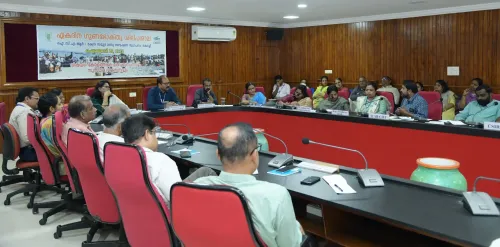
Kerala State Fisheries Minister V.E. Abdul Gafoor formally launched both initiatives at the Kochi headquarters. The platforms were developed with financial support from the National Fisheries Development Board (NFDB).
The Science Behind the Initiative
Dr. Livi Wilson, Senior Scientist at CMFRI's Finfish Fisheries Division and the project lead, said the app was designed to close the knowledge gap among stakeholders in marine fisheries and wildlife conservation. 'The application will help users accurately identify protected sharks and rays, facilitate effective implementation of the Wildlife Protection Act and support conservation efforts,' she said.
Who It Is Designed to Reach
The platforms are intended for a broad audience: fishermen, fisheries officials, wildlife enforcement agencies, researchers, and students. By making scientific and legal information easily accessible in a digital format, CMFRI hopes to encourage informed participation and tighter regulatory compliance at the ground level. This comes amid growing concern over the decline of shark and ray populations globally, with several species now listed as vulnerable or critically endangered on the IUCN Red List.
What This Signals for Marine Conservation
The twin launches reflect CMFRI's broader strategy of embedding digital technology into sustainable fisheries management. Notably, India is a signatory to CITES, and improved compliance at the fishermen and enforcement level is seen as critical to meeting international conservation commitments. With the app rollout imminent and the e-learning module already live, the institute's next challenge will be ensuring adoption at scale across India's vast and diverse fishing communities.
Point of View
Many of whom operate in low-connectivity coastal zones. A Google Play Store rollout is a starting point, not a solution. CMFRI and NFDB will need a last-mile outreach strategy — in regional languages, offline-capable — before this translates into measurable compliance gains.
NationPress
26 Oct 2026
Frequently Asked Questions
What is the CMFRI Shark Aware app?
The Shark Aware app is a mobile application developed by CMFRI that provides a database of protected shark and ray species listed under India's Wildlife (Protection) Act, 1972. It also covers CITES trade regulations, species identification guides, and conservation information. The app is expected to be available on the Google Play Store shortly.
Who launched the Shark Aware app and when?
Kerala State Fisheries Minister V.E. Abdul Gafoor launched the app and the companion e-learning module on 27 July at CMFRI's Kochi headquarters. The initiative was funded by the National Fisheries Development Board (NFDB).
Who is the target audience for these platforms?
The platforms are designed for fishermen, fisheries officials, wildlife enforcement agencies, researchers, and students involved in marine fisheries and conservation. The goal is to help these stakeholders accurately identify protected species and comply with relevant laws.
What does the e-learning module cover?
The interactive e-learning module covers the Wildlife (Protection) Act, CITES obligations, species identification techniques, and the conservation importance of sharks and rays. It includes quizzes, instant assessments, and progress tracking so users can learn at their own pace.
Why does protecting sharks and rays matter?
Sharks and rays are critical to marine ecosystem balance, but many species are now listed as vulnerable or critically endangered. India is a CITES signatory, and stronger domestic compliance with protection laws is essential to meeting international conservation commitments and preventing further population decline.