How is India Showcasing the Power of Knowledge Sharing?

Synopsis
Discover how the Nobel Prize Dialogue in Bengaluru exemplifies the power of collaboration and knowledge sharing. Hanna Stjärne, Executive Director of the Nobel Foundation, highlights the enthusiasm of Indian youth in shaping a sustainable future through innovative discussions.
Key Takeaways
Collaboration is essential for innovation.
Engagement with laureates offers real learning opportunities.
The inquisitive nature of Indian youth is commendable.
Partnerships can lead to successful events.
Sharing knowledge is crucial for a sustainable future.
Bengaluru, Nov 3 (NationPress) Today serves as a prime example of how we can unite to engage in discussions, share insights, and learn from each other — all of which are vital for our future, stated Hanna Stjärne, the Executive Director of the Nobel Foundation, on Monday.
Speaking with IANS on the sidelines of the Nobel Prize Dialogue at the Indian Institute of Science (IISc) here, she highlighted that the enthusiasm and inquisitiveness exhibited by Indian students and researchers demonstrate the nation's profound dedication to learning and collaboration.
“When we conduct meetings like this, we feature numerous laureates on stage, but they are also present to actively engage and respond to questions,” she elaborated.
“It transforms into an exchange between students, the public, and the laureates — a genuine chance to learn from one another,” Stjärne conveyed to IANS.
Stjärne commended the success of the Bengaluru session, remarking, “There were so many inquiries today — we could have extended the discussion for much longer.”
“I am eagerly anticipating the questions that the audience in Mumbai will pose tomorrow,” she added.
Reflecting on the Bengaluru session, she noted that the level of curiosity among participants was exceptional.
“There were so many inquiries today — we could have prolonged the discussion for much longer. I am truly excited to see the questions that the audience in Mumbai will present tomorrow,” Stjärne remarked.
She also recognized the collaboration that made the event feasible, calling it “an outstanding partnership that worked exceptionally well.”
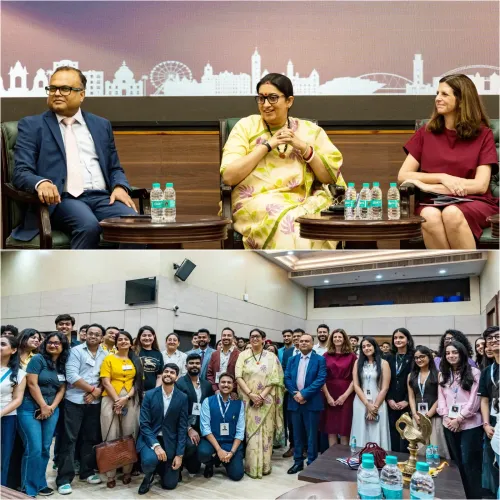
The Nobel Prize Dialogue, themed “The Future We Want”, occurred from 10:30 a.m. to 1:00 p.m. at IISc Bengaluru and acted as a platform to connect global scientific leaders with India’s youth, encouraging discussions on innovation, sustainability, and our shared future.
Point of View
It's evident that events like the Nobel Prize Dialogue illustrate India's commitment to fostering a culture of inquiry and knowledge exchange. The active participation of our youth signifies a promising future for collaboration in science and innovation, aligning with national values of growth and unity.
NationPress
27 Sept 2026
Frequently Asked Questions
What was the main focus of the Nobel Prize Dialogue?
The main focus of the Nobel Prize Dialogue was to foster discussions on innovation, sustainability, and the shared future of humanity, connecting global scientific leaders with India's young minds.
Who is Hanna Stjärne?
Hanna Stjärne is the Executive Director of the Nobel Foundation, dedicated to promoting knowledge sharing and collaboration through events like the Nobel Prize Dialogue.
Where was the Nobel Prize Dialogue held?
The Nobel Prize Dialogue was held at the Indian Institute of Science (IISc) in Bengaluru, India.
What did Stjärne say about the participation of Indian students?
Stjärne praised the enthusiasm and curiosity of Indian students and researchers, highlighting their deep commitment to learning and collaboration.
What was the theme of the Nobel Prize Dialogue?
The theme of the Nobel Prize Dialogue was 'The Future We Want', aiming to inspire discussions about the future of humanity.