Dr Jitendra Singh urges simpler science communication at ESSC meet
Synopsis
At the ESSC's second general body meeting, Union Minister Dr Jitendra Singh pushed for science to speak plainly — and reviewed India's most ambitious ocean milestones yet, including MATSYA-6000's progress and Indian aquanauts diving beyond 5,000 metres aboard a French submersible.
Key Takeaways
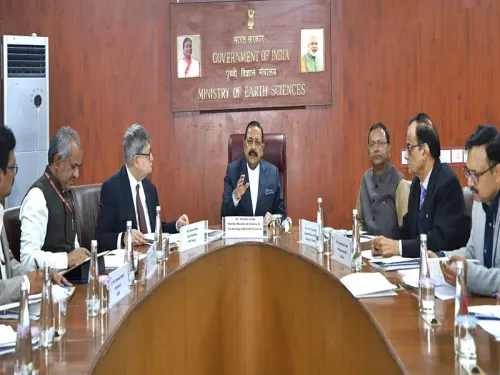
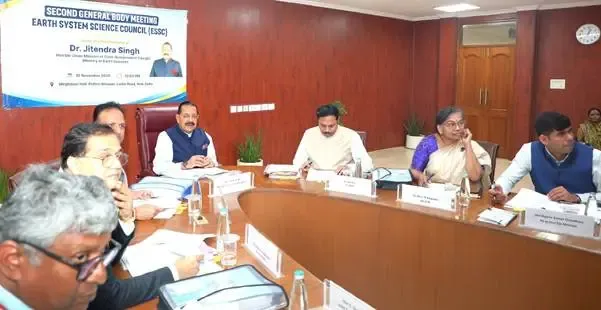
Dr Jitendra Singh chaired the Second General Body Meeting of the Earth System Sciences Council (ESSC) on 10 November 2026 in New Delhi .
The minister called for research outcomes to be communicated in simple, accessible language to citizens.
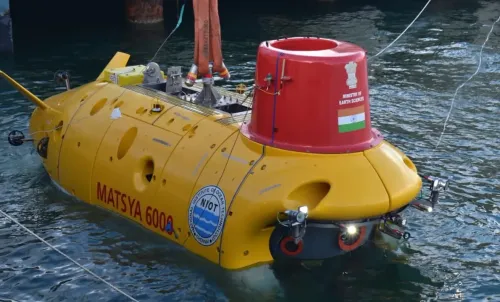
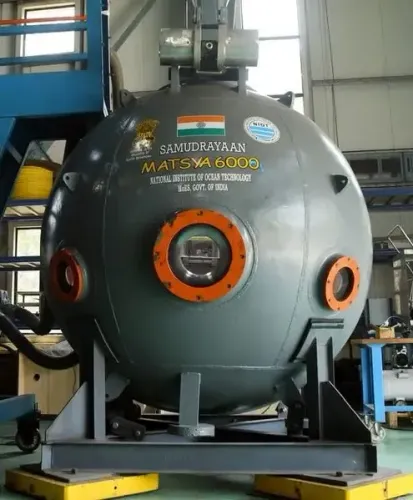
MATSYA-6000 , India's indigenous human submersible for depths up to 6,000 metres , is under development with French collaboration.
Indian aquanauts dived to 4,025 metres and 5,002 metres aboard the French submersible Nautile during an Indo-French expedition.
Annual reports and audited accounts for FY26 of five ESSC institutions — NIOT, INCOIS, NCESS, IITM and NCPOR — were reviewed.
Advances under Mission Mausam , the PRITHVI programme , and the Bharat Forecasting System were also discussed.
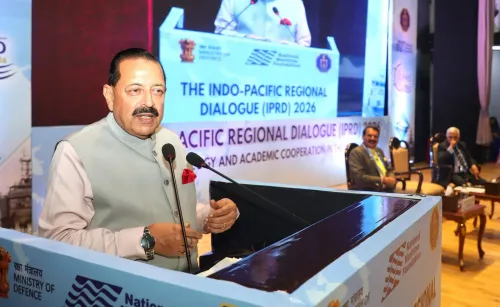
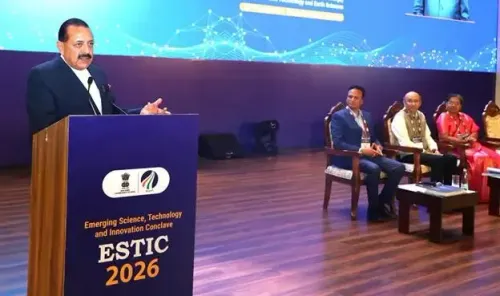
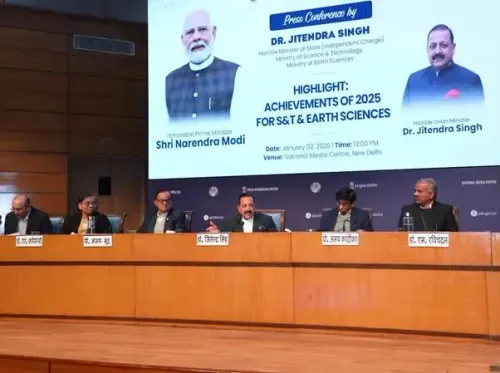
Union Minister of State for Science and Technology and Earth Sciences Dr Jitendra Singh on Tuesday, 10 November 2026, chaired the Second General Body Meeting of the Earth System Sciences Council (ESSC) in New Delhi, calling for greater citizen-centric outreach and stressing that research outcomes and technological innovations must be communicated in plain, accessible language.
Key Directions from the Minister
Dr Singh urged institutional communication teams to coordinate more closely, engage regularly with media professionals, and adopt creative formats to present scientific achievements, technological applications, and public services to wider audiences. The push reflects a broader concern that cutting-edge science is often lost in translation between laboratories and citizens who stand to benefit from it.
The meeting also reviewed the annual reports and audited accounts for FY26 of ESSC's five constituent institutions — the National Institute of Ocean Technology (NIOT), the Indian National Centre for Ocean Information Services (INCOIS), the National Centre for Earth Science Studies (NCESS), the Indian Institute of Tropical Meteorology (IITM), and the National Centre for Polar and Ocean Research (NCPOR).
MATSYA-6000 and Deep-Sea Milestones
Dr Singh highlighted that India's human deep-sea exploration programme is advancing with the development of MATSYA-6000, an indigenous human-rated submersible designed for operations at depths of 6,000 metres, developed in collaboration with France. In a significant operational milestone, Indian aquanauts completed dives to depths of 4,025 metres and 5,002 metres aboard the French submersible Nautile during an Indo-French expedition, underscoring the growing depth — literally and strategically — of India's ocean exploration capabilities.
Ocean Technologies and Indigenous Innovations
The meeting noted progress across a range of indigenous ocean technologies, including desalination solutions for Lakshadweep, offshore fish cage technologies, oceanographic instrumentation, deep-sea mineral exploration, and ocean thermal energy conversion. These initiatives collectively strengthen India's position in marine research and the sustainable utilisation of ocean resources.
INCOIS was specifically recognised for expanding its ocean information and advisory services, which now include multilingual marine advisories, fishing-related information, swell-surge inundation forecasts, and ocean observation products — services that directly reach fishing communities, coastal populations, and maritime stakeholders.
Mission Mausam and PRITHVI Programme
Dr Singh also reviewed scientific advances under Mission Mausam and the PRITHVI programme, including developments in the Bharat Forecasting System, advanced numerical weather prediction models, and atmospheric observation networks. These programmes are central to India's ambition of building a world-class weather and earth-system prediction infrastructure.
What This Signals
The minister's emphasis on accessible communication is notable at a time when India is ramping up public investment in ocean science, polar research, and atmospheric modelling. Bridging the gap between institutional output and public understanding will be critical to building citizen trust in government-backed science — and to ensuring that communities most affected by climate variability, coastal hazards, and food security actually benefit from the country's scientific progress.
Point of View
But the institutional record on outreach is mixed — government science bodies have long produced technically excellent work that rarely reaches the communities it is designed to serve. The MATSYA-6000 milestone is genuinely significant and deserves wider visibility, yet it barely registers in public discourse. If INCOIS's multilingual coastal advisories can reach fishing villages in real time, the template for citizen-centric science already exists; the question is whether NIOT, IITM, and NCPOR will follow that model or stick to press releases. Dr Singh's directive will only matter if it comes with accountability metrics — not just encouragement.
NationPress
11 Nov 2026
Frequently Asked Questions
What is the Earth System Sciences Council (ESSC)?
The ESSC is a government body under the Ministry of Earth Sciences that oversees five premier research institutions: NIOT, INCOIS, NCESS, IITM, and NCPOR. Its mandate covers ocean technology, tropical meteorology, polar research, and earth science studies.
What is MATSYA-6000 and why is it significant?
MATSYA-6000 is an indigenous Indian human-rated submersible being developed for operations at depths of up to 6,000 metres, in collaboration with France. It is central to India's deep-sea exploration programme and marks a major step toward autonomous ocean research capabilities.
What milestone did Indian aquanauts achieve during the Indo-French expedition?
Indian aquanauts completed dives to depths of 4,025 metres and 5,002 metres aboard the French submersible Nautile during the Indo-French expedition. These are among the deepest dives recorded by Indian crew members and represent a significant advance in the country's ocean exploration experience.
What services does INCOIS provide to coastal communities?
The Indian National Centre for Ocean Information Services (INCOIS) provides multilingual marine advisories, fishing-related information, swell-surge inundation forecasts, and ocean observation products. These services are designed to protect and support fishing communities, coastal populations, and maritime stakeholders.
What are Mission Mausam and the PRITHVI programme?
Mission Mausam is a government initiative aimed at modernising India's weather forecasting infrastructure, while the PRITHVI programme focuses on earth system science research. Both were reviewed at the ESSC meeting, with progress noted in the Bharat Forecasting System and advanced numerical weather prediction models.