MoSPI energy statistics report: Key fixes for EV, biofuel, captive power data gaps
Synopsis
India's energy data has a credibility problem — and MoSPI is now formally acknowledging it. A new expert committee report flags that biofuel alone may account for 31–34% of total energy use, yet no verified national data exists. With EVs and captive power also untracked, the report lays out the methodological groundwork to fix what could be one of the most consequential blind spots in India's Net Zero planning.
Key Takeaways
MoSPI released the Expert Committee on Energy Statistics report on 6 July , chaired by IIT Delhi Director Dr Rangan Banerjee .
The UNSD currently estimates India's biofuel consumption at 31–34% of total annual energy use — based on its own modelling, not verified Indian data.
Imported coal accounts for around 20% of India's total coal consumption and has lacked granular sectoral tracking; the committee proposes an ASI -based methodology to fix this.
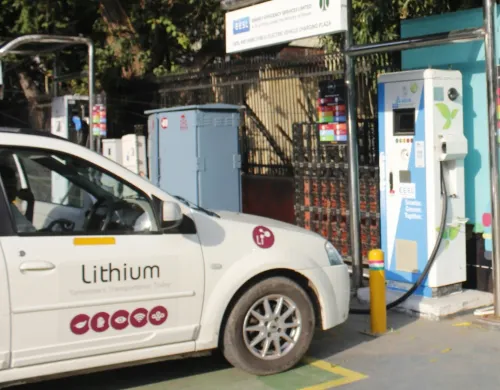
Electricity use by EVs and through captive/off-grid modes are identified as significant untracked data gaps, with an initial framework proposed.
All line Energy Ministries have been urged to adopt uniform conversion factors for inter-ministerial consistency.
The Bureau of Energy Efficiency (BEE) has been asked to build a comprehensive database under the PAT scheme.
The Ministry of Statistics and Programme Implementation (MoSPI) on Monday, 6 July released the report of its Expert Committee on Energy Statistics, outlining critical methodological reforms to address long-standing data gaps in India's energy statistics framework — covering biofuels, captive power, and electricity consumption by electric vehicles (EVs).
What the Committee Was Set Up to Do
MoSPI constituted the Expert Committee under the chairmanship of Dr Rangan Banerjee, Director of IIT Delhi, with senior representatives drawn from line Energy Ministries and domain experts from institutions including The Energy Research Institute (TERI) and the Alliance for an Energy Efficient Economy (AEEE). The committee's mandate was to harmonise India's energy statistics database in coordination with relevant Energy Ministries — a process that has taken on fresh urgency as the country accelerates its renewable energy and Net Zero commitments.
Key Recommendations
The committee has called for adoption of international standards in data collection and dissemination, aligning tabulation categories with the International Standard Industrial Classification (ISIC) Rev. 5, National Industrial Classification (NIC)-2025, and the Standards International Energy-product Classification (SIEC). It also urged all line Energy Ministries to adopt uniform conversion factors to ensure inter-ministerial consistency.
On coal, the committee proposed a refined methodology for tracking sectoral end-use consumption of imported coal — which accounts for around 20 per cent of India's total coal consumption — as well as domestic coal routed via auction, both of which have historically been clubbed under a broad miscellaneous category. The approach draws on the Annual Survey of Industries (ASI) database to capture industry-wise consumption. A similar ASI-based methodology was recommended for mapping electricity end-use consumption across industries.
The Bureau of Energy Efficiency (BEE) has been asked to develop and maintain a comprehensive database under the Perform, Achieve, and Trade (PAT) scheme.
Biofuel Data: Closing a Major Gap
One of the most consequential findings concerns biofuel. In the absence of consolidated national-level data, the United Nations Statistical Division (UNSD) currently estimates India's biofuel consumption at roughly 31–34 per cent of total annual energy consumption — based on its own modelling rather than verified Indian data. The committee has recommended a comprehensive methodology to fill this gap and incorporate biofuel accurately into India's energy balance table.
Captive Power and EV Electricity Consumption
Electricity consumed through captive and off-grid modes and by EVs represent two of the most significant untracked segments in India's energy accounting. The committee has proposed an initial methodological framework for both, though it acknowledged that further refinement by researchers and data users will be needed before these estimates can be reliably incorporated into the national energy balance database.
What Happens Next
MoSPI has emphasised that implementing these recommendations will require sustained collaboration across all concerned ministries and stakeholders. The reforms are intended to improve data quality, analytical usefulness, and international comparability — and to support evidence-based policymaking as India navigates its ongoing energy transition. With the country's Net Zero targets drawing closer scrutiny from global investors and multilateral agencies, the quality of underlying energy data has direct implications for policy credibility.
Point of View
Especially as India courts global climate finance and sovereign green bond investors who rely on this data. The EV and captive power gaps are equally telling: two of the fastest-growing segments of the energy economy are essentially invisible in the national accounts. The committee's framework is a necessary first step, but the harder test will be inter-ministerial coordination — a challenge that has historically stalled data reform efforts in India.
NationPress
5 Oct 2026
Frequently Asked Questions
What is the MoSPI Expert Committee on Energy Statistics report?
It is a report released by the Ministry of Statistics and Programme Implementation on 6 July, recommending methodological reforms to address data gaps in India's energy statistics — covering biofuels, captive power, imported coal, and EV electricity consumption. The committee was chaired by IIT Delhi Director Dr Rangan Banerjee and included representatives from Energy Ministries, TERI, and AEEE.
Why does India's biofuel data gap matter?
Because no consolidated national data exists, the United Nations Statistical Division currently estimates India's biofuel consumption at 31–34% of total annual energy use based on its own modelling. This means a major share of India's energy balance is not being tracked domestically, undermining the reliability of national energy accounts and climate reporting.
What data gaps has the committee identified for EVs and captive power?
Electricity consumed through captive and off-grid modes and by electric vehicles are among the most significant untracked segments in India's energy data. The committee has proposed an initial methodological framework for both, with the acknowledgement that further refinement will be needed before reliable estimates can be incorporated into the national energy balance.
What international standards will India's energy statistics align with?
The committee recommends aligning data collection and tabulation with the International Standard Industrial Classification (ISIC) Rev. 5, National Industrial Classification (NIC)-2025, and the Standards International Energy-product Classification (SIEC). All line Energy Ministries have also been asked to adopt uniform conversion factors to ensure consistency across agencies.
What role does the Bureau of Energy Efficiency play in the new framework?
The Bureau of Energy Efficiency (BEE) has been recommended to develop and maintain a comprehensive energy database under the Perform, Achieve, and Trade (PAT) scheme, which would help track industry-level energy consumption more accurately.