Nvidia Bets on CUDA-X Software to Lead Accelerated Computing
Synopsis
Nvidia declared on August 24, 2026 that its CUDA-X software library stack — built on the CUDA platform launched in 2006 — is the key to unlocking domain-specific GPU performance for AI, HPC, and enterprise workloads, underscoring the company's pivot from chip maker to full-stack accelerated computing provider.
Key Takeaways
Nvidia announced on August 24, 2026 that its strategy extends beyond GPU hardware to encompass software and algorithms under the CUDA-X platform.
CUDA-X is a suite of GPU-accelerated libraries built on the CUDA parallel computing platform, which Nvidia introduced in 2006 .
The libraries provide domain-specific acceleration for AI , HPC , data analytics, and other enterprise workloads.
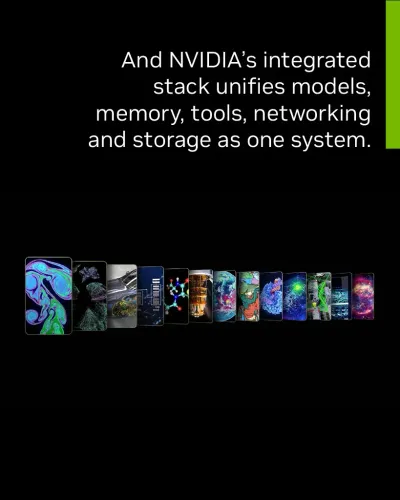
Nvidia's full-stack pivot — bundling optimised software with hardware — is designed to deepen developer lock-in and raise switching costs for competitors.
Key audiences include AI developers , HPC researchers , and enterprise software teams globally.
Watch Nvidia's GTC conference for upcoming CUDA-X library updates and new industry partnership announcements.
Nvidia is no longer content to be the world's fastest chip maker — it wants to own the entire stack. On Monday, August 24, 2026, chip giant Nvidia Corporation declared that its ambitions stretch well beyond graphics processing units, spotlighting CUDA-X as the software engine it believes will redefine what accelerated computing can actually deliver.
From silicon to software: what CUDA-X actually does
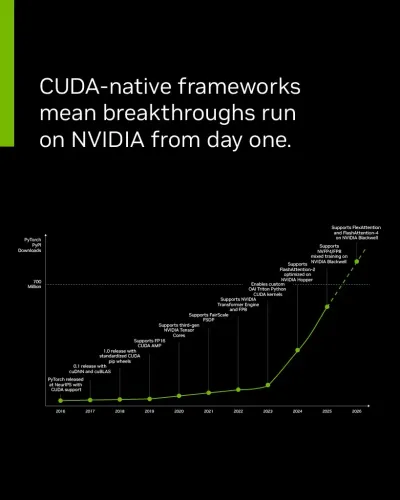
Nvidia's post put it plainly: 'We're building the software and algorithms that help redefine what accelerated computing can do.' At the centre of that claim sits CUDA-X — a collection of GPU-accelerated libraries built on top of the CUDA parallel computing platform that Nvidia first introduced in 2006. Where CUDA gave developers a way to run general-purpose workloads on GPUs, CUDA-X layers domain-specific acceleration on top: purpose-built libraries tuned for artificial intelligence, high-performance computing (HPC), data analytics, and beyond.
Think of it this way: the GPU is the engine, CUDA is the drivetrain, and CUDA-X is the set of precision-engineered gearboxes that let each industry — from genomics labs to financial risk desks — extract maximum torque for its specific workload. The company's latest push frames these libraries not as optional add-ons but as the core reason to choose Nvidia infrastructure.
Why the full-stack pivot matters now
Nvidia's move from pure hardware to integrated hardware-software provider mirrors a broader industry reckoning: raw compute speed alone no longer wins enterprise contracts. What wins is the ability to ship a complete, optimised solution that cuts time-to-result for AI training, inference, and scientific simulation. By bundling CUDA-X libraries tightly with its accelerators, Nvidia raises the switching cost for the AI developers, HPC researchers, and enterprise software teams who build on its platform — making the ecosystem, not just the chip, the moat.
The company accompanied the post with a video walking through how CUDA-X libraries convert raw GPU compute into domain-specific performance gains. The visual case study format signals that Nvidia is increasingly marketing its software story to a technical audience that needs to justify infrastructure spend to finance teams, not just benchmark sheets to fellow engineers.
What developers and enterprises should watch next
The next signal to track is Nvidia's GTC conference, where the company typically unveils new CUDA-X library updates and partnership expansions that bring additional frameworks and industries into the ecosystem. Each new library added to the CUDA-X stack deepens developer lock-in and widens the addressable market — a compounding effect that has already made Nvidia the default infrastructure choice for the global AI build-out.
Nvidia's message on August 24 was quiet in tone but loud in strategic intent: the GPU era is not ending, it is evolving — and the company intends to own both the silicon and the software that define what comes next.
Point of View
Switching to a rival accelerator means rewriting code, not just swapping hardware. This mirrors how dominant platforms in other tech sectors have used developer ecosystems to entrench hardware advantages. For India's fast-growing AI and cloud-infrastructure sector, the implication is significant — dependency on Nvidia's software layer will likely deepen alongside GPU adoption. The company that controls the software abstraction ultimately controls the economics of the entire AI compute market.
NationPress
25 Aug 2026
Frequently Asked Questions
What is CUDA-X and how is it different from CUDA?
CUDA is Nvidia's foundational parallel computing platform launched in 2006 that lets developers run general-purpose workloads on GPUs. CUDA-X is a collection of domain-specific libraries built on top of CUDA that deliver pre-optimised acceleration for fields like AI, high-performance computing, and data analytics — so developers get tuned performance without building from scratch.
Why is Nvidia focusing on software like CUDA-X?
Nvidia is expanding from a GPU hardware company into a full-stack provider. By bundling optimised software libraries with its accelerators, it raises the value of its ecosystem and increases the cost for customers to switch to rival chips — making software the long-term competitive moat.
Who uses CUDA-X libraries?
CUDA-X is used by AI developers, high-performance computing researchers, enterprise software teams, and scientists in fields ranging from genomics to financial modelling — anyone who needs maximum GPU throughput for a specific workload.
What does accelerated computing mean in the context of Nvidia?
Accelerated computing refers to using specialised processors like GPUs to handle tasks far faster than a traditional CPU can. Nvidia's accelerated computing platform combines its GPU hardware with software like CUDA and CUDA-X to speed up AI training, inference, and scientific simulations.
What should developers watch for next from Nvidia on CUDA-X?
The next major signal will come at Nvidia's GTC conference, where the company typically announces new CUDA-X library updates, expanded framework support, and industry partnerships that broaden the platform's reach.