Nvidia spotlights Taiwan as engine of global AI factory buildout
Synopsis
Chip giant Nvidia has publicly credited Taiwan with powering the world's AI factory buildout, naming TSMC, Foxconn, QCT, Pegatron and Wistron as key partners. The post ties the endorsement to the ramp of its Vera Rubin architecture for agentic AI factories and points readers to an NVIDIA GTC blog.
Key Takeaways
Nvidia's corporate account named TSMC , Foxconn , QCT , Pegatron and Wistron as central to the global AI factory buildout.
The post is anchored to the ramp of the Vera Rubin GPU architecture for agentic AI factories.
Taiwan accounts for over 60 percent of global semiconductor output and an even larger share of leading-edge logic.
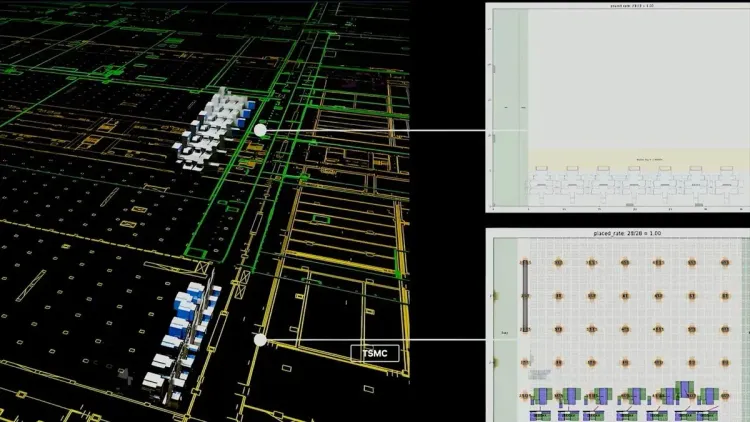
Partners are deploying accelerated computing, digital twins and AI agents inside fabs and assembly lines.
The message ties into the NVIDIA GTC developer conference content cycle.
The concentration of advanced manufacturing in Taiwan continues to shape US, EU and Indian chip policy.
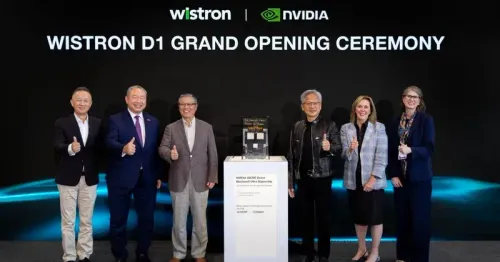
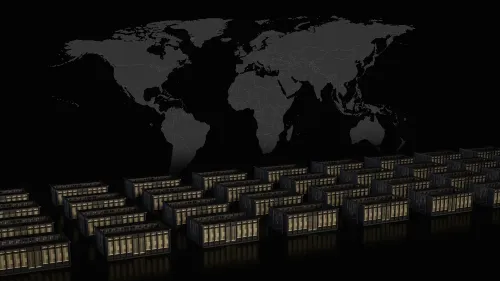
Chip giant Nvidia has publicly credited Taiwan with powering the world's AI factory buildout, naming TSMC, Foxconn, QCT, Pegatron and Wistron as the manufacturing leaders driving the transformation. The post, published on 3 June 2026 from the company's official corporate handle, frames the island as central to the rollout of its next-generation Vera Rubin architecture for agentic AI factories.
'Taiwan isn't just building AI infrastructure, it's powering the world's AI factory buildout,' the company said, adding that its named partners are deploying 'accelerated computing, digital twins, and AI agents to transform how AI systems are designed, built, and scaled.' The message points readers to a blog tied to the NVIDIA GTC developer conference.
Context
The tweet anchors a broader marketing arc around Nvidia's transition from the Blackwell generation of GPUs to Vera Rubin, the successor architecture positioned for large-scale AI training and inference workloads. By tying the ramp directly to Taiwanese manufacturing partners, the company is signalling that the production base for its highest-value silicon and systems remains concentrated on the island.
The cited firms span the full stack of the AI hardware chain. TSMC fabricates Nvidia's most advanced logic chips, while Foxconn, Quanta Cloud Technology (QCT), Pegatron and Wistron assemble the GPU servers, racks and reference systems that hyperscale customers install in data centres.
Policy backdrop
Taiwan produces more than 60 percent of the world's semiconductors and an even larger share of leading-edge logic, a concentration that has shaped industrial policy across the United States, the European Union, Japan and India. The US CHIPS and Science Act of 2022 committed federal subsidies to diversify fabrication capacity, even as advanced packaging and assembly remained anchored in the Taipei-Hsinchu corridor.
Nvidia's own ascent rests on a longer lineage, beginning with the launch of its CUDA programming platform in 2006, which opened general-purpose computing on GPUs and seeded the software ecosystem that today underpins generative AI. TSMC's roadmap toward 2 nm process technology, updated through 2022-2023, has been calibrated in large part to AI accelerator demand.
Stakeholders and impact
For Taiwan's contract manufacturers, the endorsement reinforces their position as preferred integrators for AI infrastructure at a moment when hyperscale cloud operators and sovereign AI projects are competing for allocation. The message that 'AI infrastructure becomes part of its own manufacturing engine' suggests deeper deployment of Nvidia's Omniverse digital-twin tools and AI agents inside fabs and assembly lines.
For policymakers in New Delhi, the post is a reminder of how narrow the global supplier base for AI hardware remains. India's semiconductor mission, anchored by fab and assembly incentives, has positioned the country to attract downstream packaging and systems work, but the cutting edge of GPU manufacturing still routes through Taiwan.
Geopolitically, the concentration sits against persistent concerns over Taiwan Strait stability and tightening US export controls on AI technology to China, factors that have pushed buyers to seek dual-sourcing while still depending on Taiwanese capacity for volume.
What's next
Markets and the developer community will watch upcoming NVIDIA GTC keynote sessions for firmer timelines on the Vera Rubin ramp and for additional Taiwan-centric manufacturing case studies. Taiwan government budget cycles, including allocations for AI research and fab incentives, will indicate whether the island's policy support keeps pace with the buildout Nvidia is now publicly celebrating.
The wider implication is that AI infrastructure is increasingly self-reinforcing: the same accelerated-computing systems being shipped to customers are also being installed inside the factories that build them, compressing design and production cycles for the next generation of chips.
Point of View
Nvidia is acknowledging that the leading edge of AI hardware, from wafer to rack, remains concentrated on one island, even as Washington's CHIPS Act and similar programmes in New Delhi, Tokyo and Berlin attempt diversification. The framing of AI infrastructure as 'part of its own manufacturing engine' also signals a deeper commercial play: selling Nvidia's accelerated computing and digital-twin stack into the very factories that build its chips. For Indian policymakers, it is a reminder that downstream assembly incentives alone will not close the gap with the Taipei-Hsinchu corridor.
NationPress
17 Oct 2026
Frequently Asked Questions
What did Nvidia say about Taiwan?
Nvidia said Taiwan is 'powering the world's AI factory buildout' and named TSMC, Foxconn, QCT, Pegatron and Wistron as leaders using accelerated computing, digital twins and AI agents to transform how AI systems are designed and built.
What is NVIDIA Vera Rubin?
Vera Rubin is Nvidia's next-generation GPU architecture, the successor to Blackwell, positioned for large-scale AI training and inference workloads in what the company calls agentic AI factories.
Why is Taiwan so important for AI chips?
Taiwan produces more than 60 percent of the world's semiconductors and hosts TSMC, the dominant manufacturer of leading-edge logic chips used in Nvidia's GPUs, alongside major electronics assemblers like Foxconn, Pegatron and Wistron.
How does this affect India's semiconductor plans?
It underscores that the cutting edge of GPU manufacturing remains anchored in Taiwan, so India's fab and assembly incentives will need to scale and deepen to participate meaningfully in the AI hardware value chain.