Nvidia Launches AI Tool to Detect Synthetic Video in Media

Synopsis
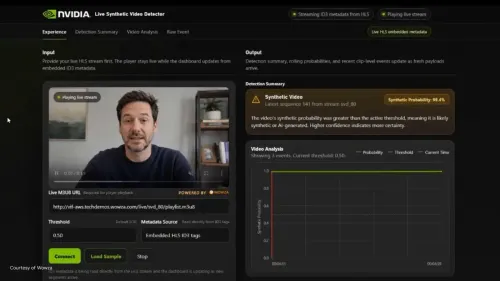
Nvidia has unveiled the Synthetic Video Detector NIM microservice at SIGGRAPH 2026, built on its AI for Media platform to help broadcasters and publishers authenticate video content inside live production workflows as AI-generated media becomes increasingly prevalent.
Key Takeaways
Nvidia announced the Synthetic Video Detector NVIDIA NIM microservice on 20 July 2026 .
The tool is built on the NVIDIA AI for Media platform and targets broadcasters, publishers, and content teams.
It is designed to verify whether video is AI-generated at the speed of production , integrating into existing media workflows.
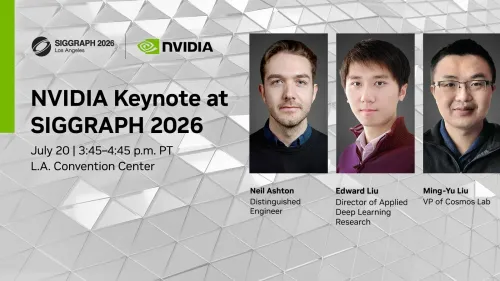
The announcement was made under #SIGGRAPH2026 , the annual ACM conference on computer graphics and interactive techniques.
The launch reflects growing industry demand for synthetic media detection tools as generative AI lowers barriers to creating fake video.
Chip giant Nvidia on Monday, 20 July 2026 announced the Synthetic Video Detector NVIDIA NIM microservice, a tool built on its NVIDIA AI for Media platform designed to help broadcasters, publishers, and content teams verify whether video has been AI-generated — at the speed of modern production workflows.
Context
In its post on X, Nvidia stated: 'As AI-generated content becomes more prevalent, media organizations need trusted tools to help verify video at the speed of production.' The announcement was made under the #SIGGRAPH2026 banner, tying the launch to the annual ACM SIGGRAPH conference — the industry's flagship gathering on computer graphics, animation, and interactive techniques.
The microservice is positioned as an authenticity layer that integrates directly into existing media pipelines, rather than requiring organisations to build standalone detection infrastructure from scratch.
Policy Backdrop
The rise of generative AI has dramatically lowered the cost and complexity of producing synthetic video, placing new pressure on newsrooms and broadcast organisations to authenticate footage before publication or transmission. Detection tools that operate inside production pipelines — rather than as post-hoc audits — have become a priority for the media industry globally.
Hardware and software vendors have responded by developing specialised inference microservices aimed at media workflows. Nvidia's NIM (NVIDIA Inference Microservice) architecture is the company's broader framework for packaging AI models as deployable, scalable units that integrate with enterprise software stacks.
Stakeholders and Impact
Broadcasters and publishers are the primary audiences for the new tool, according to Nvidia's announcement. Content teams working under deadline pressure stand to benefit most, as the microservice is designed to function 'at the speed of production' — meaning it can flag synthetic video without adding significant latency to editorial workflows.
For Indian media organisations operating large digital and broadcast operations, the availability of such a tool within an established AI infrastructure platform could reduce reliance on manual verification processes, which are slower and resource-intensive. The broader implication extends to election coverage, breaking-news verification, and social media content moderation — areas where synthetic video poses acute risks.
What's Next
SIGGRAPH 2026 is expected to feature further demonstrations and integration case studies around AI media pipeline tools, with Nvidia's announcement likely to draw attention from technology and media professionals attending the conference. The company has shared a product link alongside the announcement, signalling that the microservice is being positioned for near-term adoption.
As synthetic media detection becomes a competitive space, the integration of such capabilities directly into GPU-backed infrastructure platforms could set a new baseline expectation for media technology vendors. The pace of adoption among major broadcasters and publishers will be a key indicator of how seriously the industry is treating AI-generated content as a verification challenge.
Point of View
The company is targeting the technical decision-makers who actually build media pipelines, not just executives who approve budgets. For the broader media industry, this represents a recognition that deepfake and synthetic-content risks can no longer be addressed by policy alone — they require tooling baked into the production stack. The competitive pressure this creates on other AI infrastructure vendors will likely accelerate the availability of similar detection capabilities across the industry.
NationPress
21 Jul 2026
Frequently Asked Questions
What is the Nvidia Synthetic Video Detector NIM microservice?
It is an AI tool built on the NVIDIA AI for Media platform that helps broadcasters, publishers, and content teams detect whether video has been synthetically generated, designed to work within existing production workflows at production speed.
Why do media organisations need synthetic video detection tools?
Generative AI has made it easier and cheaper to create realistic fake video, increasing the risk of misinformation. Detection tools help newsrooms and broadcasters verify content authenticity before publication or broadcast.
What is SIGGRAPH 2026?
SIGGRAPH is the annual ACM conference on computer graphics, animation, and interactive techniques. It serves as a major venue for demonstrating new AI and media technology tools, including content authenticity solutions.
How does this Nvidia tool affect Indian media organisations?
Indian broadcasters and digital publishers could use the tool to reduce reliance on manual video verification, particularly during high-stakes events like elections or breaking-news situations where synthetic video poses significant risks.