Nvidia unveils AI for Media suite for live and archive video
Synopsis
Chip giant Nvidia has unveiled NVIDIA AI for Media, a stack pairing a Synthetic Video Detector with RTX Video Super Resolution and Frame Generation. The company says the tools upscale footage from 480p to 8K, boost frame rates two to four times, and run across on-prem and cloud, targeting broadcasters, sports streamers and archive owners.
Key Takeaways
Nvidia announced NVIDIA AI for Media , a stack for live and on-demand video workflows.
The Synthetic Video Detector is claimed to deliver up to 92% accuracy with latency as low as 22 ms .
RTX Video Super Resolution and Frame Generation upscale from 480p to 8K and boost frame rates 2-4x .
The platform runs across on-prem and cloud deployments for hybrid media pipelines.
Target users include broadcasters, sports streamers, content archivists and localisation teams.
The release aligns with rising regulatory focus on AI-generated content labelling.
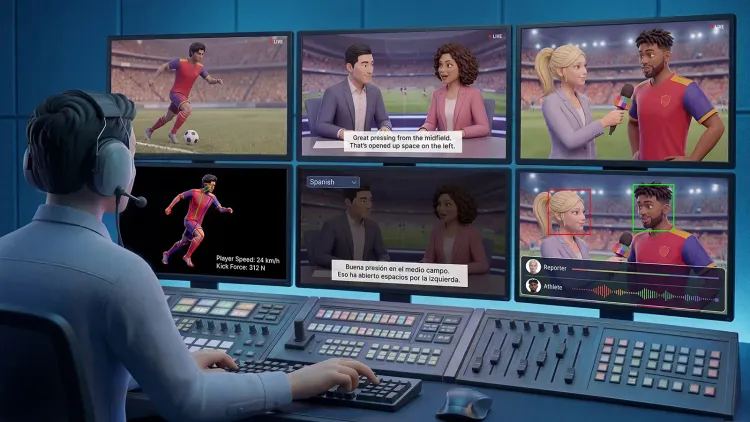
Chip giant Nvidia on Tuesday announced a new NVIDIA AI for Media stack designed to bring real-time artificial-intelligence performance into live broadcasts and on-demand video workflows. The corporate account said the package combines synthetic-video detection, super-resolution upscaling and frame generation, targeted at broadcasters, streamers and content archivists.
According to the post, the suite's Synthetic Video Detector delivers 'up to 92% accuracy' with 'latency as low as 22 ms' for AI video authenticity checks, while RTX Video Super Resolution and Frame Generation upscale footage 'from 480p to 8K' and 'boost frame rates by 2-4x' for archive refresh and premium sports streams. The company added that the stack 'scales across on-prem and cloud,' helping teams localise content and 'unlock new value from massive video archives.'
Context
Nvidia Corporation, founded in 1993 and led by chief executive Jensen Huang, has progressively pushed its graphics-processing platforms beyond gaming into data-centre AI, autonomous systems and now real-time media pipelines. The RTX architecture, first introduced for real-time ray tracing, has been extended in recent years to AI-driven upscaling and frame interpolation.
The latest announcement folds three workflows — authenticity verification, resolution enhancement and frame generation — under a single 'AI for Media' umbrella, signalling a productised approach to a market that broadcasters have until now stitched together from multiple vendors.
Policy backdrop
Nvidia's media play sits within a broader technology arc that began with the launch of the CUDA parallel-computing platform in 2006, which first opened GPUs to general-purpose acceleration and, eventually, modern AI workloads. Since then, the company has steadily moved AI capabilities from training clusters into inference at the network edge.
The synthetic-video detection feature lands as governments worldwide weigh disclosure rules for AI-generated content. India's Ministry of Electronics and Information Technology has issued advisories on deepfakes and labelling of synthetic media, while the European Union's AI Act includes transparency obligations for generative outputs. Tools that flag manipulated frames in near real time are likely to feature in broadcasters' compliance kits.
Stakeholders and impact
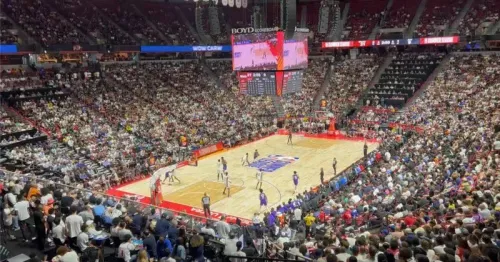
The immediate audience is media companies, sports rights holders and content archivists. Live sports producers have been among the most aggressive buyers of frame-generation and upscaling pipelines, since they can convert older standard-definition footage into ultra-high-definition replays without reshoots.
Archive monetisation is the second prize. Studios and broadcasters across India and South Asia hold decades of masala (commercial) cinema, news bulletins and regional programming locked in sub-HD formats; AI upscaling promises to make that catalogue viable for premium streaming tiers and 4K-only platforms.
For Indian post-production houses in Mumbai, Hyderabad and Chennai, the on-prem option is significant because rights-protected masters frequently cannot leave studio premises. A hybrid on-prem and cloud deployment lowers the barrier for mid-sized facilities that lack hyperscale budgets.
What's next
Attention will turn to how quickly major broadcasters and over-the-top platforms adopt the tools, and whether independent benchmarking corroborates the performance figures cited by the company. Detection accuracy and latency claims for synthetic-media tools tend to vary sharply by content type, lighting and compression.
Regulators are the other variable. If India, the European Union or the United States move from advisories to binding rules on labelling AI-generated video, a detector that runs in tens of milliseconds could shift from a value-add to a compliance requirement — and Nvidia's positioning ahead of that curve could shape procurement cycles across the global media industry.
Point of View
Upscaling and frame generation into one branded stack, the company is positioning itself as the default infrastructure layer for a media industry navigating both 8K demand and deepfake anxiety. The on-prem and cloud flexibility is a deliberate hedge for markets like India, where rights-bound masters rarely leave studio walls. The bigger question is whether regulators globally tilt synthetic-media detection from an optional feature into a compliance baseline, which would harden Nvidia's grip on broadcaster procurement.
NationPress
18 Oct 2026
Frequently Asked Questions
What is NVIDIA AI for Media?
NVIDIA AI for Media is a stack of AI tools from Nvidia aimed at live and on-demand video workflows. It bundles a Synthetic Video Detector, RTX Video Super Resolution and Frame Generation, and is designed to run across on-prem and cloud deployments for broadcasters and content archivists.
How accurate is Nvidia's Synthetic Video Detector?
Nvidia says its Synthetic Video Detector delivers up to 92% accuracy with latency as low as 22 milliseconds for AI video authenticity checks, according to its announcement post. Independent benchmarks have not yet been published.
Can RTX Video Super Resolution really upscale to 8K?
Nvidia says RTX Video Super Resolution can upscale footage from 480p to 8K and that Frame Generation can boost frame rates by two to four times. The company positions these for archive refresh and premium sports streams.
Why does Nvidia AI for Media matter for Indian broadcasters?
Indian broadcasters and studios hold large archives of sub-HD content that could be remastered for premium 4K and 8K streaming tiers. The on-prem option also lets Mumbai, Hyderabad and Chennai post-production houses process rights-protected masters without sending them to public cloud.
How does this connect to deepfake regulation?
Governments including India and the European Union are tightening rules on labelling AI-generated content. A low-latency synthetic-video detector could help broadcasters meet emerging disclosure and authenticity requirements in near real time.