Nvidia Launches Alpamayo 2 Super for Autonomous Vehicles
Synopsis
Nvidia has made Alpamayo 2 Super commercially available — an open reasoning model built for robotaxis and autonomous vehicles, featuring 360-degree awareness, high-level driving decisions, and automated reasoning labels that create an auditable decision trail for real-world deployment.
Key Takeaways
Alpamayo 2 Super is now commercially available from Nvidia for robotaxi and autonomous vehicle developers.
The model provides 360-degree environmental awareness and handles high-level driving decisions in complex real-world conditions.
Automated reasoning labels document the model's decision chain, enabling regulatory and operator audits.
Nvidia is releasing it as an open reasoning model , inviting developers to build fleet and vehicle products on top of it.
The commercial-grade release signals the model has passed Nvidia's bar for production deployment, not just research use.
The race to put self-driving cars on real roads just got a significant new entrant. Chip giant Nvidia on Tuesday, August 4, 2026, announced the commercial availability of Alpamayo 2 Super, an open reasoning model purpose-built for robotaxis and autonomous vehicles navigating the unpredictable complexity of real-world roads.
What Alpamayo 2 Super actually does behind the wheel
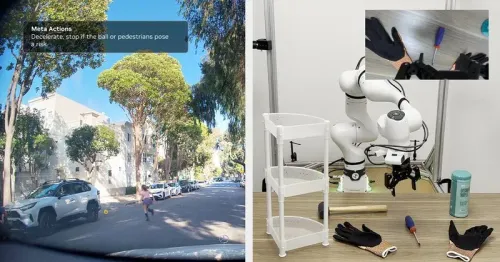
Alpamayo 2 Super is not a general-purpose AI model repurposed for cars — it is engineered from the ground up for the autonomous driving stack. The model delivers 360-degree environmental awareness, enabling a vehicle to simultaneously process everything happening around it, not just what is directly ahead. On top of perception, it handles high-level driving decisions: when to merge, how to read an ambiguous intersection, how to respond to a cyclist cutting across a lane.
Critically, Nvidia has baked in automated reasoning labels — a mechanism that documents the model's decision-making chain. This is not a small detail. Regulators and fleet operators need to understand why an autonomous system made a specific choice, and reasoning labels make that audit trail possible. It is the difference between a black box and an accountable machine.
Open model, commercial ambition
Nvidia is releasing Alpamayo 2 Super as an open reasoning model, a deliberate strategic choice. By letting developers build directly on top of it, Nvidia positions itself not just as a hardware supplier but as the foundational software layer of the autonomous vehicle industry. The company's own framing — 'We built it, so you can build on it' — signals an ecosystem play: attract robotaxi startups, fleet operators, and automotive OEMs who want a production-ready AI base without training from scratch.
The commercial availability announcement means the model has cleared Nvidia's internal bar for deployment-grade reliability, moving it from research preview into the hands of companies building vehicles that carry passengers.
Why this moment matters for the AV industry
Autonomous vehicles have long struggled with the gap between controlled-environment performance and the chaos of real roads — unexpected pedestrian behaviour, faded lane markings, construction zones, monsoon-soaked streets. Alpamayo 2 Super's design brief explicitly targets 'complex real-world driving,' suggesting Nvidia has stress-tested it against exactly these edge cases.
For the Indian market, where road conditions rank among the world's most demanding, a model with robust 360-degree reasoning and transparent decision labels could accelerate conversations between AV developers and domestic regulators who have been cautious about permitting autonomous trials at scale.
Nvidia has just handed the autonomous vehicle industry a new foundation to build on. What developers construct on top of it will define whether self-driving finally moves from promise to pavement.
Point of View
Nvidia embeds itself into the AV stack at the software layer, not just the silicon layer. The inclusion of automated reasoning labels is the most consequential technical detail — it directly addresses the regulatory explainability problem that has slowed AV approvals globally. This move mirrors how cloud providers offer pre-trained models to lock in developer ecosystems, and it positions Nvidia as the 'picks and shovels' supplier of the autonomous vehicle era regardless of which robotaxi company ultimately wins the market.
NationPress
19 Sept 2026
Frequently Asked Questions
What is Nvidia Alpamayo 2 Super?
Alpamayo 2 Super is an open reasoning AI model from Nvidia, commercially available as of August 2026, designed specifically for robotaxis and autonomous vehicles. It provides 360-degree awareness, high-level driving decisions, and automated reasoning labels.
Is Alpamayo 2 Super available for developers to use?
Yes. Nvidia has released it as an open reasoning model, meaning developers and companies building autonomous vehicles or robotaxi platforms can directly build their products on top of it.
What are automated reasoning labels in autonomous driving AI?
Automated reasoning labels are records of the model's decision-making process — they document why the AI made a specific driving choice. This creates an auditable trail that regulators and fleet operators can review.
How does Alpamayo 2 Super handle complex road conditions?
The model is built for 360-degree environmental awareness, processing inputs from all directions simultaneously, and is designed to handle unpredictable real-world scenarios such as ambiguous intersections, pedestrians, and complex traffic situations.
What does this mean for autonomous vehicles in India?
India's demanding road conditions make explainable, robust AV models especially relevant. Alpamayo 2 Super's real-world design and reasoning labels could help AV developers engage Indian regulators who require transparency in autonomous system decisions before permitting large-scale trials.