Nvidia Partners Korea on AI Chips, Robotics and AI Factories
Synopsis
Nvidia declared a 'Golden Age of Korea' on 25 July 2026, announcing partnerships with Korean government and industry to advance the K-AI vision across chips, frontier AI, physical AI, robotics, and AI factories — marking a major step in Korea's push to become a top-tier AI infrastructure hub by 2030.
Key Takeaways
Nvidia announced on 25 July 2026 that it is partnering with South Korea across government, industry, and global technology on AI infrastructure.
The collaboration covers chips, frontier AI, physical AI and robotics, and AI factories under what Nvidia calls the 'K-AI vision'.
South Korea has pursued structured AI policy since its 2019 National Strategy for Artificial Intelligence , targeting top-tier AI capability by 2030 .
The Framework Act on Intelligent Informatization (2022) provides the legislative backbone for Korea's AI acceleration drive.
The partnership positions Korea as a key node in US-aligned AI supply chains amid ongoing US-China technology competition .
Follow-on announcements on joint AI data centre projects and Korean government AI budget allocations are expected.
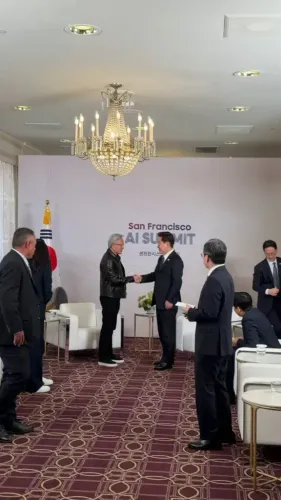
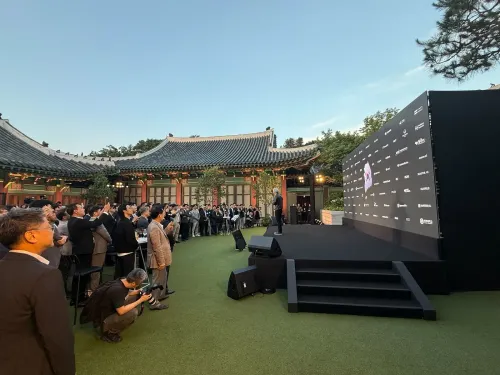
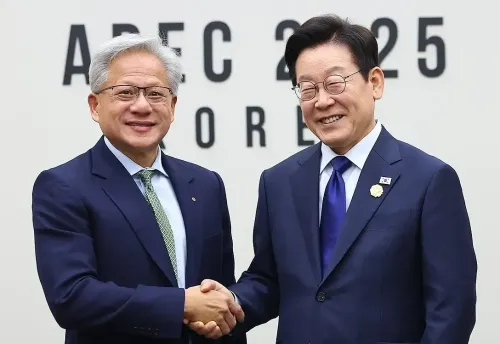
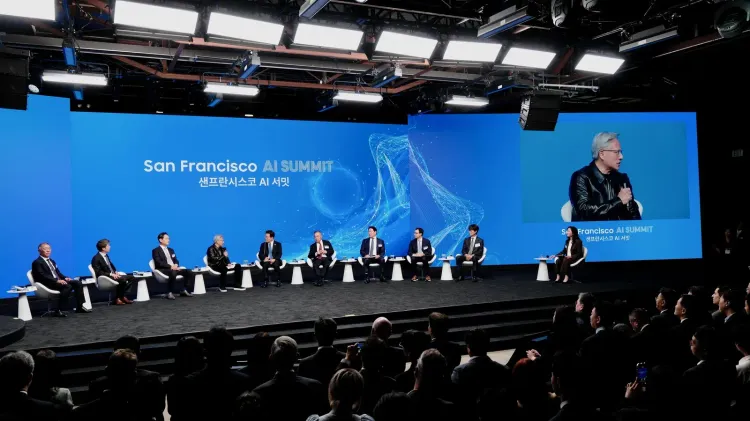
Chip giant Nvidia announced on Saturday, 25 July 2026 that it is partnering with leaders across government, industry, and global technology in South Korea to advance what it calls the 'K-AI vision' — spanning chips, frontier AI, physical AI and robotics, and AI factories.
Context
In its post on X, Nvidia declared: 'This is the Golden Age of Korea,' framing the partnership as a landmark moment for the country's artificial intelligence ambitions. The company said it is proud to partner with stakeholders 'across government, industry, and global technology' to build AI infrastructure for Korea, covering the full stack from silicon to AI factories.
The announcement reflects Nvidia's expanding role as the dominant supplier of GPU-based AI accelerators globally, with South Korea representing a strategically critical market given its world-class semiconductor ecosystem anchored by firms such as Samsung and SK Hynix.
Policy Backdrop
South Korea has pursued national AI capacity building through a structured policy framework. Its National Strategy for Artificial Intelligence, announced in 2019, set a target of achieving top-tier AI capabilities by 2030. This was followed in 2022 by the Framework Act on Intelligent Informatization, which accelerated AI adoption across industry and government.
The K-AI vision referenced by Nvidia aligns with these legislative and strategic pillars, positioning AI infrastructure — data centres, compute clusters, and robotics — as the backbone of Korea's next phase of economic and technological development. Nvidia's involvement signals that the country is looking beyond domestic chip production to global AI compute partnerships.
Stakeholders and Impact
The partnership as described by Nvidia spans multiple layers: the Korean government, domestic industry players, and international technology partners. The explicit mention of 'physical AI and robotics' alongside frontier AI and AI factories suggests the collaboration extends well beyond cloud computing into industrial and manufacturing applications where Korea already holds significant global weight.
For Korea's semiconductor firms, a deepened Nvidia relationship could mean tighter integration between Nvidia's GPU architectures and Korean memory and logic chip production — a pairing that has strategic value as the global AI supply chain faces pressure from US-China technology competition. Allied Asian markets such as South Korea have become increasingly important nodes in US-aligned AI infrastructure build-outs.
AI researchers and startups in Korea stand to benefit from improved access to frontier compute, while the government gains a high-profile international partner to validate and accelerate its 2030 AI targets.
What's Next
The broader pattern of US AI hardware firms deepening ties with allied Asian nations suggests follow-on announcements are likely. Observers should watch for concrete disclosures on joint AI data centre projects, Korean government budget allocations for AI infrastructure in upcoming fiscal plans, and any formal agreements between Nvidia and Korean public or private sector entities.
If the K-AI vision materialises into large-scale AI factory deployments, South Korea could emerge as one of Asia's most significant AI compute hubs — a development with implications not only for the peninsula's economy but for the regional technology balance of power.
Point of View
Sitting at the intersection of advanced memory production and ambitious national AI policy, is a natural anchor for this strategy. For New Delhi, the announcement is a reminder that peer economies are moving fast to lock in AI infrastructure partnerships; India's own semiconductor and AI ambitions will be measured against the pace set by Seoul. The K-AI vision, if it translates into concrete AI factory deployments, could reshape Asia's technology hierarchy in ways that matter well beyond the Korean peninsula.
NationPress
25 Jul 2026
Frequently Asked Questions
What is Nvidia's K-AI vision partnership with South Korea?
Nvidia has announced a partnership with South Korean government and industry stakeholders to build AI infrastructure under the 'K-AI vision,' covering chips, frontier AI, physical AI, robotics, and AI factories, as stated in its 25 July 2026 post on X.
What is South Korea's national AI strategy?
South Korea launched its National Strategy for Artificial Intelligence in 2019, targeting top-tier AI capabilities by 2030, and reinforced this with the Framework Act on Intelligent Informatization passed in 2022 to accelerate AI adoption across industry and government.
Why is Nvidia investing in South Korea's AI infrastructure?
South Korea is a major semiconductor producer and a US-allied market, making it strategically important for Nvidia as US-China technology competition pushes AI hardware firms to deepen ties with allied Asian nations and diversify compute capacity.
What are AI factories and why do they matter for Korea?
AI factories are large-scale computing facilities purpose-built to train and run AI models at scale. For Korea, hosting such infrastructure would position it as a significant AI compute hub in Asia, supporting both domestic AI development and international technology partnerships.
How does Nvidia's Korea partnership affect India?
While the partnership is bilateral between Nvidia and South Korea, it sets a benchmark for AI infrastructure investment in allied Asian economies. India, which is also pursuing semiconductor and AI ambitions, may face competitive pressure to accelerate its own partnerships with global AI hardware leaders.