Nvidia Partners Lambda and Hudson River Trading on HGX B200
Synopsis
Nvidia has announced that GPU cloud provider Lambda is partnering with quantitative trading firm Hudson River Trading to power quantitative research and development using NVIDIA HGX B200 systems, Nvidia's latest Blackwell-generation rack-scale platform optimised for AI training and inference workloads.
Key Takeaways
Lambda is partnering with Hudson River Trading to deploy NVIDIA HGX B200 systems for quantitative research and development.
The HGX B200 is based on Nvidia's Blackwell GPU architecture , unveiled in March 2024 as the successor to the Hopper H100.
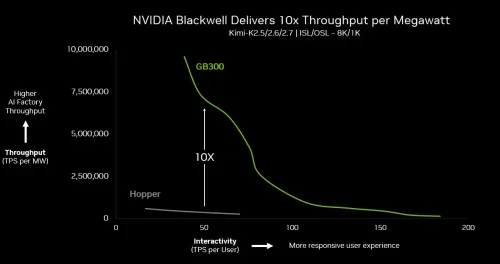
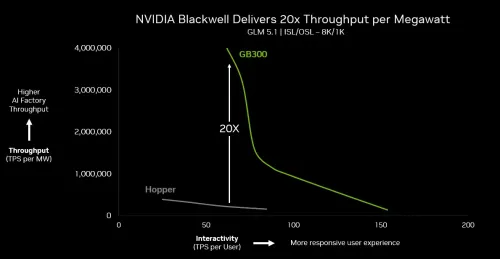
Nvidia positions the B200 as delivering the highest compute per watt, lowest token cost, and longest useful life among its platforms.
Lambda provides on-demand GPU cloud infrastructure, enabling enterprise clients to access cutting-edge hardware without direct capital expenditure.
Hudson River Trading is a leading quantitative trading firm that relies on advanced computing for high-frequency and statistical arbitrage strategies.
The partnership reflects a broader trend of financial services firms migrating quantitative workloads to the latest generation of AI accelerators.
Chip giant Nvidia announced on Thursday, 21 May 2026 that Lambda, a GPU cloud infrastructure provider, is partnering with quantitative trading firm Hudson River Trading to power quantitative research and development using NVIDIA HGX B200 systems — hardware Nvidia describes as delivering the highest compute per watt, lowest token cost, and longest useful life.
Context
The announcement, made via Nvidia's official corporate account on X, positions the HGX B200 as the compute backbone for Hudson River Trading's quantitative workflows. Lambda, which operates on-demand GPU cloud infrastructure targeted at AI researchers and developers, will serve as the intermediary platform providing access to the Blackwell-generation hardware. Nvidia described the B200 as 'the platform that delivers the highest compute per watt, lowest token cost, and longest useful life.'
Hudson River Trading is a prominent quantitative trading firm known for developing high-frequency and statistical arbitrage strategies that depend heavily on advanced computing power. The partnership signals a deepening of ties between specialised AI hardware and the financial services sector.
Policy Backdrop
Nvidia unveiled its Blackwell GPU architecture in March 2024, positioning the B200 as the direct successor to the widely adopted Hopper H100, with a focus on higher compute density and improved energy efficiency. The HGX B200 is a rack-scale platform optimised for both AI training and inference workloads at scale.
Nvidia has maintained a commanding share of the accelerated-computing market by tightly coupling its hardware with the CUDA software ecosystem, which has become the dominant development environment for AI applications globally. This software-hardware integration has made migration to each new Nvidia generation relatively seamless for existing customers.
Stakeholders and Impact
Financial services firms have steadily increased spending on specialised compute infrastructure to run machine-learning models for alpha generation, risk modelling, and market simulation. The Lambda-Hudson River Trading deployment reflects a broader industry migration of quantitative workloads onto the newest generation of Nvidia systems, driven by tightening constraints around power consumption and per-token inference costs.
For Lambda, the partnership reinforces its position as a preferred cloud provider for compute-intensive enterprise clients beyond the traditional AI research audience. For Hudson River Trading, access to HGX B200 systems through Lambda's cloud infrastructure could accelerate the development cycle for new quantitative strategies without the capital expenditure of owning hardware outright.
What's Next
Analysts and market observers will be watching Nvidia's next earnings report for updates on Blackwell deployment volumes and enterprise adoption rates across sectors. Separately, regulators in multiple jurisdictions have been scrutinising the growing use of AI and machine-learning models in high-frequency trading environments, a dynamic that could shape how firms like Hudson River Trading deploy and disclose their compute infrastructure going forward.
The convergence of AI cloud providers, next-generation GPU hardware, and quantitative finance points to a structural shift: as token costs and energy efficiency become central operational concerns, the choice of compute platform is increasingly a strategic, not merely a technical, decision for financial firms.
Point of View
Compute-hungry world of quantitative finance, a sector whose credibility rubs off on the hardware. By routing the partnership through Lambda rather than a direct enterprise sale, Nvidia also validates the GPU-cloud model as a viable delivery channel for its most advanced systems. The emphasis on 'lowest token cost' and 'compute per watt' is telling — it suggests Nvidia is acutely aware that total cost of ownership, not raw performance, is now the primary battleground as hyperscalers and cloud providers compete for enterprise AI budgets. Regulatory attention on AI in high-frequency trading remains a slow-burning variable that could eventually force greater transparency around the compute infrastructure underpinning these strategies.
NationPress
7 Oct 2026
Frequently Asked Questions
What is the NVIDIA HGX B200?
The NVIDIA HGX B200 is a rack-scale computing platform based on Nvidia's Blackwell GPU architecture, announced in March 2024 as the successor to the Hopper H100, and optimised for large-scale AI training and inference workloads.
What does Lambda do?
Lambda operates GPU cloud infrastructure that gives AI researchers, developers, and enterprise clients on-demand access to Nvidia hardware without requiring them to purchase or manage physical servers.
Who is Hudson River Trading?
Hudson River Trading is a prominent quantitative trading firm that develops high-frequency and statistical arbitrage strategies using advanced computing, including machine-learning models for market analysis.
Why are financial firms using Nvidia GPUs?
Financial services firms increasingly use specialised GPU hardware to run machine-learning models for alpha generation, risk modelling, and market simulation, as these workloads demand the kind of parallel compute that GPUs provide far more efficiently than traditional CPUs.
What is Nvidia's Blackwell GPU architecture?
Blackwell is Nvidia's GPU architecture generation unveiled in March 2024, designed to deliver higher compute density and improved energy efficiency compared to its predecessor, Hopper, and is the foundation of the HGX B200 platform.