Nvidia Redefines AI Infrastructure With 'Fungible' Platform Vision

Synopsis
Nvidia has defined 'fungible' AI infrastructure as a single platform capable of running every AI workload type, every development phase, and even non-AI tasks — framing the concept around three pillars: productivity, durability, and fungibility.
Key Takeaways
Nvidia introduced 'fungible' as the defining property of next-generation AI infrastructure on October 1, 2026 .
A 'fungible' platform can handle every type of AI, every phase of AI development, and workloads entirely outside AI.
Nvidia's platform is pitched on three pillars: productivity , durability (value that holds years after deployment), and fungibility .
The messaging directly targets a major industry pain point — specialised hardware becoming a stranded asset as workload priorities shift.
The announcement is accompanied by a detailed blog post expanding on the infrastructure vision.
The question sounds almost philosophical — but its answer could reshape how the world's data centres are built. Chip giant Nvidia on Thursday, October 1, 2026, laid out a sweeping vision for AI infrastructure centred on a single, loaded word: 'fungible' — meaning a platform fluid enough to run any workload, at any phase of AI development, and even tasks that have nothing to do with AI at all.
One platform, three promises: productivity, durability, fungibility
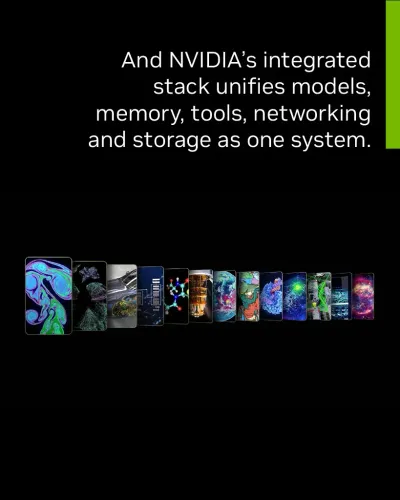
In a post directed at infrastructure architects and enterprise buyers, Nvidia distilled its platform philosophy into three interlocking properties. 'Productivity' addresses how efficiently a deployment generates output from day one. 'Durable' signals that the platform holds its value and relevance for years after the initial purchase — a pointed message in an industry where last year's flagship chip can feel obsolete by next quarter. And 'fungible' — the headline concept — promises that the same underlying infrastructure can pivot between training large language models, running inference pipelines, handling traditional high-performance computing jobs, or serving workloads that sit entirely outside the AI category.
The framing is a direct response to a recurring pain point for large cloud providers, sovereign AI projects, and enterprise IT teams: capital spent on specialised hardware that becomes a stranded asset the moment workload priorities shift. Nvidia's argument is that betting on a single, adaptable platform eliminates that risk entirely.
Why 'fungibility' is the sharpest word in the AI hardware debate right now
Fungibility — a term borrowed from economics, where it describes assets that are interchangeable unit-for-unit — is not a word that typically appears in chip marketing. Its use here is deliberate. It signals that Nvidia is positioning its infrastructure not as a narrow accelerator for one class of model or one generation of AI, but as a universal compute fabric. Every type of AI — generative, agentic, multimodal — and every phase — research, fine-tuning, deployment, post-training — can, in Nvidia's telling, run on the same stack.
The blog post linked in the announcement expands on these concepts, though the core message is already sharp in the post itself: a single platform designed for maximum productivity, built to last years, and flexible enough to handle whatever workload a customer throws at it next.
The stakes for India's AI infrastructure push
For India, where government-backed sovereign AI initiatives and a rapidly scaling startup ecosystem are driving aggressive data-centre investment, Nvidia's fungibility argument carries particular weight. Procurement cycles in public infrastructure are long, and the ability to justify a platform that remains relevant across shifting policy priorities — from large language models today to specialised domain AI tomorrow — is a compelling procurement case. The message lands at a moment when AI infrastructure investment decisions are being made for the next decade, not the next quarter.
In the end, the real product Nvidia is selling here is not a chip or a server — it is certainty: the promise that the infrastructure a buyer deploys today will not become a liability by the time the next wave of AI arrives.
Point of View
Nvidia is signalling to CFOs and procurement heads — not just engineers — that its platform is a capital allocation argument, not merely a performance spec. The three-part framework of productivity, durability, and fungibility also subtly counters the narrative that specialised AI ASICs from competitors offer a cheaper path: if Nvidia's platform can flex across all workloads, the total addressable use case for each unit of spend is larger. Expect rivals to respond with their own 'universality' claims as enterprise AI procurement cycles mature through 2027.
NationPress
1 Oct 2026
Frequently Asked Questions
What does 'fungible' mean in the context of Nvidia AI infrastructure?
'Fungible' means the infrastructure platform can flexibly run different workloads — every type of AI, every phase of AI development, and even tasks that are not AI-related — without requiring separate, dedicated hardware.
What are the three pillars of Nvidia's new AI platform vision?
Nvidia describes its platform around three properties: 'productivity' (efficient output from deployment), 'durable' (retains value and relevance years after purchase), and 'fungible' (adaptable across every model and workload type).
Why is AI infrastructure fungibility important for Indian enterprises and government projects?
India's large AI infrastructure investments — from sovereign AI projects to enterprise data centres — involve long procurement cycles. A fungible platform reduces the risk of hardware becoming a stranded asset as AI workload priorities evolve.
What problem is Nvidia's fungible platform trying to solve?
Nvidia is addressing the industry-wide pain point of specialised AI hardware that becomes obsolete or underutilised when workload needs shift, arguing a single adaptable platform eliminates that capital risk.
Where can I read the full Nvidia blog on fungible AI infrastructure?
Nvidia directed readers to a detailed blog post via its official X announcement on October 1, 2026, accessible through the link shared in the post at nvda.ws/4hphGmQ.