Rajasthan Police launches AI chatbot ABHAY to combat cyber fraud

Synopsis
Rajasthan Police has rolled out ABHAY, a CBI-developed AI chatbot designed to be the first line of defence against digital arrest scams — available 24x7, multilingual, and built specifically for the elderly and rural citizens who are most often targeted. It is a rare instance of a state police force deploying a national-agency AI tool for mass public outreach on cyber fraud.
Key Takeaways
Rajasthan Police Cyber Crime Branch launched the AI chatbot ABHAY on 29 May 2025 to counter rising 'digital arrest' scams.
ABHAY was developed by the Central Bureau of Investigation (CBI) and operates 24×7 .
The chatbot verifies suspicious legal notices received via mobile, email, or social media and responds in Hindi, English, and regional languages .
It is specifically designed for women, elderly citizens, villagers , and those with limited digital literacy.
Critical cases are automatically redirected to the Union government's cyber complaint portal ; citizens can also call helpline 1930 .
Police clarified that no legitimate agency conducts arrests via video call or demands money transfers to avoid legal action.
The Rajasthan Police Cyber Crime Branch on Friday, 29 May issued a public advisory urging citizens to use the newly launched AI chatbot ABHAY — short for Artificial Intelligence Based Helpful Assistant for You — to verify suspicious legal notices and guard against rising 'digital arrest' scams and fake court notices. The tool, available round the clock, is aimed particularly at women, the elderly, and citizens with limited digital literacy.
What ABHAY Is and How It Works
Additional Director General of Police (Cyber Crime), V.K. Singh, confirmed that the chatbot has been developed by the Central Bureau of Investigation (CBI) to help the public identify fraudulent legal notices and avoid falling prey to impostors posing as police officers, CBI officials, or court representatives. The system operates as a 24×7 digital support platform capable of instantly assessing the authenticity of suspicious communications received via mobile phones, emails, or social media.
ABHAY communicates in Hindi, English, and several regional languages, making it accessible to users across rural and semi-urban areas. Officials noted that the interface is designed to respond in simple, non-technical language — a deliberate choice to serve villagers and first-time digital users.
Key Features of the Chatbot
According to the Cyber Crime Branch, ABHAY provides real-time updates on emerging cyber fraud techniques and offers calm, step-by-step guidance to distressed victims. In critical cases, it automatically redirects users to the Union government's official cyber complaint portal, ensuring seamless escalation without requiring the victim to navigate complex systems independently.
Singh said the core objective is to prevent citizens from panicking or transferring money after receiving threatening calls or fake 'digital arrest' notices — a pattern that has become increasingly common across Rajasthan and the wider country.
The Digital Arrest Threat
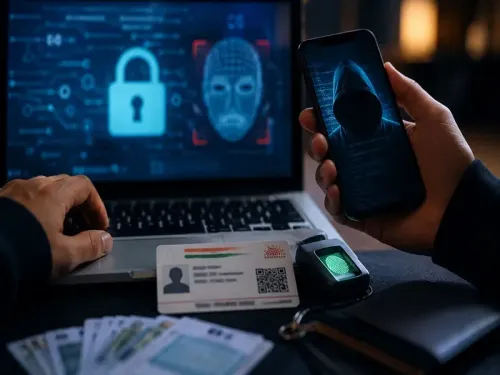
The advisory comes against a backdrop of surging cyber fraud cases in which criminals impersonate law enforcement or judicial authorities and coerce victims — often the elderly or financially vulnerable — into transferring large sums under the threat of fabricated arrest warrants. Such scams exploit the fear of legal consequences and typically unfold over video calls designed to mimic official proceedings.
Rajasthan Police reiterated a firm warning: no legitimate law enforcement agency conducts arrests or investigations through video calls, nor does any official body demand money transfers to forestall legal action. This clarification is central to countering the psychological manipulation that makes digital arrest scams effective.
What Citizens Should Do
The public has been advised to verify any suspicious legal notice or call through ABHAY before responding. Cyber fraud incidents should be reported immediately to the National Cyber Crime Reporting Portal, the dedicated cyber helpline number 1930, or the nearest cyber police station. Authorities stressed that early reporting significantly improves the chances of fund recovery and perpetrator tracing.
As cyber fraud tactics grow more sophisticated, the launch of ABHAY signals a broader shift toward proactive, technology-driven public outreach by Indian law enforcement — and the pressure is now on adoption at the grassroots level.
Point of View
Not technology. Digital arrest scams succeed precisely because victims are offline, elderly, or distrustful of digital tools; getting them to use an AI chatbot requires an outreach infrastructure that the advisory alone cannot build. The CBI-developed tool is a credible asset, but its impact will depend on whether frontline police, local self-government bodies, and community networks actively push adoption. India's cyber helpline ecosystem — 1930, the National Cyber Crime Reporting Portal — already exists; the gap has always been last-mile awareness, not the number of tools available.
NationPress
14 Oct 2026
Frequently Asked Questions
What is the ABHAY chatbot launched by Rajasthan Police?
ABHAY — Artificial Intelligence Based Helpful Assistant for You — is a CBI-developed AI chatbot launched by the Rajasthan Police Cyber Crime Branch to help citizens identify fake legal notices and avoid digital arrest scams. It operates 24x7 and supports Hindi, English, and several regional languages.
What is a 'digital arrest' scam and why is it dangerous?
A digital arrest scam involves fraudsters impersonating police, CBI, or court officials — often over video calls — and threatening victims with fabricated arrest warrants unless they transfer money. The scam targets the elderly and financially vulnerable, exploiting fear of legal consequences.
Who is ABHAY designed to help?
The chatbot is specifically designed for women, elderly citizens, villagers, and people with limited technical knowledge. Its simple language interface and multilingual support make it accessible to first-time digital users in rural and semi-urban areas.
How can citizens report a cyber fraud in Rajasthan?
Citizens can report cyber fraud through the National Cyber Crime Reporting Portal, by calling the dedicated helpline number 1930, or by visiting the nearest cyber police station. ABHAY also automatically redirects critical cases to the official Union government complaint portal.
Does any government agency conduct arrests through video calls?
No. Rajasthan Police has clearly stated that no legitimate law enforcement agency conducts arrests or investigations through video calls, nor does any official body demand money transfers to avoid legal action. Any such communication should be treated as a fraud attempt and verified through ABHAY.