RBI holds 7.1% GDP growth forecast for FY27, adjusts key policy rates

Synopsis
The RBI has held its FY27 GDP growth forecast steady at 7.1% even as it tightened key policy rates — raising the MSF rate and Bank Rate to 5.75% and adjusting the SDF to 5.25%. With food inflation broadening and global central banks tightening, the RBI is walking a tightrope between sustaining India's growth momentum and clamping down on price pressures.
Key Takeaways
RBI Governor Sanjay Malhotra confirmed 7.1% real GDP growth forecast for FY27 on 7 October 2026 .
Quarterly projections: 7.2% in Q2, 6.9% in Q3, 6.8% in Q4, and 7.1% for Q1 FY28.
Actual Q1 FY27 GDP growth came in at 7.8% , reflecting domestic resilience.
SDF rate adjusted to 5.25% ; MSF rate and Bank Rate raised to 5.75% .
Food inflation has broadened, with sharp rises in sugar and onion prices; fuel inflation also edged higher in August .
Global inflation expected to rise sharply, prompting monetary tightening by major central banks worldwide.
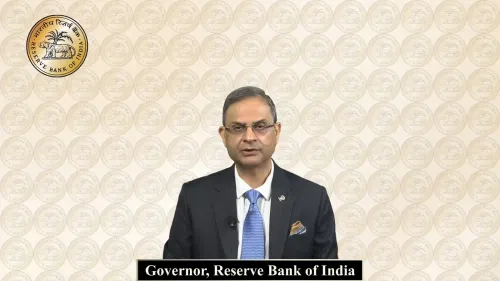
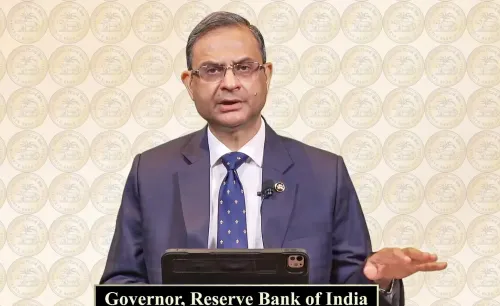
Reserve Bank of India (RBI) Governor Sanjay Malhotra on Wednesday, 7 October 2026 confirmed that the central bank has maintained its real GDP growth projection at 7.1% for FY27, signalling measured confidence in India's economic trajectory even as global headwinds intensify. The announcement came alongside adjustments to key policy rates, marking a calibrated shift in the RBI's monetary stance.
Quarterly Growth Projections
Governor Malhotra laid out a detailed quarterly outlook: 7.2% growth expected in Q2, easing to 6.9% in Q3 and 6.8% in Q4. The RBI also projected 7.1% growth for Q1 of FY28, a forward estimate that underscores the central bank's view of sustained, if moderating, momentum. This follows an actual Q1 FY27 print of 7.8%, which the governor described as evidence of domestic resilience.
'Domestic economic activity exhibited resilience amidst global headwinds, as evident from real GDP growth of 7.8 per cent in Q1,' Malhotra said.
Manufacturing, Services PMI Remain in Growth Zone
The RBI noted that business activity continues on an expansion path, with both manufacturing and services Purchasing Managers' Index (PMI) readings holding in growth territory during the second quarter. However, the pace of expansion moderated compared to the previous quarter — a development the central bank is monitoring closely.
Inflation Concerns Widen
On prices, Governor Malhotra flagged that food price pressures have become broader in nature, with notable increases in items such as sugar and onion. Both food and fuel inflation edged higher in August, largely attributed to adverse base effects. The RBI said it monitors a comprehensive set of indicators — including inflation expectations, firm-level pricing behaviour, core inflation trends, and diffusion indices — to gauge the depth and spread of inflationary pressures across the economy.
Key Rate Adjustments
In a significant policy move, the RBI adjusted the Standing Deposit Facility (SDF) rate to 5.25%, while raising the Marginal Standing Facility (MSF) rate and Bank Rate to 5.75%. These tweaks to the policy corridor reflect the central bank's intent to anchor liquidity conditions amid a more uncertain global monetary environment.
Global Risks on the Radar
Governor Malhotra warned that global inflation is expected to rise sharply, prompting monetary tightening by major central banks worldwide. This external pressure complicates India's domestic calculus — the RBI must balance growth support against the risk of imported inflation and capital outflows as developed-market rates stay elevated. The policy stance adjustment reflects this delicate balancing act, and markets will be watching subsequent guidance closely for signals on the repo rate trajectory.
Point of View
But the rate moves signal that inflation is not yet under control. The broadening of food price pressures beyond vegetables into sugar and onion points to supply-side stresses that monetary policy cannot fully address. What is notable is the RBI's candour about global tightening risks: with the Fed and other major central banks still hawkish, India faces capital-flow volatility that could force the RBI's hand on the repo rate sooner than its current stance implies. The quarterly growth deceleration from 7.8% in Q1 to a projected 6.8% by Q4 also deserves more scrutiny than a headline 7.1% full-year number suggests.
NationPress
7 Oct 2026
Frequently Asked Questions
What is the RBI's GDP growth forecast for FY27?
The RBI has retained its real GDP growth forecast at 7.1% for FY27 (the current financial year ending March 2027). Quarterly projections stand at 7.2% for Q2, 6.9% for Q3, and 6.8% for Q4.
What rate changes did the RBI announce on 7 October 2026?
The RBI adjusted the Standing Deposit Facility (SDF) rate to 5.25% and raised both the Marginal Standing Facility (MSF) rate and the Bank Rate to 5.75%. These changes adjust the policy interest rate corridor and signal a tighter liquidity stance.
Why is the RBI concerned about inflation?
Food price pressures have broadened, with significant increases in items such as sugar and onion. Food and fuel inflation also edged higher in August, partly due to adverse base effects, prompting the RBI to monitor a wide range of indicators including core inflation trends and firm-level pricing behaviour.
How did India's economy perform in Q1 FY27?
India's real GDP grew at 7.8% in Q1 FY27, which RBI Governor Sanjay Malhotra cited as evidence of domestic resilience despite global headwinds. Both manufacturing and services PMI remained in growth territory in Q2, though the pace moderated.
What global risks is the RBI watching?
The RBI has flagged that global inflation is expected to rise sharply, prompting major central banks worldwide to tighten monetary policy. This raises risks of imported inflation and capital outflows for India, complicating the domestic rate-setting environment.