S. Korea, UN members launch group to fight tech-facilitated trafficking
Synopsis
South Korea has turned a national tragedy — a university student kidnapped and killed after falling for an overseas online scam — into diplomatic momentum at the UN. The new 'Group of Friends' coalition it co-launched on 13 June is a direct push to build multilateral guardrails against AI-assisted trafficking, at a moment when Southeast Asia's scam-compound networks are drawing global alarm.
Key Takeaways
South Korea and dozens of UN member states launched the 'Group of Friends for Combating Technology-facilitated Trafficking in Persons' on 13 June in Washington.
The initiative was co-hosted by South Korea's UN mission and the UN Office on Drugs and Crime (UNODC) .
Ambassador Cha Ji-hoon cited the killing of a South Korean university student — kidnapped after an overseas online scam — as the catalyst for Seoul's diplomatic push.
The group will serve as a flexible platform for awareness-raising, best-practice exchange, and cooperation on AI -enabled and digital trafficking methods.
Separately, President Lee Jae Myung called South Korea and Italy 'optimal partners' at a business roundtable in Rome , proposing a joint 'new industrial order.'
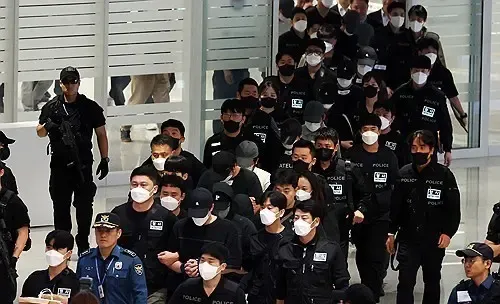
South Korea and dozens of United Nations member states formally launched an informal coalition on 13 June to combat technology-facilitated trafficking in persons, as Seoul intensifies its diplomatic push on the issue following a high-profile case involving South Koreans targeted by online scam operations in Cambodia last year.
The New Coalition
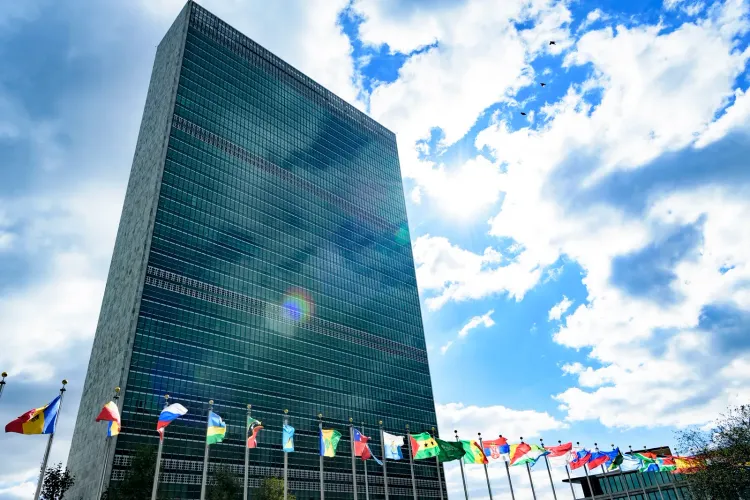
South Korea's mission to the UN and the UN Office on Drugs and Crime (UNODC) jointly hosted the launch event for the 'Group of Friends for Combating Technology-facilitated Trafficking in Persons' in Washington. The group is designed as a flexible, action-oriented platform open to all UN member states, focused on raising awareness, exchanging best practices, and strengthening international cooperation against a rapidly evolving form of transnational crime.
What the Ambassador Said
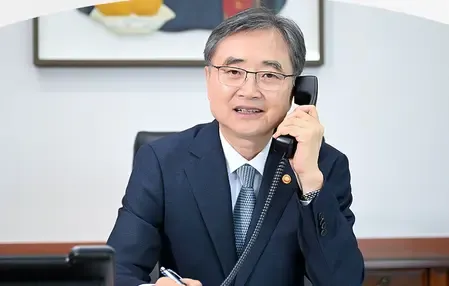
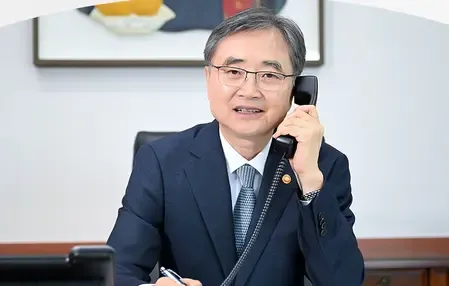
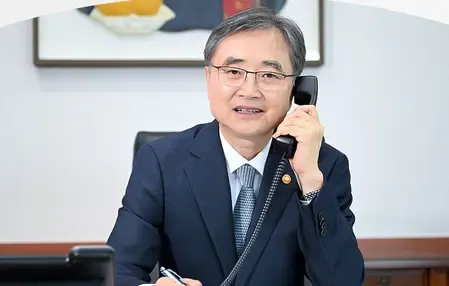
Seoul's Ambassador to the UN, Cha Ji-hoon, stressed the urgency of a coordinated global response to human trafficking enabled by digital technologies, including artificial intelligence (AI). He warned that no country or region is immune to the threat. Ambassador Cha cited a deeply personal case that galvanised South Korean public attention: 'Last summer, a Korean university student fell victim to an overseas online scam, kidnapped, tortured and ultimately killed. This tragic incident deeply shocked Korean society and served as a wake-up call to the dire risk of human trafficking linked to online scam businesses,' he said. 'Our thoughts remain with him, his family and countless others whose lives have been shattered by this crime globally,' he added.
Why This Matters
The launch comes amid mounting international concern over transnational criminal networks that exploit the internet and digital platforms to recruit, control, and exploit victims — and to conceal criminal proceeds. Traffickers increasingly use social media, encrypted messaging apps, and AI-driven tools to identify and lure targets, making traditional law-enforcement responses inadequate. This is not an isolated bilateral concern; the UNODC has flagged Southeast Asia in particular as a growing hub for scam compound operations that feed into trafficking networks, affecting nationals from multiple countries.
South Korea's Diplomatic Push
Seoul's drive to establish this group reflects a broader escalation in its foreign policy engagement on human trafficking and digital crime since the Cambodia scam incidents came to light. South Korean authorities have previously coordinated with Cambodian officials to repatriate victims, but the new UN-level platform signals an ambition to institutionalise multilateral responses rather than rely on ad hoc bilateral interventions. Notably, the group's 'flexible' mandate is intended to allow rapid adaptation as trafficking methods evolve with emerging technologies.
On the Sidelines: South Korea-Italy Ties
Separately, South Korean President Lee Jae Myung described South Korea and Italy as 'optimal partners for business cooperation' during his opening remarks at a business roundtable in Rome, where leaders from both countries explored avenues for enhanced economic collaboration. Lee said the two nations could together build a 'new industrial order,' signalling Seoul's concurrent push to deepen economic ties alongside its multilateral security diplomacy.
The Group of Friends is expected to convene its first substantive dialogue in the coming months, with the UNODC providing technical support to member states on identifying and prosecuting technology-enabled trafficking networks.
Point of View
And Seoul is right to seek a multilateral response. Yet the 'Group of Friends' format — informal, non-binding, open to all — is historically better at generating dialogue than enforcement. The real test will be whether this platform produces binding commitments or shared prosecution frameworks, rather than becoming another well-intentioned talking shop. With AI now actively weaponised in recruitment and victim control, the gap between diplomatic pace and criminal innovation is widening fast.
NationPress
27 Oct 2026
Frequently Asked Questions
What is the Group of Friends for Combating Technology-facilitated Trafficking in Persons?
It is an informal UN coalition launched on 13 June by South Korea and dozens of member states, co-hosted with the UNODC, designed as a flexible platform to raise awareness, share best practices, and strengthen international cooperation against trafficking enabled by digital technologies and AI.
Why did South Korea push for this UN group?
Seoul escalated its diplomatic efforts following online scam operations in Cambodia that targeted South Koreans, including a case in which a university student was kidnapped, tortured, and killed after falling victim to an overseas online scam. The incident prompted a national reckoning and a foreign policy response.
What role will artificial intelligence play in the group's work?
Ambassador Cha Ji-hoon specifically highlighted AI as one of the digital technologies traffickers are exploiting. The group's mandate includes tracking emerging trends in tech-facilitated trafficking, meaning AI-enabled recruitment and victim control will be a core focus of its dialogue.
Who can join the Group of Friends?
The platform is open to all UN member states. Its informal structure is intended to make participation accessible and allow the group to adapt quickly as trafficking methods evolve.
What else did South Korea announce alongside this initiative?
President Lee Jae Myung, speaking at a business roundtable in Rome, called South Korea and Italy 'optimal partners' and proposed building a 'new industrial order' together, signalling Seoul's parallel push to deepen bilateral economic ties with European partners.