UNODC 2026 report: Young gamers lured into online gambling across South-East Asia

Synopsis
A landmark UNODC report released in Bangkok reveals that criminal networks are deliberately blurring the line between online gaming and gambling to hook young users — while simultaneously running a transnational crime economy worth hundreds of billions of dollars, with hundreds of Indians among those rescued from forced-labour scam compounds.
Key Takeaways
The UNODC released its Transnational Organised Crime Threat Assessment for Southeast Asia 2026 in Bangkok , warning that young gamers are being deliberately targeted by illegal online gambling networks.
Combined annual scam losses across East Asia, South-East Asia, Australia, and New Zealand are estimated at USD 88.3 billion to USD 114.1 billion for 2025 .
Individuals from at least 80 countries and territories have been identified in scam compounds; hundreds of Indians were reportedly rescued from compounds along the Myanmar–Indonesia border .
The Golden Triangle drug market is valued at USD 75 billion to USD 109.7 billion annually, with synthetic drugs increasingly trafficked into Africa, Europe, and South Asia. ‘Malvertising’ incidents rose 42 per cent year-on-year in 2025 , reflecting rapid expansion of tech-enabled cybercrime.
UNODC called for specialised law enforcement training in cryptocurrency asset recovery and a prevention-first counter-crime strategy.
The United Nations Office on Drugs and Crime (UNODC) has warned that young gamers across South-East Asia, including India, are being deliberately targeted by criminal networks that exploit the structural similarities between online gaming and online gambling to draw minors into illegal betting. The warning comes from a new report released in Bangkok, Thailand, on 22 July 2025, titled An Interconnected Criminal Ecosystem: Transnational Organised Crime Threat Assessment for Southeast Asia 2026.
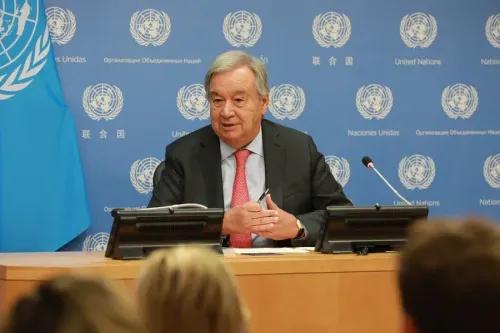
“The line between online gaming and online gambling is becoming more and more blurred,” said Delphine Schantz, UNODC regional representative for South-East Asia and the Pacific. She noted that while online gaming originally referred to interactive digital play without mandatory monetary stakes, the two sectors have converged through design features that deliberately exploit this ambiguity.
How Criminals Are Targeting Young Users
According to the report, organised crime groups are using the same structural frameworks as online casinos to ‘gamify’ illegal gambling platforms, making them visually and mechanically indistinguishable from mainstream video games. The highly addictive nature of online gaming, combined with near-universal mobile accessibility, has created a vulnerability that criminal networks are systematically exploiting.
Schantz described the operating model of these criminal groups as resembling “corporate franchising,” with “specialised departments for laundering money, trafficking people, smuggling migrants and harvesting data, all plugged into the same, service-based interconnected network.” Groups that previously operated within distinct geographic and criminal domains are now running across multiple illicit markets simultaneously.
Scale of the Criminal Economy
The report documents a sweeping convergence of criminal activities — scam operations, drug trafficking, illegal gambling, online child sexual exploitation, tobacco crime, and firearms trafficking — into a single transnational, technology-driven criminal economy. Combined annual losses from scam offences across East Asia, South-East Asia, Australia, and New Zealand are estimated at between USD 88.3 billion and USD 114.1 billion for 2025 alone, a figure that, even at the lower end, exceeds the GDP of several countries in the region.
Inshik Sim, UNODC lead analyst, warned that “the scale and complexity of this expanding organised crime economy are outpacing existing responses, which were not structured to address such sophisticated criminal activity.”
Indians Among Victims of Forced Criminality
The report documents a sharp surge in human trafficking for forced criminality. Individuals from at least 80 countries and territories have been identified in scam compounds across the region. Hundreds of Indians have reportedly been rescued from such compounds operating along the Myanmar–Indonesia border, where victims were lured with promises of software industry jobs and subsequently forced to work as online scam operatives.
Recruitment networks are documented as operating through multiple transit hubs in Asia, the Middle East, and Africa. According to the report, communication channels linked to the region’s scam industry show growing efforts to expand recruitment toward Europe and North America, targeting individuals with proficiency in German, Polish, Dutch, Spanish, Italian, French, Swedish, Norwegian, and English.
Drugs, Technology, and Emerging Threats
The Golden Triangle remains the region’s primary drug production hub. The combined annual retail value of methamphetamine, ketamine, and heroin markets is estimated at between USD 75 billion and USD 109.7 billion. Evidence points to a strong expansion of synthetic drugs, heroin, and cannabis being trafficked from South-East Asia into Africa, Europe, and South Asia.
The report also flags emerging technological threats, including generative AI, deepfakes, and automated fraud systems. ‘Malvertising’ — the exploitation of legitimate advertising networks to deliver malware — rose 42 per cent year-on-year in 2025. Low-earth orbit satellites used as technology enablers for scam operations are reportedly being smuggled undetected through the maritime corridor connecting Indonesia, Malaysia, and the Philippines.
What Needs to Change
Schantz called for a strategy that goes beyond disruption alone. “We have to address all the drivers, including prevention and following the money. Seizing criminal proceeds hits these networks where it hurts,” she said, adding that law enforcement in the region requires specialised training to identify, seize, and recover funds in the new cryptocurrency context. The report is expected to inform regional policy responses and multilateral law enforcement cooperation in the months ahead.
Point of View
And regulators in India have been slow to close it. With hundreds of Indians already rescued from forced-labour scam compounds, the human cost is no longer abstract. The report’s framing of organised crime as a ‘corporate franchise’ is the most important signal: disruption-only policing, which targets nodes rather than the financial infrastructure, will continue to underperform against networks this sophisticated.
NationPress
20 Oct 2026
Frequently Asked Questions
What is the UNODC Transnational Organised Crime Threat Assessment for Southeast Asia 2026?
It is a comprehensive report released by the United Nations Office on Drugs and Crime in Bangkok on 22 July 2025, documenting how once-fragmented criminal syndicates in South-East Asia have merged into a single transnational, technology-driven criminal economy. The report covers online gambling, scam operations, drug trafficking, human trafficking, cybercrime, and emerging threats such as AI-enabled fraud.
How are criminals targeting young gamers with online gambling?
Criminal networks are using the same design structures as online casinos to gamify illegal gambling platforms, making them visually and mechanically similar to mainstream video games. The UNODC says the highly addictive nature of online gaming and its mobile accessibility are being deliberately exploited to draw young users into monetary gambling without their full awareness.
How many Indians have been affected by scam compounds in South-East Asia?
Hundreds of Indians have reportedly been rescued from scam compounds operating along the Myanmar–Indonesia border, according to the UNODC report. They were lured with promises of software industry jobs and subsequently forced to work as online scam operatives.
What is the estimated financial scale of scam operations in the region?
Combined annual losses from scam offences across East Asia, South-East Asia, Australia, and New Zealand are estimated at between USD 88.3 billion and USD 114.1 billion for 2025 alone — a figure that exceeds the GDP of several countries in the region even at the lower end.
What does the UNODC recommend to counter these criminal networks?
The UNODC recommends moving beyond disruption-only strategies to address root drivers, including prevention and financial investigation. It specifically calls for specialised law enforcement training in identifying, seizing, and recovering criminal proceeds in cryptocurrency environments, arguing that cutting off financial flows is the most effective way to weaken these networks.