UN urges tech-driven crackdown on drug cyber-trafficking as 331 million users recorded in 2024
Synopsis
The UNODC's World Drug Report 2026 lands with a stark number: 331 million people used illicit drugs in 2024 — a full percentage point jump in a decade. With traffickers exploiting AI, encrypted platforms and new synthetic opioids to outpace regulators, UN Secretary-General Guterres is calling for a technology-first counter-offensive. The real question is whether global institutions can move faster than the criminal networks they are chasing.
Key Takeaways
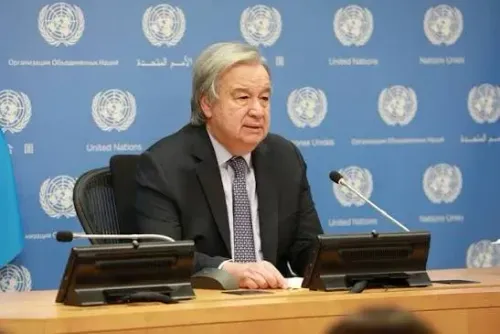
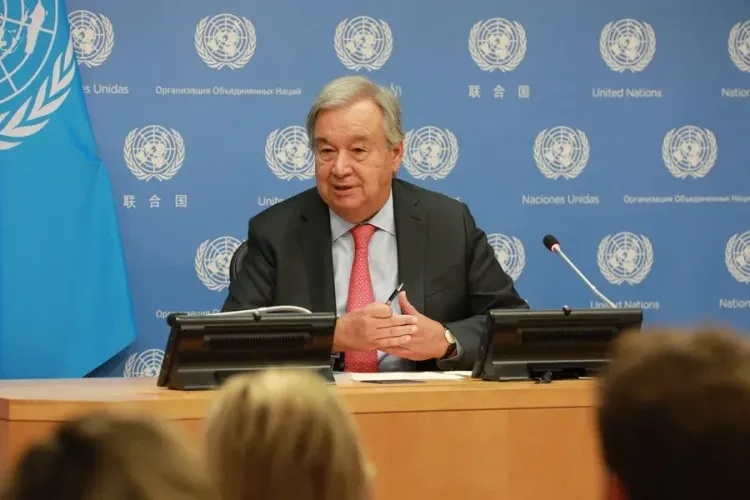
UN Secretary-General António Guterres called for technology-driven action against drug cyber-trafficking on 26 June 2025 , the International Day against Drug Abuse and Illicit Trafficking .
An estimated 331 million people used illicit drugs in 2024 — 6.2% of the global population aged 15–64, up from 5.2% in 2014 .
Cannabis led with 256 million users ; opioids followed at 63 million .
Seizures in 2024 recorded five times more drug types than before 2000 , driven by illicit synthetic drug manufacturing.
Novel synthetic opioids — fentanyls , nitazenes , orphines — are threatening a permanent shift away from plant-based heroin in the global opioid market.
UNODC Executive Director Monica Juma warned of millions of premature deaths and economies distorted by trafficking networks.
UN Secretary-General António Guterres on 26 June 2025 called on the international community to harness technology to combat drug cyber-trafficking, urging coordinated action with law enforcement to detect and disrupt criminal networks, curb synthetic drug manufacturing, and scale up investment in prevention, harm-reduction and treatment. His remarks came on the International Day against Drug Abuse and Illicit Trafficking.
The Scale of the Crisis
An estimated 331 million people used an illicit drug in 2024, representing 6.2 per cent of the global population aged between 15 and 64 — up sharply from 5.2 per cent in 2014, according to the UN Office on Drugs and Crime (UNODC) World Drug Report 2026, released on the same day. Cannabis remained the most widely used substance with 256 million users, followed by opioids (63 million), amphetamines (32 million), cocaine (25 million) and ecstasy (21 million).
Synthetic Drugs and Online Trafficking Networks
Guterres warned that the proliferation of synthetic drugs and the rapid growth of online trafficking networks are compounding the global drug crisis. Illicit manufacturers are continuously inventing new synthetic substances to circumvent regulations and evade detection — seizure data shows five times more drug types found in 2024 than were recorded before 2000.
The rising availability of novel synthetic opioids — including fentanyls, nitazenes and orphines — signals that traffickers are actively seeking alternatives to heroin. The UNODC report warned that a structural shift away from plant-based opiates toward synthetics could permanently alter the global opioid market and intensify associated harms.
Expanding Markets and New Trafficking Routes
New trafficking corridors and the gradual spread of methamphetamine production have opened fresh markets, notably in the Near and Middle East, Africa and parts of Europe. Cannabis production, trafficking and consumption patterns are also evolving, partly attributed to shifting public perception and legalisation or decriminalisation policies adopted in several jurisdictions, particularly in North America.
UNODC Executive Director Monica Juma described the situation in stark terms: 'We have seen an unprecedented spike in new types of drugs on the market, and worryingly, some are more potent or dangerous than before. And, we are already suffering the impact: millions of premature deaths and healthy years of life needlessly lost; drug trafficking networks that are distorting economies; the destruction of lives, communities and livelihoods; and the compounding of insecurity and violence.'
Broader Social Consequences
The UNODC report linked drug use to acquisitive crime, domestic violence and community-level victimisation, while cautioning that outcomes are shaped by wider structural factors — including poverty, homelessness, poor mental health and inadequate access to drug treatment and social services. Fragile health systems and persistent treatment gaps, the report noted, are undermining global efforts to reduce stigma and address drug use disorders.
The Call to Action
Invoking this year's theme of foresight, innovation and solidarity, Guterres urged world leaders to 'recommit to the bold, innovative and evidence-based solutions this scourge demands.' He stressed that illicit drug trafficking is not a victimless crime, describing it as one that 'inflicts profound harm on people and communities around the world while fuelling violence, crime and instability.' The next test for the international community will be whether political will translates into coordinated cross-border enforcement and sustained investment in public health infrastructure.
Point of View
Exploiting encrypted platforms and synthetic chemistry to stay perpetually ahead of enforcement. Guterres' call to 'harness technology' is directionally correct, but the UNODC's own data reveals the uncomfortable truth: international drug control architecture, built around plant-based supply chains and physical border interdiction, is structurally mismatched against a synthetic, digital-first trafficking model. Without binding commitments on cross-border data sharing and real-time platform accountability, the next World Drug Report risks recording an even steeper curve.
NationPress
25 Sept 2026
Frequently Asked Questions
What did UN Secretary-General Guterres say about drug cyber-trafficking?
Guterres called on the international community to harness technology to stop drug cyber-trafficking, work with police to disrupt criminal networks and synthetic drug manufacturing, and boost investment in prevention, harm-reduction and treatment. He made the appeal in his message for the International Day against Drug Abuse and Illicit Trafficking on 26 June 2025.
How many people used illicit drugs globally in 2024?
An estimated 331 million people used an illicit drug in 2024, representing 6.2% of the global population aged 15 to 64 — up from 5.2% in 2014, according to the UNODC World Drug Report 2026. Cannabis was the most widely used substance with 256 million users.
Why are synthetic opioids considered a growing threat?
Novel synthetic opioids such as fentanyls, nitazenes and orphines are increasingly available as traffickers seek alternatives to heroin. The UNODC warns this shift away from plant-based opiates toward synthetics could permanently alter the global opioid market and worsen associated health harms.
What does the UNODC World Drug Report 2026 say about new drug types?
The report found five times more drug types in seizures in 2024 than before 2000, as illicit manufacturers continuously invent new synthetic substances to evade regulations and detection. Traffickers are also exploiting global instability to experiment with new trade routes and aggressively push into new markets.
Which regions are seeing new drug markets emerge?
New trafficking routes and the spread of methamphetamine production have created fresh markets notably in the Near and Middle East, Africa and parts of Europe, according to the UNODC report. Cannabis markets are also evolving globally, partly linked to legalisation and decriminalisation trends in North America.