Transforming Meghalaya: Starlink's Role in Last-Mile Connectivity

Synopsis
Meghalaya's Chief Minister, Conrad K. Sangma, reveals how Starlink's satellite internet services are set to revolutionize last-mile connectivity in remote areas, promising to enhance healthcare, education, and economic growth.
Key Takeaways
Starlink's satellite services will enhance connectivity in Meghalaya.
The partnership aims to address challenges in remote regions.
Improved connectivity can facilitate better healthcare and education.
Meghalaya envisions a $10 billion economy by 2028.
Shillong is set to become an IT hub in the Northeast.
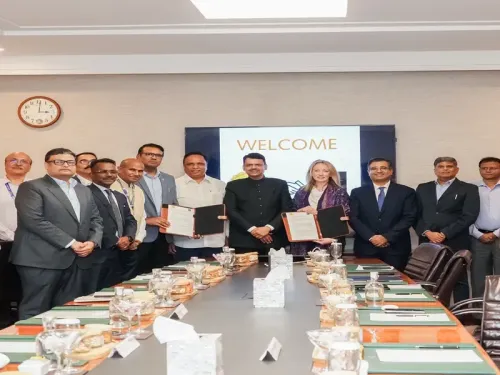
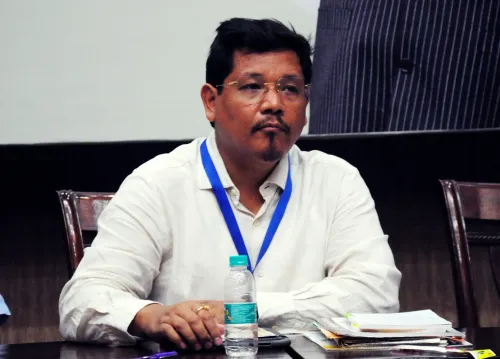
Shillong, April 1 (NationPress) Meghalaya's Chief Minister, Conrad K. Sangma, stated on Wednesday that the introduction of satellite internet services through Starlink will profoundly enhance last-mile connectivity throughout the state, especially in its most remote and underserved areas.
During a video conference to witness the signing of a Letter of Intent between the Meghalaya government and Starlink India, Chief Minister Sangma highlighted that achieving reliable connectivity remains a significant challenge, despite ongoing efforts to broaden optical fibre networks.
"Addressing last-mile connectivity is an ongoing struggle. While we are expanding optical fibre to connect distant health facilities, schools, and villages, this process is slow, and we must act swiftly," the Chief Minister remarked.
He expressed optimism that this partnership would greatly improve access to vital services.
"If this initiative can save just one life by improving healthcare access, allow one child to gain quality education, or increase a farmer's income, it will be a remarkable achievement," Chief Minister Sangma emphasized.
This collaboration supports Meghalaya's ambitious goal of creating a $10 billion economy by 2028, with digital infrastructure identified as a crucial element for inclusive growth and economic advancement.
Stressing the state's aspirations in the tech sector, Chief Minister Sangma noted that the government aims to position Shillong as an IT and IT-enabled services hub in the Northeast.
He remarked that embracing advanced technologies like satellite internet could enable Meghalaya to "overcome traditional barriers" and hasten development.
He also underscored the urgency of rolling out this technology, stating that the immediate objective is to implement it in the most isolated and underserved regions as soon as possible.
Officials indicated that this collaboration is anticipated to enhance service delivery in healthcare, education, governance, and disaster management, while also fostering entrepreneurship, skill development, and digital inclusion.
Given the hilly landscape and dispersed populations of Meghalaya, satellite-based connectivity is viewed as a viable alternative to traditional infrastructure such as fibre networks and mobile towers, facilitating dependable high-speed internet access in challenging terrains.
Point of View
The partnership between Meghalaya and Starlink represents a significant step toward overcoming connectivity challenges in remote areas. The initiative aims to improve access to essential services, enhancing the quality of life for many residents. However, the effectiveness of this collaboration will depend on timely implementation and its ability to deliver tangible benefits.
NationPress
19 Sept 2026
Frequently Asked Questions
What is the main goal of the Starlink partnership?
The primary goal is to enhance last-mile connectivity in remote areas of Meghalaya, improving access to essential services such as healthcare and education.
How does satellite internet differ from traditional methods?
Satellite internet offers a practical alternative to traditional fibre networks and mobile towers, providing reliable high-speed internet access in difficult terrains.
What are the expected benefits of improved connectivity?
Expected benefits include better healthcare access, quality education for children, and increased income opportunities for farmers.
What is Meghalaya's economic vision by 2028?
Meghalaya aims to build a $10 billion economy by 2028, with digital infrastructure as a key driver of growth.
What role does Shillong play in this initiative?
Shillong is envisioned to be a hub for IT and IT-enabled services in the Northeast, promoting technological advancement in the region.