Shenzhen university to drop English classes, citing AI translation
Synopsis
Shenzhen University of Advanced Technology is scrapping traditional English classes from 2026, with its provost citing AI earpiece translation so effective he says he no longer needs to understand English at all — a radical bet that cultural fluency matters more than language proficiency in the AI era.
Key Takeaways
Shenzhen University of Advanced Technology (SUAT) announced on July 2, 2026 that it will phase out standard university English courses.
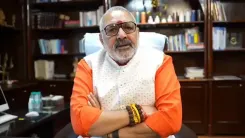
Provost Zhao Wei made the announcement via the university's official social media channel, citing real-time AI translation as the primary driver.
English classes will be replaced by intercultural communication courses designed to build cross-cultural confidence with both Chinese and Western contexts.
Students applying to SUAT in 2026 will be the first cohort enrolled under the experimental curriculum.
Zhao described current real-time translation as capable of rendering spoken Chinese into Spanish and English into Chinese simultaneously via earphones.
The move diverges from the approach of peers including Central South University , University of Macau , and Xi'an Jiaotong University , which retain English requirements.
Shenzhen University of Advanced Technology (SUAT) has announced plans to phase out traditional English-language courses, replacing them with intercultural communication classes — a move the institution attributes directly to the growing effectiveness of AI-powered real-time translation tools. The announcement was made on July 2, 2026, in a video posted to the university's official social media account.
The announcement
Zhao Wei, provost of SUAT, stated that students enrolling in 2026 would be part of an experimental curriculum that would gradually eliminate standard university English requirements. In their place, the institution will introduce courses focused on cross-cultural competency — equipping students to engage confidently with international counterparts by understanding both Chinese and Western cultural frameworks.
"If you apply to SUAT in 2026, we will be running the experimental [curriculum], which will gradually phase out university English and replace it with intercultural communication courses," Zhao said.
Why it matters
The decision reflects a broader rethinking of language education as AI translation reaches a level of fluency that institutional leaders are now willing to bet curricula on. Zhao argued that real-time translation tools have already rendered language proficiency secondary to cultural literacy in cross-border communication.
"Today, I don't need to understand English at all," Zhao said. "You can speak in English, and the translation comes through my earphones in Chinese. I can speak Chinese, and your earphones may receive it in Spanish. Real-time translation has become impressively effective."
The competitive backdrop
English proficiency has long been a core metric in Chinese higher education, underpinned by the nationally standardised College English Test. SUAT's move stands in contrast to the approach of institutions such as Central South University, University of Macau, and Xi'an Jiaotong University, where English remains embedded in graduation requirements. The decision is likely to prompt debate among educators and employers who still view English fluency as a marker of global employability.
What's next
The new intercultural curriculum is set to roll out for students entering SUAT from 2026 onward, with the phase-out of English courses described as gradual. Whether other Chinese universities follow suit will depend on how employers — particularly multinationals operating in China — respond to graduates who hold cultural competency credentials in place of traditional language qualifications. The experiment at SUAT may become a bellwether for how AI tools reshape not just communication, but the very skills universities choose to teach.
Point of View
Increasingly, is AI platforms. By outsourcing language itself to machine translation, universities risk producing graduates fluent in culture but dependent on proprietary tools they do not own or control. What mainstream coverage misses is the geopolitical subtext: as US-China tech decoupling accelerates, reducing dependence on English-language fluency also reduces a form of soft-power exposure. The real test will come from the labour market — if multinationals hiring in Shenzhen begin discounting candidates without the College English Test, SUAT's experiment could become a cautionary tale rather than a template.
NationPress
13 Oct 2026
Frequently Asked Questions
Which university is dropping English classes in China?
Shenzhen University of Advanced Technology (SUAT) is phasing out traditional English courses. The decision was announced by Provost Zhao Wei on July 2, 2026 , via the university's social media account.
Why is SUAT replacing English courses with intercultural communication?
SUAT cites the effectiveness of AI -powered real-time translation tools as making language study less necessary than cultural literacy. Provost Zhao Wei stated that real-time translation now allows speakers of different languages to communicate seamlessly through earpiece devices.
When will the new curriculum take effect at SUAT?
Students applying to SUAT in 2026 will be the first to enter under the experimental curriculum. The phase-out of English courses is described as gradual rather than immediate.
Are other Chinese universities also dropping English requirements?
Not yet. Institutions including Central South University , University of Macau , and Xi'an Jiaotong University continue to maintain English-language requirements. SUAT 's move is currently an outlier in Chinese higher education.
What will replace English classes at SUAT?
Intercultural communication courses will replace standard English classes at SUAT . These courses are designed to help students understand both Chinese and Western cultural contexts so they can engage confidently with international peers.