Tsinghua University builds ceramic battery stable at 150°C
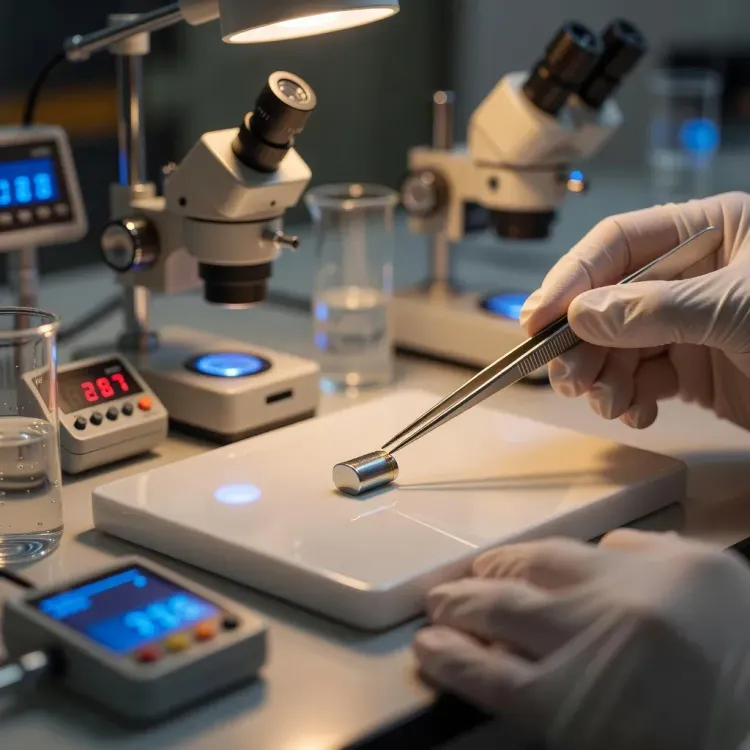
Synopsis
Tsinghua University scientists have built a ceramic solid-state lithium-ion battery that operates stably at 150°C and survives 300°C thermal shocks — a potential game-changer for aerospace, military, and IoT devices that conventional flammable batteries cannot serve.
Key Takeaways
Tsinghua University researchers developed an all-ceramic lithium-ion battery published in Matter on June 5, 2026 .
The battery operates stably at up to 150°C (302°F) and withstands brief thermal shocks of up to 300°C .
The all-ceramic design eliminates the flammable liquid electrolyte found in conventional lithium-ion cells.
Target applications include smart sensors , wearable electronics , aerospace equipment , and military devices .
The research is currently at laboratory stage; commercial scaling of ceramic electrolytes remains a major engineering hurdle.
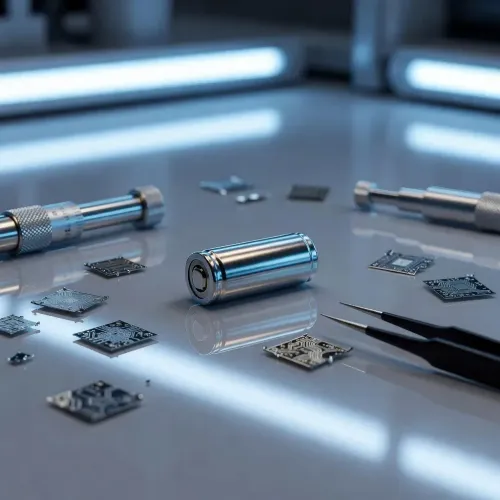
Tsinghua University researchers have developed an all-ceramic lithium-ion battery capable of operating stably at temperatures up to 150 degrees Celsius (302 degrees Fahrenheit), a breakthrough that could power smart sensors, aerospace instruments, and military-grade electronics in environments where conventional batteries fail. The findings were published in the peer-reviewed journal Matter on June 5, 2026.
What makes this battery different
Unlike standard lithium-ion batteries, which rely on a flammable liquid electrolyte to transport ions and generate current, this rechargeable solid-state design uses an all-ceramic architecture that eliminates flammability risks entirely. The battery can also endure brief thermal shocks of up to 300 degrees Celsius without any compromise in performance — well above the boiling point of water at 100 degrees Celsius.
According to the research paper, the batteries “deliver stable, pressure-free operation across a wide temperature range … offering a safe and mechanically robust power solution for miniaturised electronics.” The team highlighted the cell’s small form factor, high energy density, and structural resilience as key differentiators.
Why it matters
The proliferation of miniaturised devices — including smart sensors, wearable electronics, and Internet of Things (IoT) nodes — has intensified demand for power sources that are compact, safe, and capable of functioning in harsh environments. Conventional lithium-ion cells struggle in high-heat scenarios, creating a critical gap in aerospace, industrial monitoring, and defence applications.
The Tsinghua University-led team argued that their all-ceramic micro battery addresses precisely this gap, combining the energy density advantages of lithium-ion chemistry with the thermal and mechanical stability of ceramic solid-state electrolytes.
The competitive backdrop
China has made solid-state battery technology a national priority, with state-backed funding flowing into research institutions and manufacturers alike. The global race to commercialise solid-state batteries involves major players across Japan, South Korea, the United States, and Europe, primarily targeting electric vehicles. The Tsinghua team’s focus on miniaturised, high-temperature variants carves out a distinct niche — one less contested but potentially critical for next-generation defence and aerospace systems.
What’s next
The research currently represents a laboratory-stage proof of concept. Scaling ceramic-based solid-state cells to commercial volumes remains a significant manufacturing challenge, as ceramic electrolytes are brittle and difficult to process at scale. Industry analysts note that bridging the gap between academic demonstration and mass production typically requires years of process engineering and substantial capital investment.
Whether Tsinghua University’s findings attract commercial partners or government defence contracts will be a key indicator of how quickly this technology moves beyond the lab.
Point of View
High-value segments of the battery technology race rather than competing head-on with South Korean and Japanese giants in mainstream EV cells. A ceramic micro-battery tolerant of extreme heat has obvious dual-use appeal — aerospace telemetry, battlefield sensors, hypersonic vehicle electronics — areas where Western export controls on advanced components create a strong domestic incentive to develop indigenous solutions. What mainstream coverage tends to underplay is that the real bottleneck is not the chemistry but the manufacturing: ceramic electrolytes are notoriously brittle and expensive to process at scale, and no research group has yet cracked that problem commercially. The journal publication establishes intellectual-property priority, but the distance from Matter to a production line is measured in years and billions of yuan.
NationPress
22 Sept 2026
Frequently Asked Questions
What is the Tsinghua University ceramic battery and how does it work?
The Tsinghua University all-ceramic battery is a solid-state lithium-ion cell that replaces the conventional flammable liquid electrolyte with a ceramic material, allowing ions to move safely at extreme temperatures. It operates stably up to 150°C and can survive thermal shocks of up to 300°C .
Why can this battery handle such high temperatures?
The ceramic solid-state electrolyte is thermally stable and non-flammable, unlike the liquid electrolytes in standard lithium-ion batteries that degrade or combust at elevated temperatures. This architecture allows the cell to maintain performance in environments that would destroy conventional batteries.
What applications is the all-ceramic battery designed for?
According to the research team, the battery targets smart sensors , wearable electronics , aerospace instruments , and military devices — all of which may operate in high-heat or mechanically demanding environments where standard lithium-ion cells are unsafe or unreliable.
When was the research published and where?
The findings were published in the peer-reviewed journal Matter on June 5, 2026 , by a team led by Tsinghua University .
Is this battery ready for commercial use?
Not yet. The technology is currently at the laboratory proof-of-concept stage. Scaling ceramic-based solid-state batteries to commercial production is a well-known engineering challenge due to the brittleness and processing difficulty of ceramic electrolytes, and significant further development is required.