TCS says PERM suspension won't hit workforce, pledges US compliance
Synopsis
The US has suspended six major outsourcing firms — including TCS, Infosys, Wipro, and HCL — from the PERM immigration pathway. TCS says it barely used the programme anyway, with single-digit applications over two years. But the regulatory signal is clear: Washington is tightening the route to permanent residency for foreign IT workers, and India's tech giants are being put on notice.
Key Takeaways
TCS said it will comply with US Department of Labor directives following its suspension from the PERM programme on 9 October 2026 .
The company's PERM applications were in single digits over the last two years, limiting the suspension's operational impact.
US Labour Secretary Keith Sonderling suspended six outsourcing firms — TCS , Infosys , Wipro , HCL , Cognizant , and Capgemini — following a Department of Labor Inspector General investigation.
TCS plans to hire an additional 15,000 people in the US over the next five years through its local campus recruitment model across 31 offices .
Nasscom noted Indian IT firms have already significantly reduced H-1B dependence while expanding local US hiring.
Microsoft said 80 per cent of its 6,000 H-1B filings last fiscal year were for existing employee status changes, not new hires.
Tata Consultancy Services (TCS), India's largest IT firm, on Thursday, 9 October 2026, said it will comply with any directive from the US Department of Labor following the suspension of six outsourcing companies — including TCS — from the Permanent Labor Certification Program (PERM). The company maintained that the suspension will not materially affect its workforce strategy or client engagements in the United States.
TCS Response and Local Hiring Commitment
In an exchange filing, TCS stated that its US workforce strategy is built around hiring local talent through a robust campus recruitment model. The company said it operates across 31 offices and delivery centres throughout the US and had previously announced plans to hire an additional 15,000 people in the country over the next five years.
'Our PERM applications were in single digits in the last two years and hence we do not expect the suspension of the program to impact our workforce strategy and customer engagements,' the company said in its filing.
What Triggered the PERM Suspension
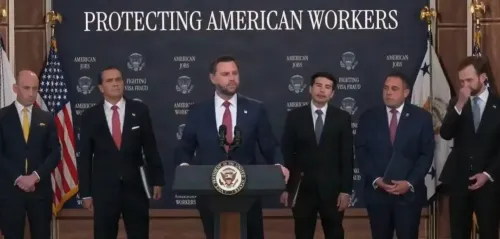
US Labour Secretary Keith Sonderling announced the suspension of six major outsourcing firms from the PERM programme following investigations by the Department of Labor's Inspector General. The companies barred from submitting new PERM applications — or having pending applications processed — include India's Infosys, Tata, Wipro, and HCL, along with Cognizant and Capgemini. The action marks one of the most significant regulatory interventions targeting the Indian IT sector's US immigration pathway in recent years.
Industry Body Nasscom Weighs In
IT industry body Nasscom sought to contextualise the impact, noting that the number of employees transitioning from H-1B visas to permanent residency through the PERM process is relatively limited. 'The H-1B visa programme has historically played an important role in addressing short-term skill gaps in the US... However, over the past few years, Indian technology companies have significantly reduced their dependence on H-1B visas, while steadily expanding local hiring,' Nasscom said.
Microsoft Also Responds
Separately, Microsoft clarified that the vast majority of its US employees are American citizens. Of approximately 6,000 H-1B applications submitted in the last fiscal year, 80 per cent were filed to extend or change the status of existing employees — not to bring in new hires. The remaining filings covered individuals already legally present in the US and represent just 1 per cent of the company's total US workforce, the tech giant said.
What This Means Going Forward
The PERM suspension signals a broader tightening of US immigration pathways for foreign-origin IT firms, even as those firms argue their local hiring has already reduced dependence on such programmes. For TCS specifically, the near-negligible volume of recent PERM applications provides a degree of insulation — but the regulatory direction in Washington suggests that compliance pressure on the sector is unlikely to ease in the near term.
Point of View
Not the current exposure. Washington is systematically narrowing green-card pathways for IT outsourcing firms, and the PERM suspension — coming via an Inspector General investigation, not routine policy review — carries a punitive signal. Indian IT's pivot to local hiring has been genuine, but it has also been partly driven by exactly this kind of regulatory pressure. The question now is whether compliance alone is enough, or whether firms will face reputational and contractual scrutiny from US enterprise clients wary of being associated with companies under federal investigation.
NationPress
9 Oct 2026
Frequently Asked Questions
What is the PERM programme and why does it matter for Indian IT companies?
The Permanent Labor Certification (PERM) programme, administered by the US Department of Labor, is the primary pathway through which US employers sponsor foreign workers for permanent residency (green cards). For Indian IT firms, it has historically been used to retain skilled H-1B visa holders on a long-term basis. The suspension blocks these companies from filing new PERM applications or having pending ones processed.
Why were TCS, Infosys, Wipro, HCL, Cognizant, and Capgemini suspended from PERM?
US Labour Secretary Keith Sonderling announced the suspension following investigations by the Department of Labor's Inspector General. The specific findings of the investigation have not been publicly detailed, but the action stops both new and pending PERM applications from the named firms.
Will the PERM suspension affect TCS's operations or clients in the US?
TCS says the impact is expected to be minimal, citing single-digit PERM applications over the past two years. The company maintains a local workforce across 31 US offices and has committed to hiring an additional 15,000 people in the US over the next five years, reducing its reliance on immigration-linked hiring pathways.
What has Nasscom said about the PERM suspension?
Industry body Nasscom said the number of employees transitioning from H-1B visas to permanent residency via PERM is relatively limited across the sector. It added that Indian IT companies have significantly reduced their H-1B dependence in recent years while expanding local US hiring.
How does Microsoft's H-1B situation compare to the suspended Indian IT firms?
Microsoft disclosed that of approximately 6,000 H-1B applications filed last fiscal year, 80 per cent were to extend or change status of existing employees — not to recruit new foreign workers. New-hire filings represent just 1 per cent of its total US workforce, reflecting a different profile of visa usage compared to the outsourcing firms under scrutiny.