Z.ai shares surge 37% after 1-GW Chinese-chip data centre launch
Synopsis
Z.ai's shares rocketed 37% in a single session after the Beijing AI firm unveiled a 1-gigawatt data centre running entirely on Chinese chips — a direct response to US export controls — and quietly acquired chip-software specialist XCore Sigma from the Chinese Academy of Sciences.
Key Takeaways
Z.ai (Zhipu) shares closed at HK$1,219 (US$155) on 21 July 2026 , up 37 per cent in a single session on the Hong Kong exchange.
The rally followed completion of a 1-gigawatt AI computing centre powered entirely by Chinese chips , intended to train and deploy the company's GLM model family including GLM-5.2 .
The stock had fallen more than 40 per cent over the prior week before Tuesday's rebound.
Z.ai also completed the acquisition of XCore Sigma , a heterogeneous computing software firm spun off from the Chinese Academy of Sciences .
XCore Sigma 's technology — compilers, runtime systems, and inference engines — is designed to improve utilisation of AI chips from multiple vendors and reduce inference costs.
Z.ai is listed on the United States Entity List, making domestic chip sourcing a strategic necessity rather than a preference.
Z.ai, the Beijing-based artificial intelligence company also known as Zhipu, saw its shares soar 37 per cent on the Hong Kong stock exchange on Tuesday, 21 July 2026, closing at HK$1,219 (US$155), after the firm completed construction of a massive AI computing facility powered entirely by Chinese chips.
The data centre at the centre of it all
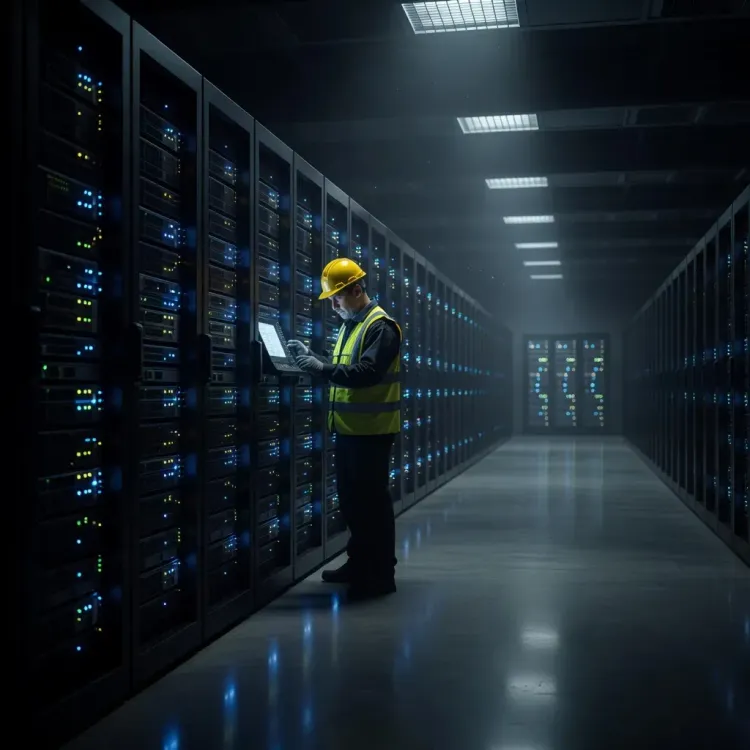
According to people familiar with the matter, Z.ai has built a 1-gigawatt AI computing centre — one of the largest of its kind — designed to train and deploy its proprietary GLM family of large language models. The company has positioned its flagship GLM-5.2 as one of China's leading large language models (LLMs). The facility's reliance on domestically produced chips marks a significant operational milestone as Chinese AI firms navigate tightening United States export restrictions.
Why it matters
The stock rebound is particularly striking given that Z.ai shares had shed more than 40 per cent over the preceding week. The 37 per cent single-session recovery signals that investors view the data centre completion and the domestic chip strategy as a credible hedge against supply-chain vulnerabilities. With Z.ai on the United States Entity List, sourcing compute infrastructure entirely from Chinese silicon is no longer optional — it is existential.
XCore Sigma acquisition adds software muscle
Alongside the data centre announcement, Z.ai has also completed the acquisition of XCore Sigma, a Chinese infrastructure software developer spun off from the Chinese Academy of Sciences, according to people familiar with the matter. XCore Sigma specialises in heterogeneous computing software — including compilers, runtime systems, and inference engines — that improve chip utilisation across vendors, lower inference costs, and accelerate model deployment. The combined move is intended to address computing power constraints and sharpen Z.ai's AI inference efficiency.
The competitive backdrop
Z.ai's dual push — sovereign compute infrastructure plus indigenous software optimisation — mirrors a broader race among Chinese AI labs to build full-stack, self-reliant technology pipelines. Rivals including Baidu, Alibaba, and Huawei's AI division have similarly accelerated domestic chip integration following successive rounds of US export controls. The XCore Sigma acquisition gives Z.ai a software layer that can squeeze more performance from heterogeneous chip arrays — a critical advantage when access to leading-edge US-designed GPUs remains restricted. Z.ai did not immediately respond to a request for comment.
What's next
The key question now is whether the 1-GW facility can deliver training throughput competitive with frontier labs operating on Nvidia hardware. Analysts and investors will be watching GLM-5.2 benchmark results and inference cost metrics in the coming quarters as the clearest test of whether domestic silicon can close the gap. The XCore Sigma integration timeline will also be a bellwether for how quickly Z.ai can operationalise its new software stack at scale.
Point of View
Vertically integrated model rather than waiting for chip import restrictions to ease. Mainstream coverage focuses on the stock move, but the deeper dynamic is that Entity List pressure is forcing Chinese AI labs to accelerate software-layer innovation to compensate for hardware deficits, potentially creating a distinct and divergent AI ecosystem. Investors rewarded the pivot sharply, but the real verdict will come from GLM-5.2 benchmark performance on domestic silicon.
NationPress
21 Jul 2026
Frequently Asked Questions
Why did Z.ai shares surge 37% on 21 July 2026?
Z.ai shares surged 37 per cent on 21 July 2026 after the company completed a 1-gigawatt AI computing centre powered entirely by Chinese chips and announced the acquisition of software firm XCore Sigma . The rally reversed a week-long decline of more than 40 per cent , as investors responded positively to the firm's domestic compute strategy.
What is Z.ai's 1-gigawatt data centre used for?
The 1-GW facility is designed to train and deploy Z.ai 's GLM family of large language models, including its flagship GLM-5.2 . It runs entirely on Chinese AI chips, positioning the company to operate independently of US -restricted hardware.
What does the XCore Sigma acquisition mean for Z.ai?
XCore Sigma , spun off from the Chinese Academy of Sciences , develops compilers, runtime systems, and inference engines that optimise performance across heterogeneous AI chip architectures. For Z.ai , the acquisition is intended to reduce inference costs, improve chip utilisation, and accelerate model deployment on its domestic hardware stack.
Is Z.ai on the US Entity List?
Yes, Z.ai is listed on the United States Entity List, which restricts its access to advanced US -origin semiconductors and technology. This makes the company's strategy of building infrastructure around Chinese chips and domestic software a practical necessity.
How does Z.ai's data centre compare to global AI infrastructure?
At 1 gigawatt , Z.ai 's computing centre is among the largest AI infrastructure projects announced by any single company globally. Its distinguishing feature is the exclusive use of Chinese chips, making it a benchmark for whether domestic silicon can support frontier AI workloads at hyperscale.