CM Mohan Yadav Calls for Public Support on MP's UCC
Synopsis
Chief Minister Dr. Mohan Yadav's office has publicly appealed for citizen support for Madhya Pradesh's proposed Uniform Civil Code, framing the law as built on public suggestions and in the people's interest, as the BJP-governed state advances a key party priority.
Key Takeaways
The Chief Minister's Office of Madhya Pradesh, on 21 July 2026 , issued a public appeal for support for a proposed Uniform Civil Code (UCC) law.
Mohan Yadav described the law as made 'for the people, on the basis of the people's suggestions, and in the people's interest.' Uttarakhand became India's first state to pass and notify a UCC law in February 2024 , establishing the legislative precedent.
The BJP's 2024 Lok Sabha manifesto committed to implementing UCC nationally, with state-level enactments serving as a sequential strategy.
The proposed law would affect all residents of Madhya Pradesh regardless of religion, covering marriage, divorce, inheritance, and adoption.
Formal introduction of the bill in the state assembly and potential court challenges are the key developments to watch.
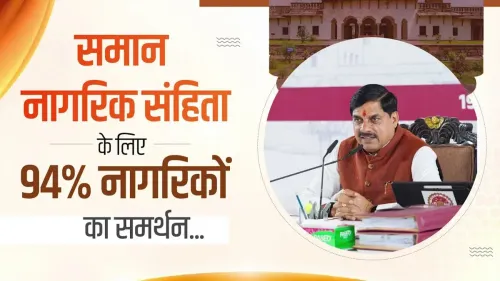
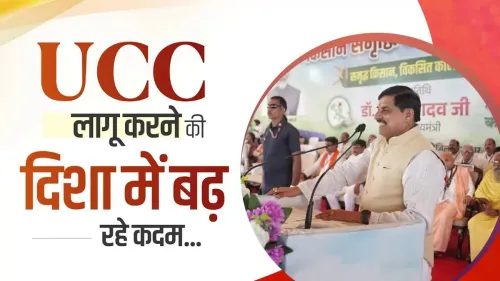
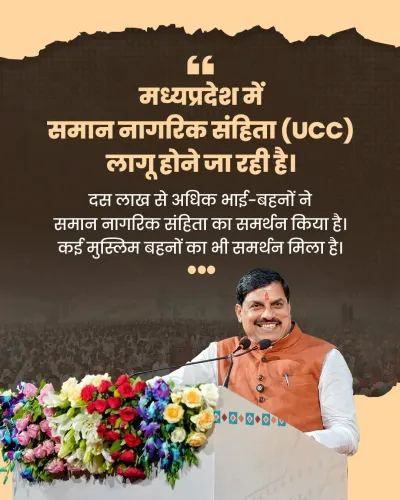
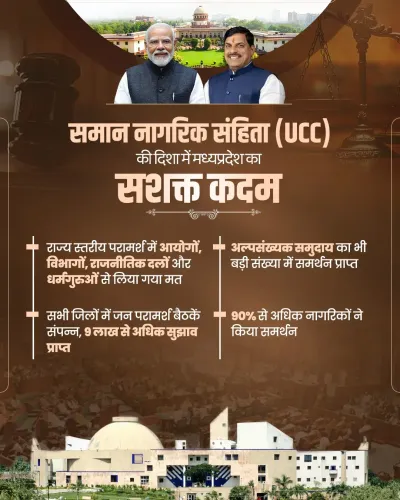
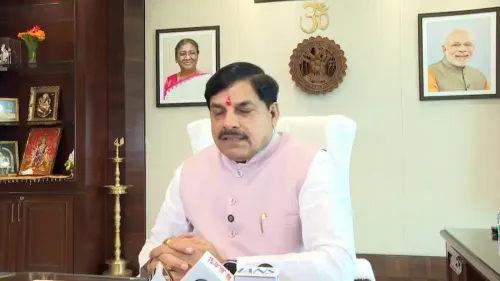
The Chief Minister's Office of Madhya Pradesh, on behalf of Chief Minister Dr. Mohan Yadav, on Tuesday, 21 July 2026, issued a public appeal for support for a proposed Uniform Civil Code (UCC) law, describing it as built for the people, on the basis of public suggestions, and in the public interest.
Posting on X, the Chief Minister's Office quoted CM Dr. Mohan Yadav: 'जनता के लिए, जनता के सुझावों के आधार पर और जनता के हित में बनाया गया यह कानून आपके समर्थन का आह्वान कर रहा है' — translated: 'This law, made for the people, on the basis of the people's suggestions, and in the people's interest, is calling for your support.'
Context
The appeal signals that Madhya Pradesh is advancing its legislative push for a Uniform Civil Code, a law that would replace religion-specific personal laws governing marriage, divorce, inheritance, and adoption with a single set of rules applicable to all citizens regardless of faith. The framing of the law as people-driven and consultation-based is a deliberate effort to build broad social legitimacy before formal legislative proceedings. The post's emphasis on public suggestions indicates that the state government has conducted or concluded a public outreach phase, positioning the draft as a product of citizen participation rather than top-down imposition.Policy Backdrop
Uttarakhand became the first Indian state to pass and notify a UCC law in February 2024, setting a legislative precedent for other BJP-governed states. The BJP's 2024 Lok Sabha election manifesto reiterated the party's commitment to implementing UCC at the national level, making state-level enactments stepping stones in a broader political and policy strategy. Madhya Pradesh, a BJP stronghold, has been among the states closely watched for its own UCC legislation following the Uttarakhand model. CM Dr. Mohan Yadav, who has led the state since December 2023, has aligned the government's legislative agenda with the party's national priorities, of which UCC is among the most prominent.Stakeholders and Impact
The proposed law, if enacted, would affect all residents of Madhya Pradesh across religious communities, touching personal matters such as marriage registration, divorce proceedings, inheritance rights, and guardianship norms. Proponents argue a uniform code advances gender justice and equality, particularly for women from communities where personal laws have historically been seen as disadvantageous. Civil society groups, religious organisations, and legal experts across the spectrum hold divergent views. Supporters frame UCC as a constitutional imperative under Article 44 of the Directive Principles of State Policy. Critics from minority communities and some constitutional scholars raise concerns about the impact on religious freedom and the complexity of codifying diverse personal practices into a single framework.What's Next
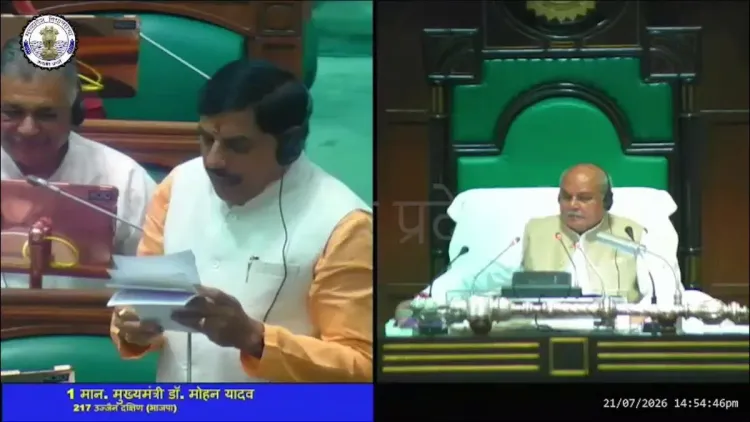
The immediate focus will be on whether the Madhya Pradesh government introduces a formal UCC bill in the state assembly and, if passed, how quickly rules are notified to operationalise the law. Legal challenges before the Madhya Pradesh High Court or the Supreme Court of India are a likely next step given the constitutional questions the legislation raises. Other BJP-governed states observing the process may use Madhya Pradesh's legislative journey as a template for their own efforts, reinforcing the pattern of state-level experimentation ahead of potential central legislation.Point of View
The Madhya Pradesh government is borrowing a legitimacy playbook similar to the one used in Uttarakhand, where citizen outreach was foregrounded ahead of legislative passage. This fits a recognisable BJP pattern: state governments function as policy laboratories, normalising legislation before it moves to the national stage. The appeal for public support also suggests the government is aware of the social and legal contestation ahead, and is building a political buffer through popular endorsement before the bill reaches the assembly floor.
NationPress
22 Jul 2026
Frequently Asked Questions
What is the Uniform Civil Code that Madhya Pradesh is proposing?
The Uniform Civil Code is a proposed set of common personal laws — covering marriage, divorce, inheritance, and adoption — that would apply equally to all citizens of Madhya Pradesh regardless of their religion, replacing existing religion-specific personal laws.
Has any Indian state already passed a Uniform Civil Code?
Yes. Uttarakhand became the first Indian state to pass and notify a Uniform Civil Code law in February 2024, and it has served as the primary legislative model for other BJP-governed states considering similar legislation.
What did CM Mohan Yadav say about the UCC on 21 July 2026?
CM Dr. Mohan Yadav, through the official Chief Minister's Office X account, stated that the law was 'made for the people, on the basis of the people's suggestions, and in the people's interest,' and called on citizens to support it.
Who will be affected by the Madhya Pradesh UCC if it is enacted?
All residents of Madhya Pradesh across all religious communities would be affected, as the code is intended to replace separate personal laws currently applicable to Hindus, Muslims, Christians, and other groups.
What are the next steps for the Madhya Pradesh UCC bill?
The key next steps are the formal introduction of the bill in the Madhya Pradesh state assembly, its passage, and notification of rules. Legal challenges before higher courts are also widely anticipated given the constitutional questions surrounding uniform personal law.