CM Mohan Yadav: All MP marriages must be registered
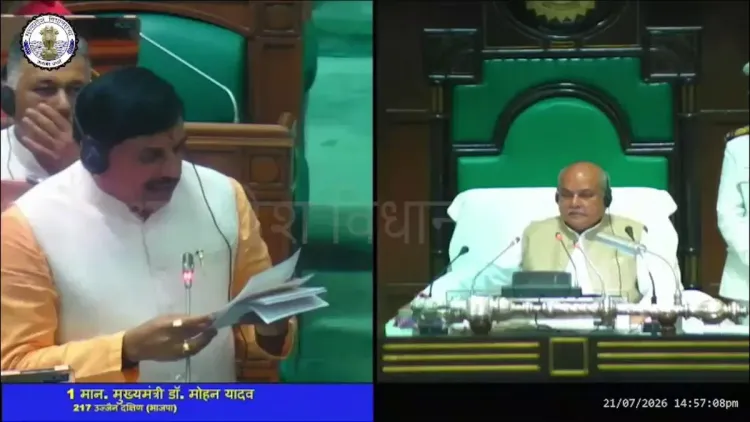
Synopsis
Chief Minister Dr. Mohan Yadav has announced that every marriage in Madhya Pradesh will require mandatory government registration, invoking the Uniform Civil Code. The move follows Uttarakhand's 2024 UCC legislation and extends the BJP's state-level push for uniform civil documentation across religious communities.
Key Takeaways
Mohan Yadav declared mandatory government registration for all marriages solemnised in Madhya Pradesh .
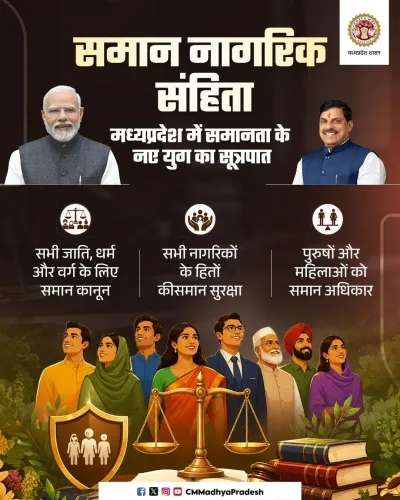
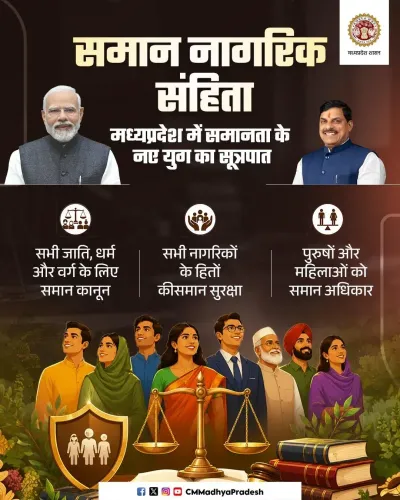
The announcement was explicitly linked to the Uniform Civil Code (UCC) by the Chief Minister's Office.
Uttarakhand enacted India's first state-level UCC law in February 2024 , which included marriage registration mandates — setting the precedent MP now follows.
The mandate would apply across all religious communities, replacing the current patchwork of community-level documentation practices.
A formal bill or executive order in the Madhya Pradesh Vidhan Sabha and implementation rules from the state registration department are the next expected steps.
Compulsory registration is broadly recognised as a protection for women's legal rights, inheritance, and access to government welfare schemes.
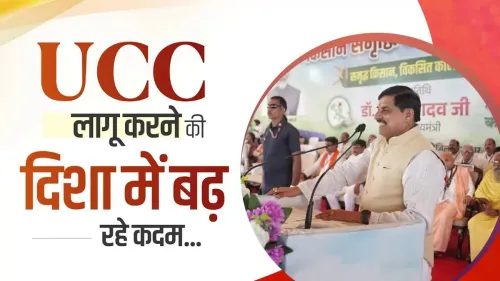
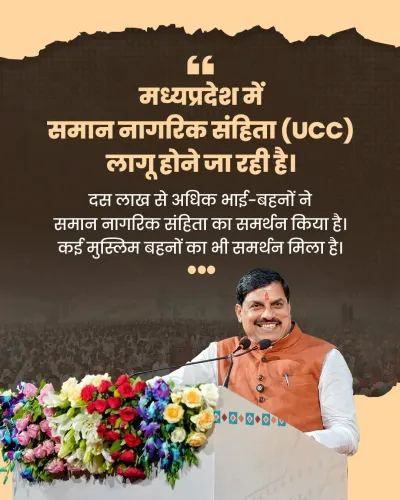
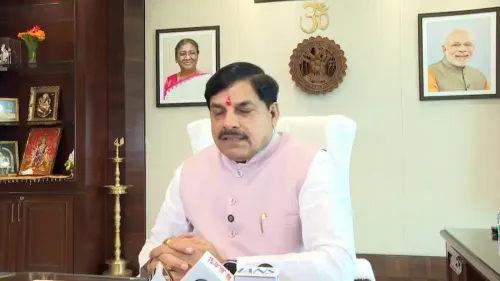
The Chief Minister's Office of Madhya Pradesh announced on Tuesday, 21 July 2026 that Chief Minister Dr. Mohan Yadav has declared mandatory government registration of every marriage solemnised in Madhya Pradesh, a move the office linked to the Uniform Civil Code (UCC) agenda.
Context
Posting on X, the official CMO account quoted CM Dr. Mohan Yadav: 'Madhya Pradesh mein sampann hone wale pratyek vivah ka shasakiya panjiyan anivarya hoga' — 'Every marriage solemnised in Madhya Pradesh will be subject to mandatory government registration.' The announcement was hashtagged #UCC, explicitly tying the move to the Uniform Civil Code debate.
The declaration covers all marriages regardless of religion or personal law, signalling a shift toward uniform administrative documentation across Madhya Pradesh's diverse communities. No specific effective date or bill text was cited in the post.
Policy Backdrop
Uttarakhand became the first Indian state to pass a comprehensive Uniform Civil Code law in February 2024, which included provisions mandating marriage registration. Madhya Pradesh's announcement follows that precedent, extending the state-driven approach to civil registration reform.
Under Article 44 of the Indian Constitution, the state is directed to endeavour to secure a Uniform Civil Code for citizens — a directive that has remained largely aspirational at the national level. BJP-ruled states have progressively moved to implement elements of standardised civil registration in the intervening period.
Marriage registration in India has historically been governed by separate laws for different communities — the Hindu Marriage Act, 1955, the Special Marriage Act, 1954, and personal laws for Muslim, Christian, and other communities — resulting in inconsistent documentation practices across states.
Stakeholders and Impact
The mandate would directly affect every couple marrying in Madhya Pradesh, which has a population of over 8 crore. Mandatory registration is widely seen as beneficial for women's legal rights, inheritance claims, and access to government schemes that require proof of marital status.
Religious communities that have traditionally relied on community-level documentation rather than state registration may need to adapt their practices. Civil society groups have long advocated compulsory marriage registration as a safeguard against child marriage and for widows' property rights.
What's Next
The key legislative step will be the introduction of a formal bill or executive order in the Madhya Pradesh Vidhan Sabha, followed by the publication of implementation rules by the state's registration department. Observers will watch whether CM Mohan Yadav moves to table legislation in the current or next assembly session. The move could also add pressure on other BJP-governed states to introduce similar measures, and may inform the contours of any future national-level UCC legislation.
Point of View
State-first strategy on the Uniform Civil Code — building administrative facts on the ground before any national legislation materialises. By anchoring a procedural reform (registration) rather than a substantive overhaul of personal law, the government minimises immediate legal challenge while advancing the UCC's core goal of uniform documentation. The move also hands CM Mohan Yadav a visible governance credential that aligns with the party's ideological commitments ahead of future electoral cycles. Whether the reform translates into a tabled bill or remains a policy declaration will determine its real-world impact on Madhya Pradesh's diverse communities.
NationPress
20 Oct 2026
Frequently Asked Questions
What did CM Mohan Yadav announce about marriage registration in Madhya Pradesh?
CM Dr. Mohan Yadav announced that every marriage solemnised in Madhya Pradesh will be subject to mandatory government registration, linking the move to the Uniform Civil Code agenda.
Does mandatory marriage registration in MP apply to all religions?
Yes, the announcement as stated applies to every marriage in Madhya Pradesh regardless of the religion or personal law of the parties involved.
Which was the first Indian state to implement a Uniform Civil Code?
Uttarakhand became the first Indian state to pass a comprehensive Uniform Civil Code law in February 2024, which included provisions for mandatory marriage registration.
What is the Uniform Civil Code and why is marriage registration linked to it?
The Uniform Civil Code (UCC) refers to a single set of civil laws governing all citizens regardless of religion, as envisioned under Article 44 of the Indian Constitution. Mandatory marriage registration is seen as a foundational step toward uniform documentation across diverse religious communities.
When will mandatory marriage registration in Madhya Pradesh come into effect?
No specific effective date was mentioned in the Chief Minister's announcement. The next steps are expected to be a formal bill in the Madhya Pradesh Vidhan Sabha and publication of implementation rules by the state registration department.