Budapest airport braces for record traffic at 2026 Champions League final
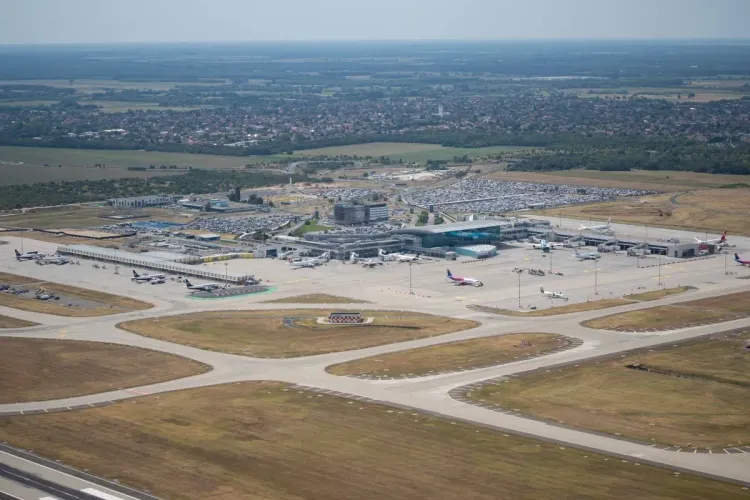
Synopsis
Budapest is hosting a Champions League final for the first time — and its airport is paying the price. With flights expected to double and nearly 800 movements per day around the Arsenal vs PSG showdown at Puskas Arena, Hungary's transport infrastructure faces its biggest-ever stress test on 30 May 2026.
Key Takeaways
Ferenc Liszt International Airport expects flight traffic to double between 29–31 May 2026 during the Champions League final.
Takeoffs and landings are projected to approach 800 per day on the Saturday and Sunday surrounding the final — a record for that period.
Arsenal face Paris Saint-Germain in the final at Puskas Arena on 30 May 2026 — Budapest's first-ever UCL final.
Routes linking London and Paris are expected to see the sharpest rise in passenger traffic.
Transport Minister David Vitezy described the event as 'the largest passenger pressure in the airport's history' .
Passengers are advised to arrive at least two and a half hours before departure around match day.
Ferenc Liszt International Airport in Budapest is preparing for the largest passenger surge in its history as the Hungarian capital hosts the UEFA Champions League final for the first time on 30 May 2026. Flight traffic between 29 and 31 May is expected to double compared with normal levels, according to the airport.
Record Flight Numbers Expected
The airport has projected that takeoffs and landings on the Saturday and Sunday surrounding the final will approach 800 flights per day — a record high for that period in the airport's history. Beyond scheduled commercial services, charter flights and private aircraft are also set to rise sharply, with routes linking London and Paris expected to see the steepest increase in passenger volumes.
Arsenal vs PSG at Puskas Arena
The 2025/26 UCL final will see Arsenal face Paris Saint-Germain at Puskas Arena, Hungary's national stadium officially opened on 15 November 2019. The match marks the conclusion of the 71st season of Europe's premier club competition and the 34th since the tournament was rebranded as the UEFA Champions League. The event is expected to draw around 500 million viewers worldwide, according to Hungarian Minister of Transport and Investment David Vitezy.
What the Government Said
Vitezy said on social media that the airport would face 'the largest passenger pressure in its history' during the final period, warning that the city's public transport network would also face a significant stress test. He confirmed that police, airport authorities, public transport operators, and event organisers are actively coordinating resources to ensure smooth operations throughout the event.
Passenger Advisory
Budapest Airport has urged travellers to arrive at least two and a half hours before departure on match day and the one to two days preceding it, or earlier if advised by their airline. This is the first time Budapest has hosted a Champions League final, making the logistical scale of the event without direct local precedent.
What to Watch
With both London and Paris — home cities of the two finalists — driving the bulk of inbound traffic, transport authorities face a dual-city influx rarely seen at a single European venue. How Budapest manages this test could shape its case for hosting future major UEFA events.
Point of View
Not a routine event. The London-Paris corridor flooding into a mid-sized Central European hub creates a bottleneck that coordination memos alone cannot fix. If the transport operation stumbles, it will follow Budapest into every future UEFA hosting bid.
NationPress
14 Oct 2026
Frequently Asked Questions
When and where is the 2026 UEFA Champions League final?
The 2026 UEFA Champions League final is scheduled for 30 May 2026 at Puskas Arena in Budapest, Hungary. It is the first time Budapest has hosted the Champions League final.
Which teams are playing in the 2026 UCL final?
Arsenal and Paris Saint-Germain will contest the 2026 Champions League final at Puskas Arena in Budapest. The match concludes the 71st season of Europe's top club competition.
How much will flight traffic increase at Budapest Airport during the final?
Budapest's Ferenc Liszt International Airport expects total flight traffic between 29 and 31 May to double compared with normal levels, with nearly 800 takeoffs and landings per day on the surrounding weekend — a record high for that period.
What travel advice has Budapest Airport issued for the Champions League final?
The airport advises passengers to arrive at least two and a half hours before their scheduled departure on match day and the one to two days preceding it, or earlier if their airline recommends it, to avoid missing flights amid the congestion.
How is Budapest managing transport during the Champions League final?
According to Transport Minister David Vitezy, police, airport authorities, public transport operators, and event organisers are coordinating resources to ensure smooth operations. The city's public transport network is also expected to face significant pressure during the event period.