China targets all 7 table tennis golds at Aichi-Nagoya Asian Games, eyes LA28 squad
Synopsis
China is gunning for a clean sweep of all seven table tennis golds at the Aichi-Nagoya Asian Games — one more than it won in 2023 — while fielding seven debutants alongside its Olympic champions. The dual mission of winning now and building for LA28 makes this squad selection as much a statement about the future as a chase for gold.
Key Takeaways
China's table tennis team targets all seven gold medals at the Aichi-Nagoya Asian Games , up from six won in 2023 .
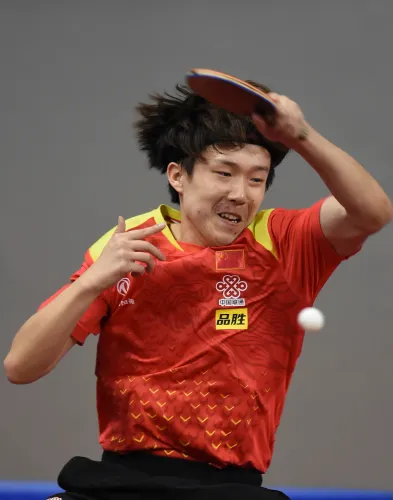
The squad pairs Olympic champions Sun Yingsha , Wang Manyu , and Wang Chuqin with seven Asian Games debutants .
Sun Yingsha returns from an injury layoff, competing at her third Asian Games .
Host nation Japan — led by Tomokazu Harimoto , Miwa Harimoto , and Sora Matsushima — is China's biggest projected rival.
China came from 2-1 down to beat Japan in the women's team final at each of the last two World Table Tennis Championships .
Team leadership says the development roadmap extends beyond LA28 to the 2032 Brisbane Olympics .
China's table tennis team departed for Japan on Wednesday, 15 September 2026, targeting a clean sweep of all seven gold medals at the Aichi-Nagoya Asian Games — while simultaneously using the tournament as a generational proving ground ahead of the 2028 Los Angeles Olympics (LA28). The squad blends three reigning Olympic champions with seven Asian Games debutants, a deliberate succession strategy that team leadership says will shape the national programme through to the 2032 Brisbane Olympics.
The Squad China Is Fielding
Olympic champions Sun Yingsha, Wang Manyu, and Wang Chuqin anchor the side, providing experience at the highest level. China won six table tennis gold medals at the 2023 Asian Games and is returning with a richer squad in terms of depth. Head coach Qin Zhijian described the dynamic between the veterans and newcomers as mutually reinforcing. 'The three Olympic champions pass on their experience to the seven young players, while the younger ones bring passion and drive to inspire the Olympic medalists,' Qin said.
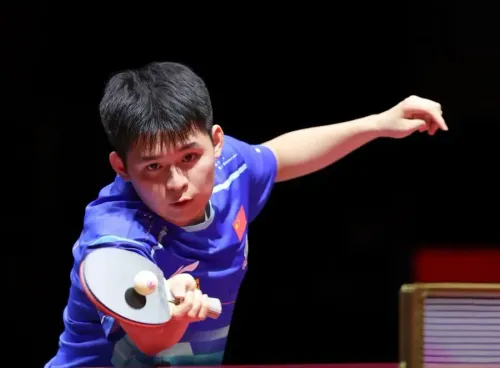
Debutant Lin Shidong said his preparation had focused on adapting to the competition venue and match balls, with his physical condition steadily improving. 'I'm eager to hit top form at the Asian Games,' Lin said.
Sun Yingsha's Return From Injury
Sun Yingsha, who missed several recent international competitions due to injury, is back in contention and expressed relief at her fitness. 'I'm thrilled to be fit enough to compete, to run around on court without any worries,' she said. Competing at her third Asian Games, Sun set no specific individual target, saying simply: 'Whenever I step onto the court, I will give my all to win.' Her return is a significant boost to China's prospects across both singles and team events.
The Japan Threat
Host nation Japan is widely regarded as China's most formidable challenger at these Games. A new generation of Japanese players — including Sora Matsushima, Tomokazu Harimoto, and Miwa Harimoto — has emerged as a genuine force on both the men's and women's sides. The women's team rivalry has been particularly intense: China came from 2-1 down to beat Japan in the women's team final at each of the past two World Table Tennis Championships, underscoring how tight the contest has become.
China women's head coach Ma Lin acknowledged Japan's own successful generational transition. 'We have never underestimated Japan. We have analyzed Japanese players' playing styles and know exactly what we are up against,' Ma said. 'We need to stay vigilant, treat every ball seriously and hold ourselves to strict standards in training.'
Sun echoed that caution: 'We are closely matched. It all goes down to on-court performance and team cohesion. That counts most.'
LA28 and the Long Road to Brisbane
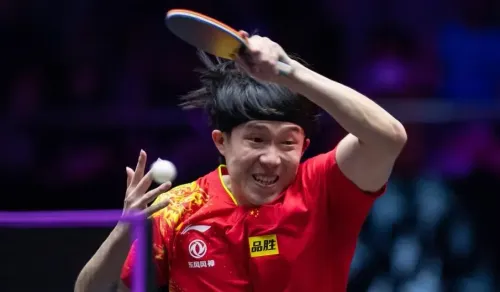
China men's head coach Wang Hao framed the Aichi-Nagoya Games as a 'midterm test' ahead of LA28 — an important competitive checkpoint for both established stars and the incoming generation. Men's captain Wang Chuqin called for mental resilience in pressure moments. 'We must hold firm to our belief in victory. We actively find ways to resolve difficulties, feed ourselves positive signals during play and free our minds mentally,' he said.
Head coach Qin placed the tournament in an even longer arc, saying the programme's development roadmap extends all the way to the 2032 Brisbane Olympics. 'We must maintain a positive mindset, stand united, focus on our own work and keep growing stronger,' Qin said. Women's coach Ma was equally unequivocal about the team's ambitions at these Games: 'We will go all out to fight for every gold medal. Huge challenges lie ahead, yet we have full confidence. Whatever obstacles come our way, we will fight to win.'
With China's all-events sweep now the stated target, all eyes will be on whether the new generation can deliver when the pressure peaks in Aichi-Nagoya.
Point of View
Build for later — is a luxury only a programme with this depth can afford. Fielding seven debutants alongside three Olympic champions is not a gamble; it is a carefully managed handover. The real story is Japan: two consecutive World Championship finals where China was pushed to 2-1 and survived suggests the gap is narrowing in ways raw gold-medal tallies conceal. If Japan takes even one gold in Aichi-Nagoya, it will signal that the era of Chinese dominance being automatic, rather than earned, is over.
NationPress
15 Sept 2026
Frequently Asked Questions
How many gold medals is China targeting at the Aichi-Nagoya Asian Games in table tennis?
China is targeting all seven available gold medals in table tennis at the Aichi-Nagoya Asian Games. It won six golds at the 2023 Asian Games and is aiming for a complete sweep this time.
Is Sun Yingsha fit to compete at the 2026 Asian Games?
Yes, Sun Yingsha has recovered sufficiently from injury to compete. She missed several recent international tournaments due to injury but confirmed she is fit enough to play, saying she can 'run around on court without any worries.'
Why is Japan considered China's biggest challenge in table tennis at these Games?
Japan has developed a strong new generation of players, including Tomokazu Harimoto, Miwa Harimoto, and Sora Matsushima. The rivalry has been especially intense in the women's team event, where China required comebacks from 2-1 down at each of the last two World Table Tennis Championships to beat Japan.
How does this Asian Games squad fit into China's LA28 preparations?
China's men's head coach Wang Hao described the Aichi-Nagoya Games as a 'midterm test' ahead of the 2028 Los Angeles Olympics. The inclusion of seven debutants is a deliberate part of a long-term transition plan that head coach Qin Zhijian says extends to the 2032 Brisbane Olympics.
Who are the key players in China's table tennis squad for the 2026 Asian Games?
The squad is anchored by Olympic champions Sun Yingsha, Wang Manyu, and Wang Chuqin. Debutant Lin Shidong is among the seven first-time Asian Games participants included as part of the generational transition.