FIFA clears VAR official Shaun Evans of racist gesture charge at World Cup
Synopsis
Australian VAR official Shaun Evans was caught on global broadcast making an upside-down OK sign — a gesture the Anti-Defamation League lists as a hate symbol — before a FIFA World Cup match. FIFA investigated and found no evidence of wrongdoing, accepting Evans' explanation that it was an involuntary, subconscious reflex. The ruling keeps him on duty for the rest of the tournament.
Key Takeaways
FIFA's independent Disciplinary Committee cleared Shaun Evans of any breach of the FIFA Disciplinary Code.
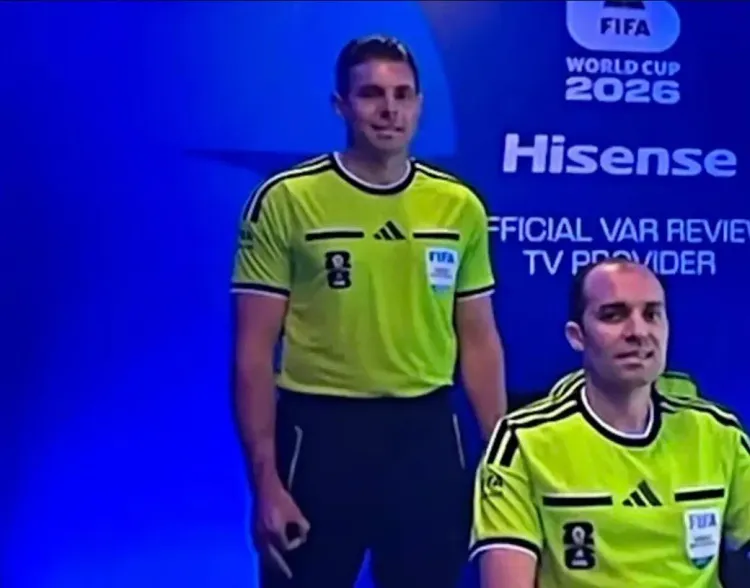
Evans was filmed making an upside-down 'OK' gesture before the Germany vs Curacao World Cup group-stage match.
The gesture was added to the Anti-Defamation League (ADL) hate symbol list in 2019 after being adopted by far-right groups from 2017 .
Evans, 38 , described the movement as an 'involuntary, subconscious twitch' and denied any deliberate intent.
Evans has been on FIFA's referee list since 2017 and previously officiated at the 2022 World Cup in Qatar .
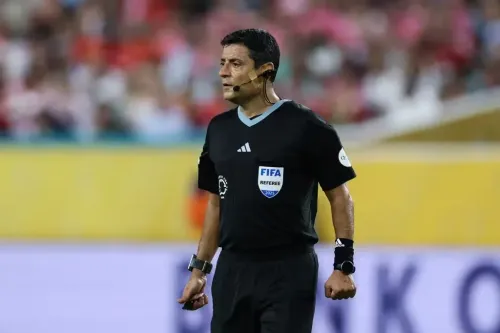
FIFA's independent Disciplinary Committee has cleared Australian video assistant referee official Shaun Evans of any wrongdoing following allegations that he made a racist hand gesture before the FIFA World Cup group-stage match between Germany and Curacao on Sunday. The governing body said it found 'no evidence' of a breach of the FIFA Disciplinary Code.
What Triggered the Controversy
During the pre-match broadcast, Evans was captured on camera making an upside-down 'OK' gesture while working with the video review team. The sign has a dual and contested history: it originated as a playful prank tied to the so-called 'Circle Game' — popularised in part by the sitcom Malcolm in the Middle — but was co-opted by far-right groups beginning around 2017. By 2019, the Anti-Defamation League (ADL) had added it to its official list of hate symbols, which is why its appearance in a high-profile World Cup broadcast drew immediate scrutiny.
Evans Calls It an Involuntary Reflex
The 38-year-old Australian official, who has been on FIFA's referee list since 2017 and also officiated at the 2022 World Cup in Qatar, issued a detailed personal statement denying any deliberate intent.
'I would like to clarify that I did not intentionally make a hand gesture or symbol to communicate a message, affiliation, game or belief of any kind,' Evans said. 'The only explanation I can offer is that the movement was an involuntary, subconscious twitch and I was unaware I had done it at the time. Images taken later during the match showed that I repeated this movement many times while holding a pen between my fingers.'
Evans added: 'The coverage following this incident simply does not reflect who I am. Of course, I understand how the gesture has been interpreted and I regret this; however, I want to be very clear and categorically say that I did not knowingly or deliberately make the hand symbol suggested. Officiating at the World Cup is the biggest honour of my career and I look forward to supporting my colleagues for the rest of the tournament.'
FIFA's Ruling and Official Statement
After conducting its investigation, FIFA's Disciplinary Committee concluded there was no disciplinary case to answer. 'FIFA's independent Disciplinary Committee can confirm that, after looking into the matter involving support video assistant referee Shaun Evans, it has found no evidence of breaches of the FIFA Disciplinary Code. The Disciplinary Committee has also taken note of Mr Evans' statement,' the body said in its official release.
Notably, the committee specifically acknowledged Evans' own account — suggesting his explanation of an involuntary reflex was a factor in the outcome.
Context and What Comes Next
The episode underscores the heightened sensitivity around symbolic gestures at major sporting events, where broadcast coverage reaches a global audience of hundreds of millions. The dual meaning of the upside-down OK sign remains a live debate: civil liberties advocates caution against over-reading ambiguous gestures, while anti-racism groups argue that the symbol's documented far-right use warrants vigilance. Evans, now cleared, is expected to continue his officiating duties for the remainder of the tournament.
Point of View
But so is its older, entirely innocuous usage. What this case highlights is that global sports bodies still lack a clear evidentiary standard for intent versus impact in symbolic conduct. Clearing Evans on the basis of his own statement, without any independent behavioural or contextual analysis being made public, may satisfy the legal threshold but will not fully settle the public debate — particularly for communities that experience hate symbols as harmful regardless of intent.
NationPress
16 Sept 2026
Frequently Asked Questions
Why was Shaun Evans investigated by FIFA?
Evans was investigated after he was filmed making an upside-down OK gesture during the pre-match broadcast before the Germany vs Curacao FIFA World Cup game. The gesture has been associated with white supremacy groups and was added to the Anti-Defamation League's hate symbol list in 2019.
What did FIFA's Disciplinary Committee decide?
FIFA's independent Disciplinary Committee found no evidence of a breach of the FIFA Disciplinary Code and cleared Evans of all wrongdoing. The committee also took formal note of Evans' personal statement denying deliberate intent.
What was Shaun Evans' explanation for the gesture?
Evans said the movement was an 'involuntary, subconscious twitch' and that he was unaware he had made it at the time. He also noted that broadcast images from later in the match showed him repeating the movement while holding a pen between his fingers.
Who is Shaun Evans and what is his officiating background?
Shaun Evans is a 38-year-old Australian VAR official who has been on FIFA's international referee list since 2017. He also served as a VAR official at the 2022 FIFA World Cup in Qatar, making him one of the more experienced video review officials in the global pool.
What is the history of the upside-down OK gesture?
The upside-down OK sign began as a playful prank linked to the so-called Circle Game before being adopted by far-right groups around 2017 as a covert in-group signal. The Anti-Defamation League formally added it to its hate symbols database in 2019, though its ambiguous origins mean intent remains central to how individual cases are assessed.