FIFA clarifies VAR glitch in Switzerland vs Qatar World Cup 2026 clash
Synopsis
A missing 3D offside graphic during Switzerland vs Qatar sparked a VAR storm at the 2026 World Cup — FIFA says the glitch hit the broadcast animation only, not the officiating process. With Gary Neville calling FIFA a 'dictator' over replay transparency, and Qatar snatching a dramatic 1-1 draw via a last-gasp own goal, the controversy captures everything that still frustrates fans about the VAR era.
Key Takeaways
FIFA confirmed a 'brief technical outage' disrupted the semi-automated offside animation during Switzerland vs Qatar at the FIFA World Cup 2026 on 14 June .
The VAR workflow was unaffected; officials confirmed Remo Freuler was not offside before the foul by goalkeeper Mahmud Abunada , and the penalty to Switzerland stood.
Pundit Gary Neville called FIFA a 'dictator' for failing to share a VAR replay of the decision with broadcast audiences.
Qatar earned their first-ever FIFA World Cup point after Miro Muheim's own goal in the 4th minute of added time secured a 1-1 draw.
Both Switzerland and Qatar sit on one point each in Group B after the result.
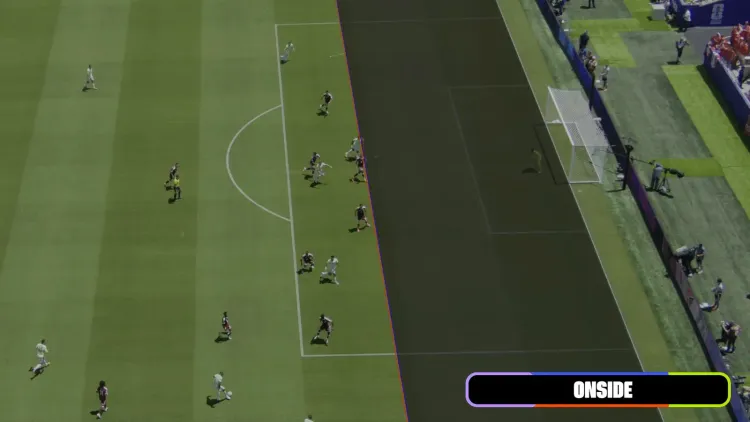
FIFA has issued an official clarification following a VAR controversy during the FIFA World Cup 2026 group stage match between Switzerland and Qatar in Santa Clara on 14 June, confirming that a brief technical outage disrupted the broadcast animation but left the Video Assistant Referee workflow entirely intact. The statement came after widespread confusion among fans and commentators over the absence of the standard 3D offside graphic during a pivotal penalty decision.
What Happened in the 14th Minute
The controversy centred on a penalty awarded to Switzerland in the 14th minute, after Qatar goalkeeper Mahmud Abunada fouled Swiss midfielder Remo Freuler. Video replays appeared to suggest Freuler may have been in an offside position before the foul occurred, fuelling immediate debate in the stands and on broadcast panels. The VAR reviewed the play and upheld the on-field penalty decision — but crucially, the broadcast failed to display the customary semi-automated offside animation that would ordinarily confirm the ruling to viewers.
FIFA's Official Explanation
Stepping in to address mounting social media backlash, FIFA Media released a formal statement clarifying the sequence of events. 'A brief technical outage prevented the onside animation graphic from being generated ahead of the penalty awarded to Switzerland in the 14th minute. The issue was quickly resolved. The workflow of the VAR was not affected by this issue and followed the normal procedure in checking the on-field decision,' the statement read.
FIFA further noted: 'The lines used by the VAR to check the position of the relevant players did not show the attacking player to be in an offside position in either of the two situations immediately before the penalty decision.' The governing body's position is unambiguous — the technical fault was confined to the broadcast graphic layer, not the officiating process itself.
Gary Neville's Broadside at FIFA
Former Manchester United captain and television pundit Gary Neville did not hold back, labelling FIFA a 'dictator' for its failure to share a VAR replay of the controversial penalty call with broadcast audiences in real time. Neville's remarks amplified the controversy significantly, drawing attention to what critics argue is a recurring transparency deficit in how football's governing body communicates officiating decisions to the public. This is not the first World Cup at which the absence of timely VAR visualisations has drawn sharp criticism.
Qatar's Late Equaliser Earns a Point
Despite the controversy surrounding the penalty, the match itself produced a dramatic finish. Qatar secured their first-ever FIFA World Cup point when Miro Muheim's own goal in the fourth minute of added time levelled the contest at 1-1, earning the host nation a share of the spoils against Group B rivals Switzerland in the San Francisco Bay Area. The result leaves both sides with one point each in the group standings.
Broader Context
The incident underscores an ongoing tension at major tournaments between the speed of officiating technology and the transparency of its communication to fans. Semi-automated offside technology — introduced at the 2022 FIFA World Cup in Qatar — was designed precisely to provide faster, more accurate decisions alongside visible confirmation graphics. A glitch that removes that visual layer, even temporarily, risks eroding the trust the system was built to establish. With the FIFA World Cup 2026 under intense global scrutiny as the first edition to feature 48 teams, pressure on FIFA to maintain broadcast and officiating transparency is higher than ever.
Point of View
The very thing that would have defused the controversy in real time, is a self-inflicted wound. Gary Neville's 'dictator' framing will resonate with fans because it names a pattern, not just an incident. Semi-automated offside was sold as a transparency upgrade; a glitch that removes the visible confirmation graphic exposes how dependent that trust is on the broadcast layer working perfectly. At a 48-team World Cup already under a microscope, FIFA cannot afford to let technical hiccups become governance stories.
NationPress
13 Sept 2026
Frequently Asked Questions
What caused the VAR controversy during Switzerland vs Qatar at the 2026 World Cup?
A brief technical outage prevented the semi-automated offside animation graphic from being broadcast during a penalty decision in the 14th minute, leaving fans and commentators without visual confirmation of the VAR ruling. FIFA clarified that the VAR workflow itself was unaffected and followed normal procedure.
Was the penalty to Switzerland in the 14th minute correct?
According to FIFA's official statement, the VAR confirmed the penalty was correct, with the lines used to check player positions showing that Remo Freuler was not in an offside position before the foul by Qatar goalkeeper Mahmud Abunada. The on-field decision was upheld.
What did Gary Neville say about FIFA's handling of the VAR incident?
Gary Neville, the former Manchester United captain and television pundit, described FIFA as a 'dictator' for failing to share a VAR replay of the controversial penalty decision with broadcast audiences. His remarks amplified the controversy on social media.
What was the final result of Switzerland vs Qatar at the 2026 World Cup?
The match ended 1-1. Qatar secured their first-ever FIFA World Cup point through Miro Muheim's own goal four minutes into added time, cancelling out Switzerland's earlier lead in the Group B fixture played in the San Francisco Bay Area.
What is semi-automated offside technology and why does it matter?
Semi-automated offside technology uses player-tracking data and AI to deliver faster, more accurate offside decisions, accompanied by a 3D animation graphic for broadcast transparency. Introduced at the 2022 World Cup, it was designed to reduce delays and improve public understanding of VAR rulings — making the graphic outage during this match particularly damaging to FIFA's transparency narrative.