VAR at FIFA World Cup 2026: Masefield says referees must have final say
Synopsis
Former English footballer Paul Masefield has praised VAR's overall impact at FIFA World Cup 2026 while insisting referees must never cede their final authority to technology. His remarks come as the tournament's opening week was clouded by a technical outage during the Qatar-Switzerland match and a disciplinary probe into Australian VAR official Shaun Evans — raising urgent questions about football's technology governance.
Key Takeaways
Paul Masefield , part of ZEE5 's FIFA World Cup 2026 expert panel, said VAR is helping but referees must retain final decision-making authority.
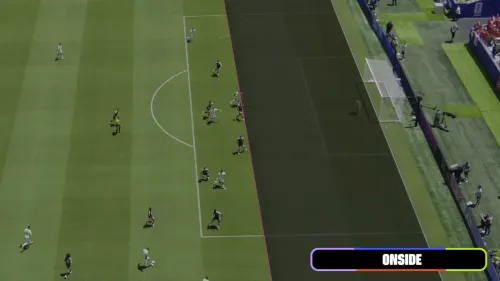
A 'technical outage' disrupted the semi-automated offside system during the Qatar vs Switzerland opener, blocking 3D graphics from broadcast.
Australian VAR official Shaun Evans was investigated after a controversial gesture on the live global feed from the Dallas VAR hub; he was later cleared.
Masefield noted the FIFA World Cup 2026 has avoided the lengthy VAR stoppages common in the Premier League .
He argued VAR is acting as a deterrent , encouraging players to modify behaviour to avoid triggering reviews.
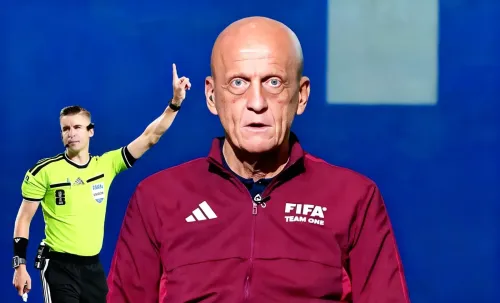
Former English footballer and commentator Paul Masefield has said that VAR has broadly served a positive function at the FIFA World Cup 2026, but cautioned that the technology must remain a support tool — with on-field referees retaining ultimate decision-making authority. Masefield, part of the expert panel for ZEE5's FIFA World Cup 2026 coverage, shared his assessment on 16 June as the tournament's opening week drew to a close amid a string of VAR-related controversies.
Masefield's Core Argument
'I think technology is helping to an extent, but I still think there should be the physical element with the referee who does have to make that final decision on whether he wants to overturn his decision or whether or not he wants to stick with his own decision,' Masefield said.
He went further, urging officials to demonstrate greater conviction rather than feeling pressured into reversals by technological prompts. 'I personally like to see referees be a little bit stronger themselves and stick to their decisions,' he added. The remarks reflect a broader debate in football governance about where human judgement ends and algorithmic authority begins.
Controversies That Defined the Opening Week
The FIFA World Cup 2026's first week was marked by two significant VAR incidents that drew global attention. During the Qatar vs Switzerland opener, a reported 'technical outage' disrupted the semi-automated offside system, preventing its 3D graphics from being broadcast. The failure left fans and pundits without transparency over a penalty awarded to Switzerland — fuelling widespread frustration.
Off the pitch, Australian VAR official Shaun Evans triggered a major disciplinary investigation after making a controversial hand gesture on the live global broadcast feed from the Dallas VAR hub. He was subsequently cleared of any violations of the ethics code, according to reports.
Why This World Cup Has Avoided Major Delays
Despite the controversies, Masefield noted that the tournament has, so far, been largely free of the extended VAR stoppages that routinely disrupt domestic leagues. 'I don't think we have really had one big major VAR decision throughout this World Cup so far. The little ones, yes and no. But there hasn't been a mega, mega hold-up for two or three minutes, which we see in the Premier League every week, where decisions need to be sorted out,' he said.
He attributed this, in part, to a change in player behaviour. 'I think the VAR there is more of a deterrent for people. I think we are seeing behaviours from players to not get VAR to intervene,' he added. This deterrence effect — where players self-regulate to avoid triggering reviews — is an underreported dimension of how technology reshapes on-pitch conduct.
The Bigger Picture for Football Technology
The FIFA World Cup 2026, co-hosted by the United States, Canada, and Mexico, is the first edition to feature an expanded 48-team format, placing greater logistical and officiating demands on FIFA's technology infrastructure. The early teething issues have intensified calls from coaches and broadcasters for greater transparency in how VAR decisions are communicated to stadiums and television audiences.
As the group stage progresses, the balance between technological assistance and referee authority is likely to remain a central talking point — both on the pitch and in football's governing corridors.
Point of View
But it sidesteps a harder question: if referees are expected to 'stick to their decisions', what is the point of a review system designed to correct errors? The real tension at this World Cup is not human versus machine — it is FIFA's opacity. The Qatar-Switzerland outage did not just frustrate fans; it exposed a governance gap where billions of viewers had no way to verify a match-altering call. Clearing Shaun Evans of ethics violations without a detailed public account of what happened compounds that opacity. The deterrence argument Masefield raises is genuinely interesting and under-examined, but it will not survive a tournament-defining wrong call made without explanation.
NationPress
16 Sept 2026
Frequently Asked Questions
What did Paul Masefield say about VAR at the FIFA World Cup 2026?
Paul Masefield said VAR has played a broadly positive role at the FIFA World Cup 2026 but stressed that referees must retain the final authority to make or overturn decisions on the field. He also called on referees to show greater conviction rather than feeling compelled to change calls due to technological pressure.
What was the VAR controversy in the Qatar vs Switzerland match?
A reported 'technical outage' prevented the semi-automated offside system from broadcasting its 3D graphics during the Qatar vs Switzerland opener, leaving fans and pundits without transparency over a penalty decision awarded to Switzerland. The incident drew widespread criticism over FIFA's communication of VAR rulings.
Who is Shaun Evans and why was he investigated?
Shaun Evans is an Australian VAR official who triggered a disciplinary investigation after making a controversial hand gesture on the live global broadcast feed from the Dallas VAR hub during the FIFA World Cup 2026. He was subsequently cleared of any ethics code violations, according to reports.
Why has the FIFA World Cup 2026 had fewer VAR delays than domestic leagues?
According to Masefield, the tournament has avoided major multi-minute VAR stoppages partly because the technology is acting as a deterrent — players are modifying their behaviour to avoid triggering reviews. He contrasted this with the Premier League, where lengthy VAR holds are a weekly occurrence.
What is the broader debate around VAR at the 2026 World Cup?
The central debate is whether technology is encroaching on referee authority and whether FIFA is being transparent enough when VAR intervenes. The opening-week controversies have intensified calls from coaches and broadcasters for clearer, real-time communication of VAR decisions to stadium crowds and television audiences.