FIFA referee chief Collina defends 2026 World Cup officials after Egypt controversy
Synopsis
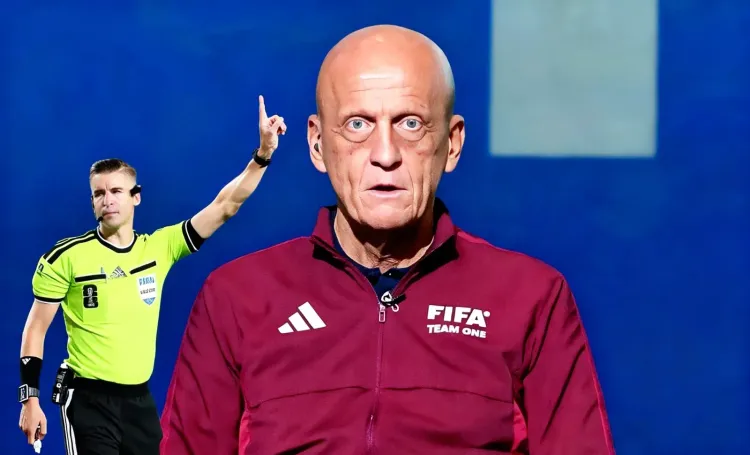
FIFA referee chief Pierluigi Collina broke from the governing body's usual silence on individual decisions to publicly defend both disputed VAR calls in Argentina's 3-2 win over Egypt — a rare, point-by-point rebuttal that signals just how seriously FIFA is taking the Egyptian Football Association's demands for an investigation.
Key Takeaways
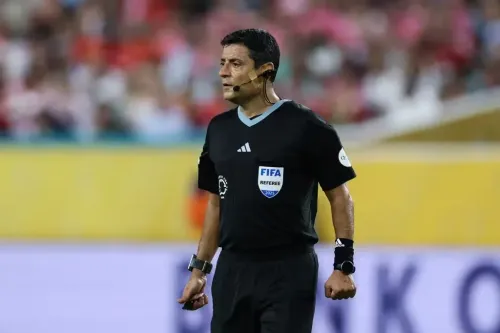
Pierluigi Collina , FIFA's chief refereeing officer, publicly defended match officials following the Argentina 3-2 Egypt Round of 16 match at the 2026 FIFA World Cup .
The Egyptian Football Association (EFA) called for a formal investigation and the removal of the refereeing team from the tournament.
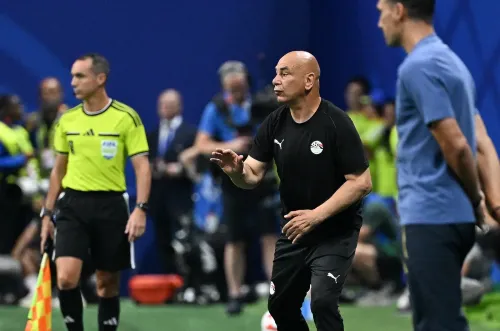
Egypt manager Hossam Hassan alleged his side had been unfairly treated after two second-half decisions went against Egypt .
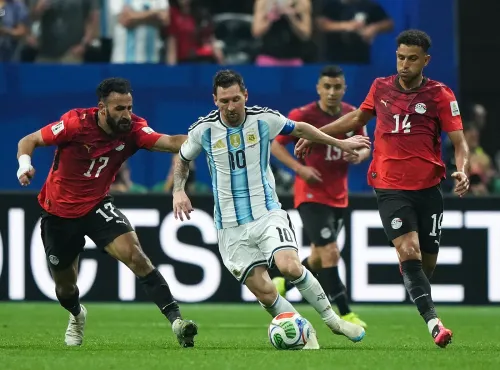
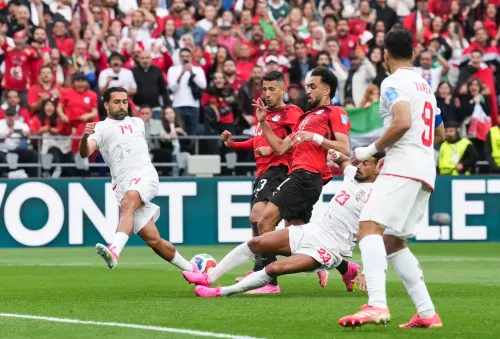
Collina confirmed that Marwan Attia had fouled Lisandro Martínez in the build-up to Egypt's disallowed goal, and that the challenge on Mohamed Salah by Julian Alvarez was deemed normal football contact.
Collina stated that not even FIFA president Gianni Infantino can influence the refereeing department's decisions.
FIFA chief refereeing officer Pierluigi Collina has mounted a robust defence of match officials at the 2026 FIFA World Cup, pushing back firmly against allegations of bias that surfaced following Argentina's 3-2 victory over Egypt in the Round of 16. Collina's statement came after the Egyptian Football Association (EFA) called for a formal investigation into the officiating and demanded the removal of the refereeing team from the tournament.
Collina's Defence of Officials' Integrity
Speaking in response to the mounting criticism, Collina drew a firm line between legitimate debate and what he characterised as damaging personal attacks. 'Nobody can question the integrity of the FIFA World Cup match officials. When this happens, it may provoke reactions that lead to threats against them and their families. This is not right,' he said, as quoted by BBC Sport.
He acknowledged that refereeing decisions will always generate discussion in football but insisted that unsubstantiated accusations cross a different threshold entirely. 'Of course, constructive discussion about decisions will always be part of football, but unfounded allegations have no place in our sport,' Collina stated.
Independence from FIFA Leadership
Collina also moved to address suggestions that FIFA's refereeing department operates under external pressure — including from the governing body's own leadership. 'Nobody can claim that FIFA refereeing can be influenced by anyone, not even by the FIFA president Gianni Infantino,' he said. He added that Infantino had consistently backed FIFA Team One while allowing the department to function with complete independence, and that match officials, like players and coaches, always strive to perform to the best of their ability.
The Two Disputed Decisions Explained
Despite FIFA's customary policy of not commenting on individual refereeing calls during major tournaments, Collina made an exception to explain both contentious incidents from the Argentina v Egypt fixture.
The first concerned an Egyptian goal that was disallowed following a Video Assistant Referee (VAR) check. Collina explained that after every goal, the VAR reviews the attacking possession phase, and if a foul is identified in the build-up that is deemed to have impacted the goal, the VAR can recommend an on-field review — with no defined distance or time limit from the incident to the goal. He confirmed that Egypt number 19 Marwan Attia had clearly trodden on the foot of Argentina number 6 Lisandro Martínez, triggering the intervention. 'We believe that a foul is a foul. Regardless of whether the foul appears 'obvious', if the referee did not see it on the field of play, the VAR can intervene,' he said.
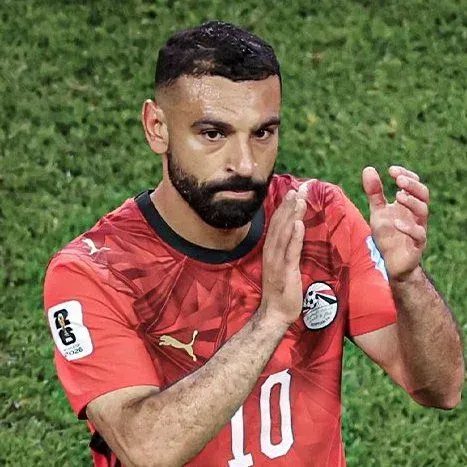
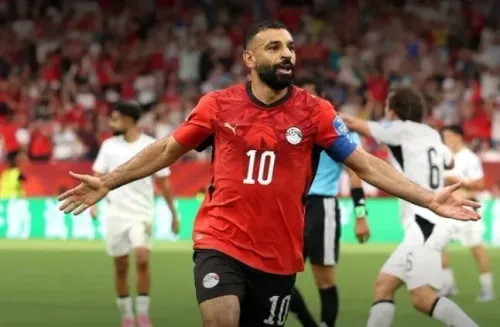
The second controversy involved Egypt number 10 Mohamed Salah going down inside the penalty area moments before Argentina scored the winning goal. Collina explained that the referee and VAR assessed the challenge between Salah and Argentina number 9 Julian Alvarez as normal football contact — noting that a defender who touches the ball first and then makes routine contact has not committed a foul.
Egypt's Reaction and Manager's Allegations
Egypt manager Hossam Hassan had alleged after the match that his side had been treated unfairly, with the EFA formally escalating the matter to FIFA. This is not the first time a football association has sought redress over VAR rulings at a major tournament, but Collina's unusually detailed public response signals that FIFA viewed the allegations as serious enough to warrant a point-by-point rebuttal.
FIFA's Broader Stance on Officiating
Collina conceded that an element of subjectivity is inherent in some refereeing decisions but expressed satisfaction with how officials have applied the laws of the game throughout the 2026 World Cup. 'Of course, there will always be an element of subjectivity in some decisions, but we are happy with how this principle has been applied throughout the tournament,' he said. The episode underscores the growing scrutiny on VAR systems at elite level and the pressure on football's governing bodies to maintain transparency without undermining the authority of on-field officials.
Point of View
Not just routine post-match noise. Yet the defence raises its own questions: if the VAR process was so clearly correct, why did it take a formal association complaint to prompt an explanation? The episode exposes a structural tension in modern football — VAR was introduced to eliminate controversy, but its opacity often amplifies it. Until FIFA publishes real-time decision rationale, every contentious call will generate exactly the kind of 'unfounded allegations' Collina says have no place in the sport.
NationPress
8 Oct 2026
Frequently Asked Questions
Why did Pierluigi Collina defend FIFA referees after the Argentina-Egypt match?
Collina issued his defence after the Egyptian Football Association demanded a formal investigation and the removal of the refereeing team, following two disputed VAR decisions in Argentina's 3-2 Round of 16 win. He rejected allegations of bias and explained both calls in detail, which is unusual for FIFA during a live tournament.
Why was Egypt's goal disallowed against Argentina?
The VAR disallowed the goal after identifying that Egypt's Marwan Attia had fouled Argentina's Lisandro Martínez during the attacking build-up phase. Collina confirmed the intervention was within VAR protocol, as there is no defined time or distance limit between a foul and the resulting goal.
Why was no penalty given when Mohamed Salah went down in the box?
The referee and VAR assessed the challenge between Salah and Argentina's Julian Alvarez as normal football contact rather than a foul. Collina explained that a defender who touches the ball first and then makes routine contact has not committed an offence under the laws of the game.
Can FIFA's refereeing decisions be influenced by Gianni Infantino or other FIFA officials?
According to Collina, no. He stated explicitly that nobody — including FIFA president Gianni Infantino — can influence the refereeing department, which operates with complete independence. He added that Infantino has consistently supported FIFA Team One while trusting it to work autonomously.
What action has the Egyptian Football Association taken?
The EFA formally called on FIFA to investigate the officiating of the Argentina-Egypt match and sought the removal of the refereeing team from the 2026 World Cup. Egypt manager Hossam Hassan also publicly alleged unfair treatment after the match. FIFA has not confirmed whether a formal review will be conducted.