Lord's pitch 'substandard' as 33 wickets fall in two days: Nasser Hussain

Synopsis
Lord's 150th Test has become a referendum on the ground itself. With 33 wickets in two days, Hussain calling the surface 'not good enough', and the ICC expected to weigh in, the MCC faces its starkest public reckoning yet over a pitch that has resisted every attempted fix — from dome covers to 200-degree steam treatment.
Key Takeaways
33 wickets fell in the opening two days of the England vs New Zealand Test at Lord's .
Former England captain Nasser Hussain described the pitch as 'substandard' and 'not good enough' for Test cricket.
Nathan Smith of New Zealand claimed 6 wickets for 70 runs , exploiting uneven bounce and seam movement.
Ground staff had used steam at 200 degrees Celsius in the off-season to revitalise the surface — critics say it has not worked.
The ICC is expected to evaluate the pitch after the Test, following its 'unsatisfactory' rating of the MCG surface earlier this year.
Former analyst Simon Doull called on the ECB to threaten relocation of matches to pressure the MCC into replacing the pitch block.
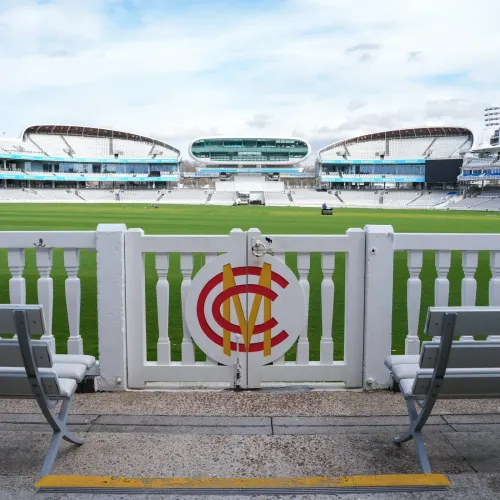
Former England captain Nasser Hussain has labelled the Lord's pitch 'substandard' and 'not good enough' for Test cricket after 33 wickets fell in the opening two days of England's first Test against New Zealand, reigniting a long-running debate over the quality of surfaces at the sport's most celebrated venue. The criticism adds fresh pressure on the Marylebone Cricket Club (MCC) and the England and Wales Cricket Board (ECB) to address structural issues with the 22-yard strip at the Home of Cricket.
How the match unfolded
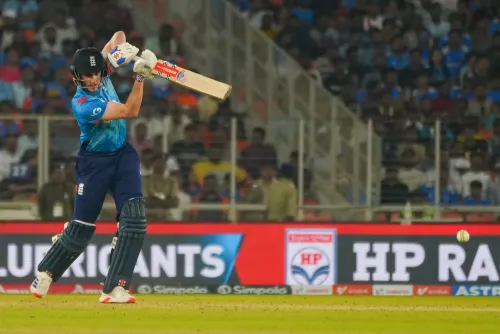
The contest at Lord's has been dominated by bowlers from the outset. England set New Zealand a target of 218 after being bowled out for a low score in their second innings. New Zealand seamer Nathan Smith proved the most destructive, claiming 6 wickets for 70 runs by exploiting uneven bounce and pronounced seam movement. England's batting order collapsed dramatically at one stage, losing four wickets in just 11 balls.
What Hussain said about the surface
'Both teams have shown high-quality bowling, but the pitch is below par, and it has been for quite a while,' Hussain told Sky Sports. He noted that this Test marks Lord's 150th Test match, with the ground scheduled to host three Tests this year alone — making the surface's condition all the more consequential.
'Everything has been attempted to improve it. The grounds staff know it lacks pace and offers inconsistent bounce and seam movement in cloudy conditions. They covered it with a dome and tried steaming, but nothing has changed,' he said. 'Throughout this Test match, it has lacked pace, and when it speeds up, it misbehaves.'
Hussain was unambiguous in his conclusion: 'There has been absolutely no chance for the batters. Lord's has many positive aspects. The attention to detail around the ground is excellent. But the most crucial part, the pitch, is not good enough.'
Ground staff efforts and their limits
The pitch had undergone significant remedial work in the off-season. Ground staff relaid the outfield and used steam at 200 degrees Celsius to kill pathogens and revitalise the soil beneath the surface. Despite these efforts, analysts and former players argue the improvements have not addressed the underlying problem.
Former New Zealand bowler and Sky Sports analyst Simon Doull echoed Hussain's concerns, going further by suggesting the ECB should consider relocating matches if conditions do not improve. 'I think the ECB needs to work with the MCC and say: 'We're sorry, but we may have to take games away, as the pitch is not up to standard,' Doull said on Sky Sports Cricket. 'Until the ECB decides to move games from Lord's, it doesn't push the MCC to spend money and fix the pitch.'
Doull expressed sympathy for ground staff while pointing to a deeper structural problem. 'They are dealing with an old pitch block, which is not suitable for their needs. It's worn out, it's aged, and it needs to be replaced,' he said.
ICC scrutiny and broader context
The criticism arrives in the wake of the Melbourne Cricket Ground (MCG) pitch being rated 'unsatisfactory' by the International Cricket Council (ICC) following a Boxing Day Ashes Test that concluded in two days. The ICC is now expected to evaluate and issue its verdict on the Lord's surface once the current Test concludes.
This is not an isolated episode — the recurring nature of complaints about Lord's pitches suggests the problem is systemic rather than seasonal.
Broad offers a contrarian view
Former England fast bowler Stuart Broad acknowledged the pitch's shortcomings but argued it had still produced compelling cricket. 'On Test match pitches and the quality of bowling in this format, you don't need as much sideways movement as this pitch has offered. Bowlers can create movement themselves,' Broad told Sky Sports Cricket.
Broad noted that public reaction had been broadly positive: 'Last night, I was on the tube with people who had watched the cricket. Everyone was talking about how much they enjoyed the day. The excitement of the wickets, the crowds, and the unpredictability.' He did, however, concede that pitches need to strike a better balance. 'Batters should be able to score centuries, while bowlers should have to work hard for wickets,' he said, pointing to the Sydney pitch during the recent Ashes as a model surface.
With the ICC review pending and the ECB-MCC relationship under scrutiny, the outcome of this Test could prove a watershed moment for how England's cricketing authorities manage their flagship venue going forward.
Point of View
And patterns demand structural responses. The MCC has attempted cosmetic fixes while the underlying pitch block, by Doull's assessment, is simply too old to perform. What is striking is that it has taken a milestone Test — the 150th at Lord's — to crystallise the argument for relocation as genuine leverage. The ECB's reluctance to act is understandable given the commercial and symbolic weight of Lord's, but that reluctance is precisely what has allowed the MCC to defer investment. The ICC's pending review will matter only if it carries a demerit point; without consequence, it is noise.
NationPress
23 Sept 2026
Frequently Asked Questions
Why is the Lord's pitch being criticised during the England vs New Zealand Test?
The Lord's pitch has been criticised after 33 wickets fell in just two days of the first Test between England and New Zealand, with former England captain Nasser Hussain calling it 'substandard' and 'not good enough' for Test cricket. Critics point to inconsistent bounce, lack of pace, and excessive seam movement in overcast conditions as recurring problems that off-season remediation has failed to fix.
What remedial work was done on the Lord's pitch before this Test?
Ground staff relaid the outfield and applied steam at 200 degrees Celsius to kill pathogens and revitalise the soil beneath the pitch. Despite these efforts, analysts and former players argue the surface continues to underperform, with Hussain noting that 'nothing has changed'.
Will the ICC review the Lord's pitch?
The ICC is expected to evaluate and issue its verdict on the Lord's surface once the current Test concludes. This follows the ICC rating the Melbourne Cricket Ground pitch 'unsatisfactory' after a Boxing Day Ashes Test that also finished in two days.
What did Simon Doull suggest the ECB should do about Lord's?
Former New Zealand bowler and analyst Simon Doull suggested the ECB should work with the MCC and threaten to relocate matches away from Lord's if the pitch does not meet required standards. He argued that only the threat of losing fixtures would compel the MCC to invest in replacing the ageing pitch block.
Did all former players agree the Lord's pitch was a problem?
Not entirely. Former England fast bowler Stuart Broad acknowledged the pitch needed to be better for batting but argued it had still produced entertaining cricket, citing positive public reaction. He pointed to the Sydney pitch during the Ashes as the ideal model — competitive for bowlers while allowing batters to score centuries.